Dubai was built for Emiratis, even if it was built by the world. Thar must be built for Tharis, even if it draws investment from Islamabad, Lahore, London, Beijing, and beyond.
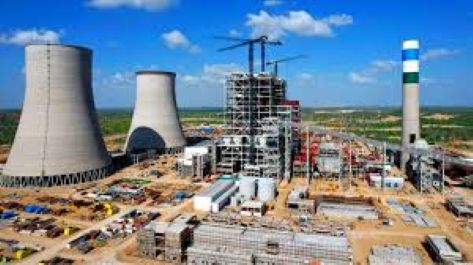
- The Thar Coal Power Project is already producing electricity but the tragedy is that little of it stays in Tharparkar itself. The power travels to other areas in the country while Thar’s own villages run on generators burning expensive diesel.
- the first non-negotiable policy demand must be for a constitutionally mandated allocation of Thar-generated electricity for Tharparkar, at substantially subsidized rates, before a single unit travels up the national grid. Power the local villages. Power the local industry. Make electricity in Thar cheaper than anywhere else in Pakistan.
By Raphic Burdo
Dubai, United Arab Emirates, in 1960 was desert, heat, poverty, and a small fishing port. Thar, Pakistan, today is desert, heat, poverty, and coal. The difference is not geography. It is what Dubai’s leaders chose to do with their underground wealth, and more critically, what they chose to build above ground while the underground wealth lasted.
Thar coal could light not just Pakistan’s grid, but Thar’s own future as well. Here is how.
Power First, Everything Else Second:
Dubai’s oil did not build Dubai. It powered Dubai. The electricity, the desalination, the logistics infrastructure, all came first. Everything else was built on top of that energy foundation.
Thar’s coal must do exactly this for Pakistan’s energy-starved province of Sindh. The Thar Coal Power Project is already producing electricity but the tragedy is that little of it stays in Tharparkar itself. The power travels to other areas in the country while Thar’s own villages run on generators burning expensive diesel. This is the ‘Niger Delta’ story in miniature. The resources leave. The poverty stays.
Therefore, the first non-negotiable policy demand must be for a constitutionally mandated allocation of Thar-generated electricity for Tharparkar, at substantially subsidized rates, before a single unit travels up the national grid. Power the local villages. Power the local industry. Make electricity in Thar cheaper than anywhere else in Pakistan. That cheap energy becomes the magnet for everything that follows.
Build the Special Economic Zone Around the Coal, Not Far From It:
Dubai did not wait for oil revenue to accumulate and then eventually build Jebel Ali Free Zone in a different emirate. It built the industrial zone adjacent to the energy source. Businesses came because power, logistics, and labour were all concentrated in one place.
Thar needs a Special Economic Zone anchored to the power plants, a dedicated industrial corridor where the electricity cost is the lowest in Pakistan, where land is available, where a single-window investment authority replaces the current maze of federal and provincial permissions, and where businesses that set up there receive ten-year tax relief in exchange for hiring a mandatory percentage of local Thari workers.
Many industries come to cheap electricity. Cement, Steel, Ceramics, Fertilizer and more. Data centers, which consume colossal amounts of power and are booming across the Gulf. Cold storage and food processing for Sindh’s agricultural output. If Thar’s electricity price is half of Karachi’s, the industrial logic writes itself.
Water is the Real Dubai Lesson:
People forget that Dubai’s most extraordinary infrastructure achievement was not the Burj Khalifa. It was desalination. Dubai converted the Arabian Gulf into drinking water at industrial scale and made a city in the desert genuinely livable.
Thar sits above one of South Asia’s largest underground aquifers. It also sits beneath one of Pakistan’s most intense solar radiation zones. Here is the opportunity hiding in plain sight: use coal power revenues to fund solar-powered desalination and groundwater management infrastructure. Not as charity. As economic infrastructure. Water makes agriculture possible. Agriculture anchors permanent population. Permanent population creates a consumer market. A consumer market attracts services like schools, hospitals, retail, and hospitality.
Without water, Thar remains a mine with villages. With water, it becomes a city with a mine beneath it.
The Talent Pipeline: The Real Secret Weapon:
Dubai understood something that pure resource exporters never do. The most valuable thing you can build with resource revenue is not another building. It is a person with skills. Dubai invested ferociously in making itself a hub of human talent drawing it in from across the world, training it locally, and retaining it with economic opportunity.
Thar must do this at provincial scale. A Thar University of Energy and Technology funded by a mandatory two percent surcharge on every tonne of coal extracted should be established in Mithi or Islamkot. It trains Pakistani mining engineers, environmental scientists, energy economists, renewable energy technologists, and water management specialists. Not just for Thar. For export. Thari engineers commanding premium salaries globally, remitting back to Thar, Sindh and Pakistan is a revenue stream that outlasts the coal by generations.
This is precisely what Chile did. Chile did not just export copper. It built a world-class mining engineering discipline. Today Chilean expertise is sold globally long after individual mines are exhausted.
The Sunset Clause: Plan Before You Need To:
Here is where Dubai’s genius was most ruthless and most visionary. Sheikh Mohammed bin Rashid is on record saying he wants Dubai’s economy built so that when the last drop of oil is extracted, nobody in Dubai will notice. That level of deliberate planning for your own obsolescence is rare in human governance. It is what distinguishes Dubai. Thar’s coal, burned at current projected rates, has a finite commercial life. The global energy transition is compressing that window further. Sindh must build into the very legal architecture of Thar coal extraction a mandatory Transition Fund, may be five percent of all coal revenues, invested exclusively in renewable energy infrastructure in Tharparkar. Solar farms on the same desert that sits above the coal. Wind energy along the Thar ridge lines. Green hydrogen production powered by renewables for export to a hydrogen-hungry Europe.
By the time the coal runs out, or the world stops wanting it, Thar should already be a renewable energy hub earning clean revenue from the same desert that once earned dirty revenue. The mine funds its own replacement. That is what Norway did with oil.
The Honest Condition:
None of this happens without one thing that money cannot directly buy but bad governance will certainly destroy: trust between the Thari people and the Government.
The Thari communities, historically marginalized, must be genuine stakeholders in this transformation, not spectators of it. Their land rights must be legally protected. Displacement compensation must be generous, transparent, and community-negotiated. Local hiring quotas must be enforced, not aspirational. Thari entrepreneurs must receive preferential access to the SEZ.
Dubai was built for Emiratis, even if it was built by the world. Thar must be built for Tharis, even if it draws investment from Islamabad, Lahore, London, Beijing, and beyond.
The coal is already there. The sun is already scorching. The desert is already vast. What Thar needs is not a resource it does not have. It needs a government wise enough to govern the resources it already has. Get that right, and in thirty years, people will not ask how Dubai rose from desert sand. They will ask how Thar did.
Read: Dynamics of Power: Power Makes You Weak
___________________
Raphic Burdo is Public Policy practitioner and development economist