The Role of Awami Tahreek and Sindhiyani Tahreek in Movement for Restoration of Democracy
By: Kalavanti Raja
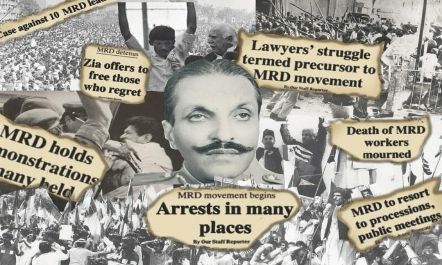
When the Movement for the Restoration of Democracy was born on 6 February 1981 to end General Zia-ul-Haq’s martial law and restore the 1973 Constitution, eleven parties stood together. But in Sindh, MRD became something else like a flood of villagers, students and women ready for jail. The reason was not only Benazir Bhutto’s Pakistan People’s Party bbut also the Rasool Bux Palijo, the cadre he built in Awami Tahreek and the women who marched with Sindhiyani Tahreek.
Convener in Chains
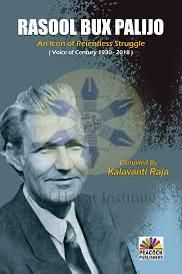 Palijo, a Supreme Court lawyer, Marxist scholar and Intellectual, founded Awami Tahreek on 5 March 1970. He remained convener of MRD, coordinating strategy between the left, nationalists and PPP forces. Zia’s regime called him a threat. Amnesty International declared him a prisoner of conscience. During MRD he spent over 6.5 years in prison, including Lahore’s notorious Kot Lakhpat Jail. In total, he spent 11 years in jail under three Marshal Law regimes.
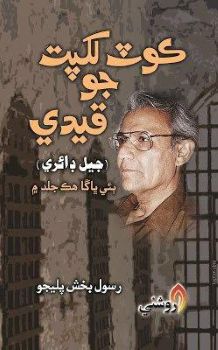
But Kot Lakhpat did not silence him. He turned it into a university. He taught Marxism, Sindh history and constitutional law to young workers. He recited poetry, led songs and told them to dance; keeping spirits alive so “jails become pleasant”. He wrote his prison diary, Kot Lakhpat Jo Qaidi, while seriously sick and denied proper treatment. From those cells emerged “a very organized, disciplined and progressive political cadre unprecedented in the history of Sindh”. Political thinkers rivalled AT “in organizational ranks, ideological indoctrination and skill in political agitation”.
Palijo’s family paid the same price. His wives, sons and family remained in jail during MRD. His stepdaughter Akhbar Baloch was also jailed for MRD activities. The state jailed the entire household to break him, yet the household became part of the movement.
Because of his “unerringly scientific approach to politics” and mastery of “facts and figures”, Sindhi parties selected him unopposed as the single speaker to present Sindh’s stance on Indus Water, Afghan refugees, Biharis, Kashmir and religious extremism. He tied martial law to Kalabagh Dam, feudalism and Punjab’s control; making MRD a fight for Sindh’s survival, not just elections.
 The Rural Army of MRD
Awami Tahreek gave MRD its “real bite”. While PPP led in cities, AT controlled the villages. By 1983, AT had “strong roots in the rural population” with a “local and ideologically motivated hardcore of leaders and activists in both male and female genders”.
 In the 1983 uprising, AT workers “toured villages and towns of Sindh and inspired the people to rise”. Millions joined boycotts, strikes and demonstrations. Zia was forced to send 45,000 troops into Sindh. 200 people were killed and up to 15,000 arrested. Jails overflowed and the regime set up tent camps for prisoners.
AT built wings for every class – Sindhi Shagard Tahreek for students, Sindhi Mazdoor Tahreek for labour, Sindhi Hari Tahreek for peasants. “Work for the rugged against the well-dressed” became the slogan.
Few names of Awami Tahreek men arrested/jailed during MRD were appeared in media; included:
- Rasool Bux Palijo – President, AT. Over 6.5 years in jail during MRD. Whipped in Badin jail after 1979 Rahooki farmers’ conference.
- Fazil Rahu – Senior AT leader, peasant organizer from Badin. Jailed repeatedly during MRD for mobilizing haris. Assassinated Jan 1987.
- Ayaz Latif Palijo – Son of Rasool Bux Palijo. Jailed as student activist during MRD.
- Hundreds of unnamed AT activists – “Hundreds of activists were arrested and subjected to corporal punishment.” Most were peasants and students from Badin, Thatta, Dadu, Larkana whose names never reached official press.
 Women Who Broke the Barriers
In 1982 Palijo formed Sindhiyani Tahreek because he knew “the strength of the female in any mass movement”. He studied Gorky’s Mother and the Bolsheviks, then gave Sindh its own. This was not a ceremonial women’s wing. He had “a different role for the female cadre”; they must lead, educate and go to jail.
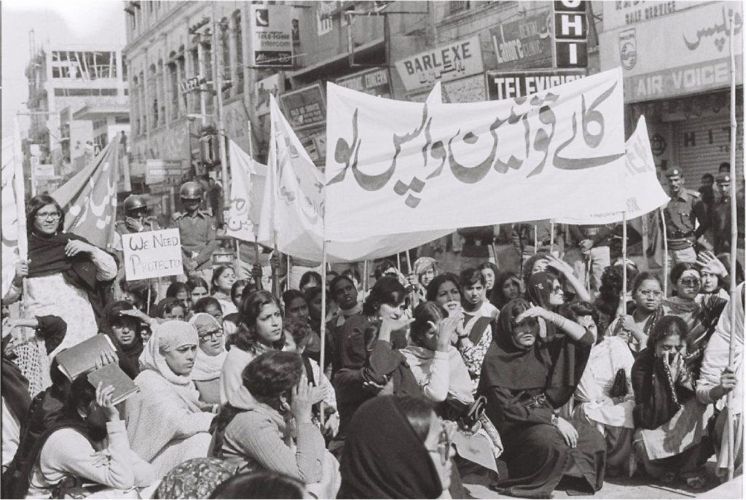
Women prepared “jail-bags” and marched to Hyderabad, Thatta, Sanghar, Larkana and Sukkur. In a society where women were told to stay home, they filled prisons. They ran study circles linking Hudood Ordinance, karo kari and lack of schooling to dictatorship. Democracy became a women’s issue. Whole families joined; sons in student wing, daughters in Sindhiyani Tahreek and parents in AT. Food at events was cooked by “members from historically marginalized communities and shared equally by all” to quit the difference of religion, caste and creed.
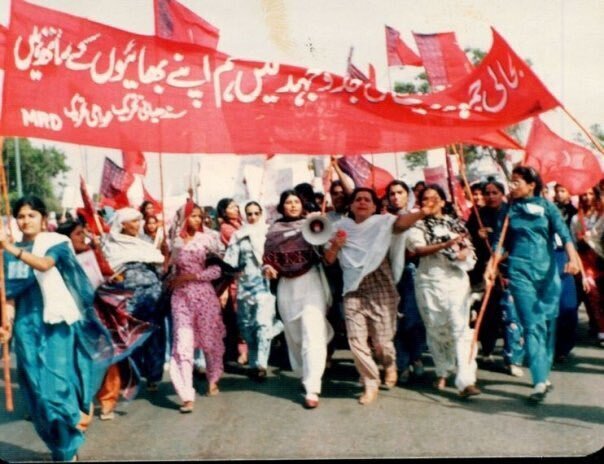
Few names of Sindhiyani Tahreek women arrested/jailed during MRD were register in media, includes:
- Hoor Palijo – Palijo’s sister, Founding organizer, lecturer from Thatta. Trained women for arrest and led them to demonstrations.
- Shahnaz Rahu – Daughter of Fazil Rahu. Visited homes of jailed comrades to keep families in the movement.
- Ghulam Fatima – Sister of Rasool Bux Palijo. Arrested during MRD protests.
- Kulsoom Palijo, Shabnam Palijo, Marvi – Schoolgirls in 6th grade who joined protests and were detained.
- Akhbar Baloch – Stepdaughter of Rasool Bux Palijo. Jailed during MRD for her activism.
- Sindhiani – Named in later police records as one of three persons taken into custody during MRD-era operations; whereabouts not known.
- Scores of rural women; Peasant women and students from Thatta, Badin, Dadu arrested in 1983 wave but remain unnamed in official records.
What They Forced Together
MRD in Sindh was “particularly strong in rural Sindh” because AT provided the farmers and Sindhiyani provided the women. When Zia needed 3 army divisions and helicopters to crush it, he was not fighting PPP rallies in Karachi. He was fighting Palijo’s jail-trained cadre, Hoor Palijo’s schoolgirls with jail-bags, and an entire family; wives, sons and stepdaughter Akhbar Baloch that refused to bend.
The cost was brutal: 1,999 arrested, 189 killed, 126 injured in early weeks alone. But the result was historic. MRD kept pressure on Zia until he held non-party elections in 1985 and civilian rule returned in 1986.
 The Idea That Survives
Zia-ul-Haq used whips, jails and assassins to silence Sindh. He failed because Rasool Bux Palijo turned every whip into a lesson, every cell into a classroom and every woman into a rebel. Awami Tahreek gave MRD its fists. Sindhiyani Tahreek gave it its voice. And Palijo, sick and chained in Kot Lakhpat, gave it a mind that could not be conquered.
He died on 7 June 2018, but as his workers say: “You can kill a man but not an idea.” In Sindh, that idea still walks in the fields, in the courts and in the women who refuse to go home.
References
- Wikipedia. “Rasool Bux Palijo.” Notes 11 years jail, prisoner of conscience, 6.5+ years during MRD, founder of AT.
- “Tribute To Rasool Bux Palijo.” Scribd. AT gave “real bite” to MRD; 45,000 troops sent; 15,000 arrested; Palijo created disciplined cadre.
- “RASOOL BUX PALIJO: An Icon of Relentless Struggle.” Internet Archive. Details AT rural roots, Sindhiani Tehrik formation 1982, Palijo as unopposed speaker, hundreds of activists arrested and whipped.
- “Movement for the Restoration of Democracy.” Wikipedia. MRD launched 6 Feb 1981; 1999 arrested/189 killed early; strongest in rural Sindh.
- Mugheri & Fatima. “Rural Women’s Struggle for Empowerment: A Case Study of Sindhiani Tehreek.” Pakistan Research Journal of Social Sciences. Confirms Sindhiani formed 1982 under Palijo; organized women of all ages for protests.
Read: Sindhiyani Tehreek: Voice of the Voiceless
______________
Kalavanti Raja, based in Gambat (Khairpur Mirs) is a researcher on Sindh’s political movements and gender history. She can be reached at kalavanti.raja@gmail.com