By Nazarul Islam
The U.S. Supreme Court’s ruling in United States v. Thind (1923) impacted all South Asians in the United States and led to the denaturalization of over fifty South Asian Americans who had already become naturalized citizens. One of them was Vaishno Das Bagai—and though Bagai’s painful story has been told before, records I recently discovered in the National Archives further reveal the deliberate and organized campaign that the U.S. government waged against South Asian Americans after Thind. As we mark the 100th anniversary of the decision, there are lessons we can draw from this history to reckon with racism and xenophobia today.
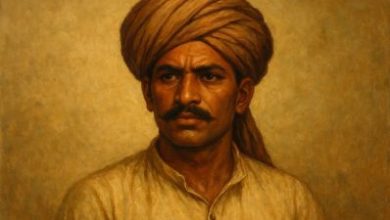
Born in Peshawar in 1891, Bagai was an early supporter of India’s freedom and independence from the British and was already working with the Ghadar Party in San Francisco when he decided to settle in the United States following his father’s death. He had inherited a good deal of land which could have cemented his family’s livelihood in Peshawar for the next generation. Instead, he used a portion of his inheritance to start a new life for himself and his family in the United States.

Bagai arrived in San Francisco on September 6, 1915 with his wife Kala and their three young sons, Brij, Madan, and Ram. He was eager to continue the cause of Indian independence and to allow his children to grow up in the United States. As his granddaughter Rani recounted some years later, Bagai “relished his new life in America.” He owned a home, started a business called Bagai’s Bazaar, and continued his work with the Ghadar Party.
And just over two weeks after his arrival, he declared his intention to become a naturalized citizen of the United States. In his application he declared that he would “renounce forever all allegiance and fidelity” to the King of Great Britain and Ireland, become a citizen of the United States of America, and permanently reside in the U.S. He formally filed his naturalization papers five years later and secured the signatures of two witnesses.
That South Asian Americans were able to successfully naturalize was an anomaly. Other Asian immigrants had already been barred from naturalized citizenship on the grounds that they were not “white” as required by the nation’s naturalization laws dating back to 1790. It would not be until the Supreme Court ruled in the Thind decision, on February 19, 1923, that South Asians were not considered “white.”
The Thind decision dealt a devastating blow to all South Asians in the United States, especially those who had become naturalized citizens. It disrupted dreams. It put already vulnerable people at further risk of discrimination. And it further codified anti-Asian racism.
For Bagai, it proved to be too much. He had staked so much in America. He had tried to do everything that immigrants were supposed to do. He wore American suits, spoke English fluently, and adopted Western manners. As he later explained, the family had “all made ourselves as much Americanized as possible.”
But after he was denaturalized, everything changed. Without U.S. citizenship, Bagai became subjected to California’s alien land laws which barred “aliens ineligible for citizenship,” i.e. Asian immigrants, from owning land. He was forced to give up his property, including Bagai’s Bazaar. When he tried to visit relatives in India in 1928, he was refused a U.S. passport. Struggling with this injustice and feeling trapped and betrayed, in 1928 Vaishno Das died by suicide. In a letter addressed to the San Francisco Examiner, he explained that he was taking his life in protest.
I end my story with a famous quote written by America’s great scholar and a jurist.
Is life worth living in a gilded cage? Obstacles this way, blockades that way, and the bridges burnt behind.
__________________
 The Bengal-born writer Nazarul Islam is a senior educationist based in USA. He writes for Sindh Courier and the newspapers of Bangladesh, India and America. He is author of a recently published book ‘Chasing Hope’ – a compilation of his articles.