To gracefully enjoy the life you live does not mean reckless pleasure or careless living
By Abdullah Usman Morai | Sweden
There will always be a last time.
Quiet, unannounced, and ordinary looking, yet final.
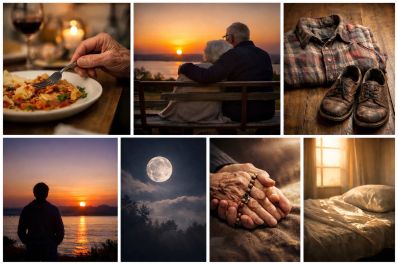
The last time you will eat your favorite food.
The last sip of a drink that once felt like comfort.
The last season when mangoes taste sweeter than memories, when winter tea warms not just the hands but the heart.
The last shirt you will ever wear, hanging casually in a cupboard, unaware of its destiny.
Perhaps we have already bought the clothes in which we will die and folded them neatly, planning a future that will never arrive.
The tragedy is not that the last time exists.
The tragedy is that we seldom recognize it.
We live as if repetition is guaranteed. As if life comes with an unlimited refill. We postpone joy, delay kindness, reschedule love, and assume tomorrow will always be available, obediently waiting for us like an unpaid servant. But time is not loyal. It does not warn. It simply leaves.
One day, without ceremony, you will pray for the last time.
Not knowing it is the last.
Your lips will move through familiar words, your hands raised perhaps half-heartedly, your mind distracted because you believe you will pray again tomorrow. But that tomorrow may never come.
One day, you will meet your favorite people for the last time.
 Your mother. Your father. Siblings. A friend who knows your silences better than your words. A relative whose presence always felt like home. You will part ways casually, saying, “We’ll talk soon” or “See you next time.” You will not hug longer. You will not say everything you should have said. Because you believe there will be another meeting.
And perhaps there will not be.
Some last times have already happened in our lives.
We just didn’t know it then.
The last time you sat with a grandparent.
The last call from a friend who is no longer alive.
The last childhood evening when you played outside, unaware that innocence had an expiry date.
The last time someone loved you purely, without conditions, before life taught them caution.
We keep archives of photographs, but forget to archive moments. We save clothes for special occasions but treat life itself as something that can wait.
Even nature grants us last times.
There will be a last sunrise you will ever see, ordinary in color, perhaps slightly cloudy, maybe annoyingly bright if you’re in a hurry. There will be a last moon you will look at without realizing it is your farewell. A last rain you will complain about. Last summer you will curse for its heat. Last winter, you wished it would end sooner.
Weather changes; we do not notice.
Life changes; we pretend it won’t.
We talk endlessly about success, achievement, and progress, yet rarely about endings. We behave as if death is an administrative error, something that happens to others, preferably later, preferably quietly, preferably far away. But death is not the opposite of life; it is part of life. The last page does not cancel the book; it completes it.
And when the last times begin to approach, when the body slows down, when memory hesitates, when energy negotiates, we suddenly ask questions we avoided for decades.
What was important?
What was noise?
What truly mattered, and what was merely urgency disguised as purpose?
Was it the long working hours that stole evenings from family?
Was it the endless competition, the rat race where everyone ran but few knew why?
Was it the ego battles, the unnecessary grudges, the pride that outlived relationships?
Was it the accumulation of things that will be divided, sold, or discarded within weeks of our departure?
At the end or near the end, life conducts a ruthless audit.
Titles lose their shine.
Bank balances lose their voice.
Social status forgets your name.
What remains are moments.
How did you make people feel?
Whether you were present or perpetually busy.
Whether you loved generously or cautiously.
Whether you lived honestly or merely survived efficiently.
Grace is not something you perform at the end; it is something you practice throughout life.
To gracefully enjoy the life you live does not mean reckless pleasure or careless living. It means awareness. It means eating your favorite food sometimes without guilt. Wearing your favorite clothes without waiting for a special day. Calling people while they are alive, not decorating graves after they are gone. Praying with presence, not habit. Listening without checking the time.
Graceful living means understanding that life is not a rehearsal. There is no dress rehearsal for kindness. No retake for apologies never made. No extension for love postponed.
Graceful departure, too, is rooted in how we lived. When the end approaches, those who lived truthfully make peace more easily. They do not panic at the closing door because they fully entered the room when it was open.
Perhaps the purpose of thinking about the last time is not sadness, but clarity.
When you know something will end, you hold it differently.
You taste food more slowly.
You listen more deeply.
You forgive faster.
You argue less.
You choose presence over performance.
Life, after all, is not measured by how long it lasts, but by how deeply it was lived.
So before the last time arrives, before the last prayer, the last meeting, the last sunrise, pause.
Ask yourself:
Am I living, or merely racing?
Am I collecting days, or experiencing them?
If today were the last time, would I be at peace?
Because there will always be a last time.
And when it comes, it will not ask for permission.
The wisdom lies in living today as if it matters because one day, it will be remembered as the last.
Read: Navigating the Tides of Uncertainty
________________________
 Abdullah Soomro, penname Abdullah Usman Morai, hailing from Moro town of Sindh, province of Pakistan, is based in Stockholm Sweden. Currently he is working as Groundwater Engineer in Stockholm Sweden. He did BE (Agriculture) from Sindh Agriculture University Tando Jam and MSc water systems technology from KTH Stockholm Sweden as well as MSc Management from Stockholm University. Beside this he also did masters in journalism and economics from Shah Abdul Latif University Khairpur Mirs, Sindh. He is author of a travelogue book named ‘Musafatoon’. His second book is in process. He writes articles from time to time. A frequent traveler, he also does podcast on YouTube with channel name: VASJE Podcast.