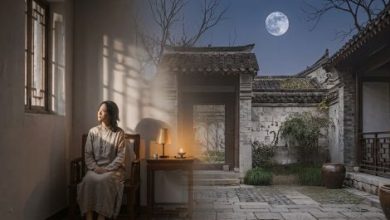
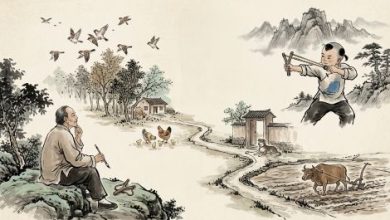
The poetry that is detached from society may still glitter, but it does not illuminate. It loses its depth, its relevance, and ultimately, its truth.
By Noor Muhammad Marri Advocate | Islamabad
To confine poetry merely to the description of human physical beauty is not only a limitation of art—it is, in my view, an injustice to history itself. Poetry, in its true essence, is far greater than ornamentation of words or admiration of appearance. It is a living document of human experience, shaped by society, circumstance, and the deep currents of collective life.
Long before formal history came into existence, poetry served as the primary medium through which human beings preserved their past. History, as a written discipline, arrived much later and even then remained selective—often limited to kings, wars, and political events. Poetry, however, preserved far more. It recorded not only events but emotions, not only rulers but ordinary people, not only victories but sufferings. It captured the lived reality of civilizations.
The earliest “historian,” Homer, did not write history in the modern sense. His works, the Iliad and the Odyssey, were based on oral traditions. Yet through poetic expression, he preserved the memory of war, heroism, social values, and human struggle. His poetry became history, even before history learned how to write itself.
Similarly, in the Arabian Peninsula before Islam, poetry was the central institution of cultural life. Great gatherings such as Suq Ukaz were not merely markets but intellectual assemblies where poets recited their verses. These poets were, in a sense, historians of their time. They recorded tribal conflicts, alliances, and journeys of trade caravans, droughts, prosperity, and even the moral code of society. In a world without written records, poetry was memory, identity, and history combined.
With the advent of Islam, language took on a new depth and power. The Prophet Muhammad was at times called a poet by his opponents, because the Quran carried a rhythm, force, and beauty that deeply resonated with the poetic culture of Arabia. Yet it distinguished itself by its message and structure, elevating language beyond conventional poetry while still engaging the same sensibilities.
In other traditions as well, poetry formed the foundation of religious and philosophical thought. The Rigveda is composed in poetic hymns that explore existence, nature, and divinity. Likewise, large parts of the Bible are written in poetic form, emphasizing rhythm, metaphor, and emotional depth. This suggests that early human understanding—whether spiritual or social—found its most natural expression in poetry.
Yet despite this rich legacy, there has always been a tendency to reduce poetry to mere beauty—to the admiration of the beloved, the description of physical charm, or the musical arrangement of words. Such a limitation, I would argue, strips poetry of its historical and social significance.
A poet who isolates himself from society may still produce verses, but such verses lack historical weight and moral substance. Their context becomes hollow, their meaning detached. Poetry does not emerge in a vacuum; it is born within the tensions, struggles, and transformations of society. Every authentic poem carries within it the imprint of its time—its conflicts, its injustices, its aspirations.
When poetry loses its connection with society, it begins to drift toward artificiality. It may still charm through rhythm and language, but it becomes what can be described as “manufactured poetry”—a product of verbal magic rather than lived experience. Such poetry may entertain for a moment, yet it rarely endures. It does not possess the depth required to speak across generations.
History itself offers quiet but powerful evidence. The epics attributed to Homer are not merely tales of heroes; they are reflections of war, honor, fate, and human struggle. Likewise, the verses of Faiz Ahmed Faiz seem to breathe because they are rooted in lived realities—resistance, injustice, longing, and hope.
Even in the early Islamic period, poetry remained inseparable from social life. The companions of Muhammad, such as Hassan ibn Thabit, used poetry not merely for praise but as a response to real circumstances—defending identity, belief, and community.
In the South Asian tradition, Shah Abdul Latif Bhittai expressed love, yet his love was never confined to physical beauty. It carried the pain of separation, the voice of the common people, and a deeper spiritual longing. His characters feel real because they are drawn from life, not invented in isolation.
The idea that poetry should only celebrate beauty reduces it to decoration. True poetry does not escape reality; rather, it engages with it—sometimes gently, sometimes forcefully. It speaks of war and peace, oppression and resistance, drought and prosperity, faith and doubt. It reflects the movement of life in its fullness.
Thought itself, like revelation, does not arise in emptiness. It emerges from context—from the conditions in which a person lives, observes, and reflects. A poet absorbs the environment, consciously or unconsciously, and then transforms it into expression. If society and circumstance are absent from poetry, what remains is not natural imagination, but something constructed—words arranged with skill, yet lacking inner truth.
There is, perhaps, a subtle but important distinction here. Natural imagination grows out of experience; it reshapes reality into art. Manufactured imagination, on the other hand, escapes reality and relies on the charm of language alone. One creates literature that lives; the other produces verses that merely exist.
A poet, therefore, cannot afford complete alienation from society. He may withdraw for reflection, but not for disconnection. His sensitivity must remain tied to the pulse of his people—their struggles, their silences, their unspoken hopes.
In this sense, poetry that is detached from society may still glitter, but it does not illuminate. It loses its depth, its relevance, and ultimately, its truth. True poetry, grounded in human experience, becomes both art and memory—a voice that does not fade easily, because it carries within it the life from which it was born.
Read: When Poets Turn Away from Their People
___________________
 Noor Muhammad Marri is an Advocate & Mediator, based in Islamabad