

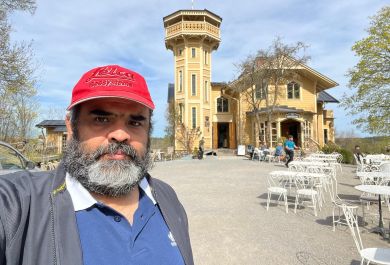
Fika, Coffee & Calm Waters at Konditori Lyran by Lake Mälaren
- Stockholm, in particular, offers a rich tapestry of traditional bakeries and konditorier, classic Swedish cafés known for their exquisite cakes, pastries, and sweets.
By Abdullah Usman Morai | Sweden
In a city like Stockholm, where modern life moves with quiet efficiency and understated elegance, there exists a parallel rhythm, one that invites you to slow down, sit back, and savor the moment. That rhythm is perhaps best captured in the Swedish tradition of fika. More than just a coffee break, fika is a cultural institution, a deliberate pause in the day to enjoy coffee, teas, drinks, pastries, and, most importantly, conversation. It is not rushed, not transactional, but deeply human.
 Yet, even for those who live in Stockholm and are accustomed to its café culture, there is something uniquely rewarding about stepping outside routine and rediscovering the city as if you were a visitor. The idea of becoming a tourist in your own city carries a quiet charm. It asks you to replace familiarity with curiosity, to observe rather than simply pass through, and to appreciate what you might otherwise overlook in the busyness of everyday life.
Stockholm, in particular, offers a rich tapestry of traditional bakeries and konditorier, classic Swedish cafés known for their exquisite cakes, pastries, and sweets. The culture of baking here is not confined to professional kitchens; it lives equally in homes, where families carry forward recipes and rituals through generations. From delicate princess cakes to cinnamon buns fresh out of the oven, the Swedish relationship with baked goods is both cultural and deeply personal. For someone like me, this becomes not just an indulgence but an exploration, an ongoing journey through flavors, textures, and spaces.
 This time that journey led us to Konditori Lyran, a place that feels less like a café and more like a gentle step back in time. Accompanied by Pernilla and Gun-Britt, I drove out on a short trip that took no more than twenty minutes from where we live. Despite the short distance, the anticipation made it feel like a small getaway.
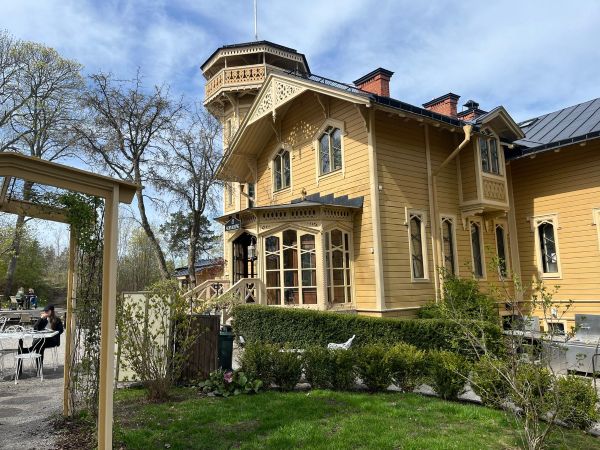
Konditori Lyran is housed in a charming, historic wooden villa painted in a warm, inviting yellow, a color that seems to echo the sunlight it often basks in. Built in the early 19th century, the building carries with it a sense of history, its architecture whispering stories of a different era. Inside, guests are greeted with a delightful selection of traditional Swedish baked goods, cakes layered with cream and berries, buttery pastries, cookies, tea, sandwiches, and, of course, coffee brewed to perfection. Everything about the place feels authentic, unpretentious, and lovingly preserved.
The café is beautifully situated along the shores of Lake Mälaren, one of Sweden’s largest and most significant lakes. Mälaren is not just a body of water; it is a defining feature of the region, stretching across several provinces and dotted with islands that seem to float like quiet secrets waiting to be discovered. Its calm waters reflect the sky in ever-changing hues, and standing by its banks, one feels a sense of openness that contrasts beautifully with the compactness of city life.
 As expected, parking near Lyran is limited and not free, and given its popularity, it is wise to arrive early. We were fortunate to find a spot without much difficulty, perhaps because we had timed our visit well. The weather that day was an indecisive blend of chill and warmth. In the shade, there was still a lingering coolness from the long Scandinavian winter, but in the sunlight, there was a gentle promise of spring.
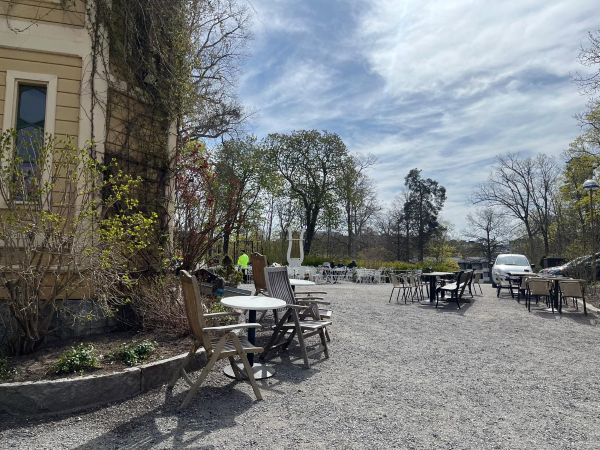
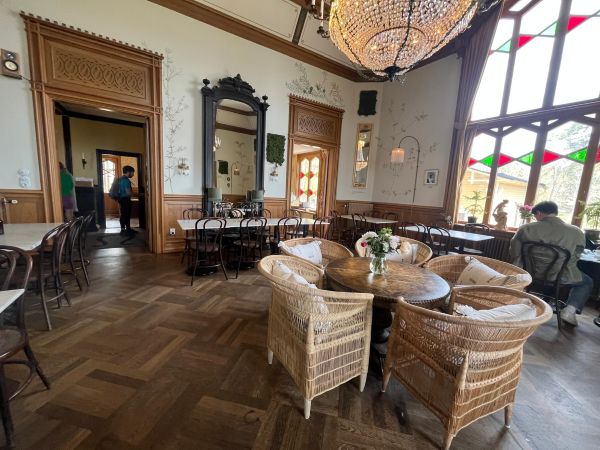
We chose a table that opened toward the lake, allowing us to fully absorb the view. The seating arrangements were generous, both indoors and outdoors, accommodating a wide range of visitors. Inside, the café offered a cozy refuge for those who preferred warmth and quiet, perfect for reading a book or engaging in soft conversation. Outside, life unfolded more vividly. There were couples sharing laughter, friends catching up, and families with young children, and individuals simply enjoying their own company. It was a small but complete cross-section of humanity.
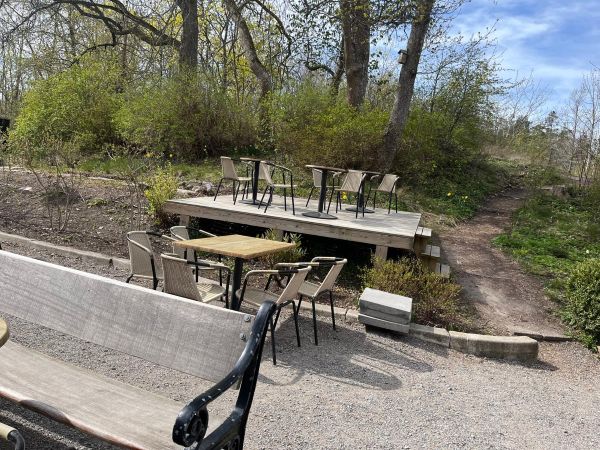 Nature, too, seemed to be in quiet celebration. After months of winter’s monochrome, the trees had begun to reclaim their green, leaves cautiously emerging as if testing the air. The ground outside the café was paved with gravel, adding to the rustic charm of the setting, with patches of grass around and small paths weaving gently in between. Beyond the immediate shoreline, the lake stretched outward, revealing one island, then another further in the distance, each adding depth to the view.
The details of the place were as captivating as the larger picture. A wooden wheel, likely once part of a horse cart, stood as a decorative relic of the past. Nearby, an old sewing machine added another layer of nostalgic character. These elements were not just decorations; they were fragments of history, quietly enriching the atmosphere. The yellow color of the building was beautifully complemented by yellow flowers scattered around, creating a visual harmony that felt both intentional and effortless.
The staff at Konditori Lyran added to the experience with their warmth and friendliness. They were attentive without being intrusive, helpful without being overwhelming, striking that delicate balance that defines good hospitality.
As we sat there, sipping coffee, tea, and sharing stories, it became clear that the experience was more than just visiting a café. It was about rediscovering a sense of wonder in the familiar. It was about allowing you to pause and see your surroundings with fresh eyes.
By the time we left, there was a quiet sense of satisfaction that we had not traveled far yet had journeyed meaningfully. Exploring your own city as a tourist may seem like a simple idea, but it carries a profound lesson: that beauty, culture, and experience are often closer than we think. All it takes is a willingness to look again.
And sometimes, all it takes is a cup of coffee and tea by the lake.
Read: The Silent Struggle of Human Life
____________________
Abdullah Soomro, penname Abdullah Usman Morai, hailing from Moro town of Sindh, province of Pakistan, is based in Stockholm Sweden. Currently he is working as Groundwater Engineer in Stockholm Sweden. He did BE (Agriculture) from Sindh Agriculture University Tando Jam and MSc water systems technology from KTH Stockholm Sweden as well as MSc Management from Stockholm University. Beside this he also did masters in journalism and economics from Shah Abdul Latif University Khairpur Mirs, Sindh. He is author of a travelogue book named ‘Musafatoon’. His second book is in process. He writes articles from time to time. A frequent traveler, he also does podcast on YouTube with channel name: VASJE Podcast.


Beautiful ❤ attractive article 😍
I have served with Swedish Armed forces in Liberia 🇱🇷 west Africa 🌍….they are good habits people 😀
I often called them swetish officers….
Still have God communication 🙏
Thanks 😊 to writer Abdullah Usman Morai
Thanks, nice to know about this, and it seems you had a very good time with them. They are nice people for sure or Swetish people. 🙂