

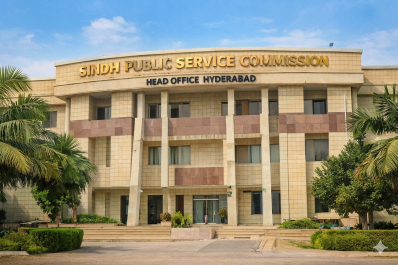
Sindh Public Service Commission stands at a critical crossroads. If it continues to be a “graveyard of merit,” Sindh’s bureaucracy will be filled with loyalists rather than public servants.
Junaid Sharif
The progress of any civilization, nation, or state hinges upon the strength of its institutions. When institutions operate on the principles of merit and transparency, the most talented segments of society rise to take the helm of governance. The Sindh Public Service Commission (SPSC) is the highest constitutional body in Sindh, tasked with selecting the “best of the best” for the province’s administrative framework.
Regrettably, over the past few decades, this institution has strayed from its core mission, becoming a breeding ground for controversy. The youth of Sindh, who invest their blood, sweat, and hard-earned resources into their education, are now mired in profound despair. This situation perfectly mirrors the Sindhi proverb: “When the fence starts devouring the field, who then shall be the protector?”
The SPSC was established to provide a level playing field where the children of the poor and the wealthy alike could attain high-ranking positions based solely on competence. However, a look at the last twenty years reveals a chronic cycle of litigation, illegal appointments of members, and systemic corruption. The Sindh High Court and the Supreme Court have repeatedly suspended the commission’s panels, exposing deep-rooted structural flaws. When an institution’s credibility vanishes, those who believe in the sanctity of hard work are left in a state of mental agony.
The primary cause of the SPSC’s decline is blatant political interference. Commission members are often appointed based on their loyalty to the ruling elite rather than their integrity. When the “referee” is a partisan, a merit-based decision becomes an impossibility. As Advocate Sajjad Chandio, a legal crusader for commission reforms, puts it: “The autonomy of the Commission exists only on paper. Until an independent and transparent mechanism for appointing members is established, the dream of merit will remain a mirage.” This state of affairs is best described by the adage: “A blind man wanders into a wilderness where there is neither a guide nor a guardian.”
Another tragedy is the “administrative inertia” of the SPSC. It often takes over two years to complete a single Competitive Combined Examination (CCE) cycle. This deliberate delay—from the initial advertisement to the final interview—shatters the morale of candidates. Many brilliant minds become “over-age” during this period. This is not merely incompetence; it appears to be a calculated maneuver to adjust “preferred” candidates over time. One frustrated candidate remarked: “We remain buried in books while our jobs are being auctioned outside.” It is a case of maximum effort yielding zero results.
In recent years, media reports have provided evidence of paper leaks via WhatsApp groups and the manipulation of interview scores to favor influential individuals. When incompetent people are recruited through political pressure or the misuse of the quota system, the entire administrative machinery of Sindh becomes paralyzed. We see the consequences today: crumbling schools, dysfunctional hospitals, and decaying departments. As the wise say: “As the intention, so the reward.” With tainted intentions, the only outcome is ruin.
While the quota system was designed to uplift underprivileged areas, it is frequently used to suppress merit. To reclaim its integrity, the SPSC must embrace modern technology:
- a) Shifting to computer-based testing to eliminate paper leaks;
- b) Video-documenting interviews to ensure accountability and provide evidence in case of disputes;
- c) Legally mandating that results be declared within 90 days of an exam.
When the son of a poor man is denied his right due to a lack of merit, it sows the seeds of rebellion and hatred. The rising rates of suicide and drug addiction among Sindh’s youth are symptoms of this systemic injustice. We must remember: “Lies have no legs to stand on”—this injustice cannot last forever.
Civil society, intellectuals, and students must form a “Watchdog Group” to monitor the commission. Furthermore, the judiciary should move beyond stay orders and establish a high-level merit committee to scrutinize the appointment of commission members. Until the policy of “setting the wolf to guard the sheep” is abolished, no real change will occur.
Suffice it to say, the Sindh Public Service Commission stands at a critical crossroads. If it continues to be a “graveyard of merit,” Sindh’s bureaucracy will be filled with loyalists rather than public servants. The survival of the province depends on choosing competence over “recommendations” (Sifarish). As the saying goes, “Truth stands tall and dances”—if we reform our institutions with honesty today, the Sindh of tomorrow will be bright. Otherwise, history will remember us as those who buried their own future with their own hands.
Read: Harassment at the Educational Institutes
___________________
Junaid Sharif, based in Hyderabad, has dome Masters in English Literature. He writes articles for English and Sindhi dailies. Currently, he is working as a subeditor and reporter at a Sindhi newspaper in Hyderabad. Email: junaidsharif2016@gmail.com.


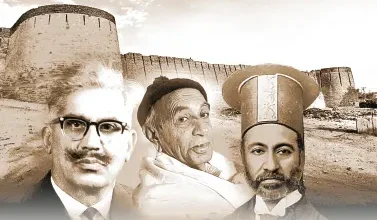


Oh my God
If I asked the present Chairman of Commission who was first sindhi directly commissioned Bombay PCS cadre as Deputy Collector
I’m sure they will not answer 🙄….
Mr Ghazanfar Ali Isani IPS Indian political services I ICS 1945 …..mentioned that when sindh was separated from Bombay presidency Mr Khuhrro moved a plan to attract sindhi officers going to Bombay services……he developed a double salary to get the sons of soil to serve sindh.
I do visit my family Graves behind this building and have same apprehension of merit.