The oral and superstitious heritage of Arab societies should not be dismissed or eliminated. Instead, it must be critically studied, analytically reinterpreted, and creatively transformed into cultural and artistic material.
Souad Khalil | Libya
Superstitions emerged in the earliest and darkest stages of human history, and no society throughout time has ever been completely free from them. They cannot be understood as marginal or accidental phenomena within cultural systems; rather, they represent a deeply rooted component of human civilization itself. Superstition belongs to the broader field of folklore and constitutes an essential layer of collective memory shared among peoples. When examining ancient civilizations such as the Sumerian, Pharaonic, Persian, Roman, Turkish, and Byzantine cultures, it becomes evident that cultural transmission was never linear or isolated. Instead, civilizations continuously influenced one another through exchange, conflict, and adaptation.
From this perspective, the human being appears not as a purely rational entity detached from history, but as a layered structure of accumulated cultural inheritances. These inheritances exist not only in societies often described as “traditional” or “non-modern,” but equally within advanced technological civilizations. Even when modern societies appear to have transcended superstition in their practical daily life, they continue to preserve symbolic, psychological, and cultural traces of it within their collective imagination.
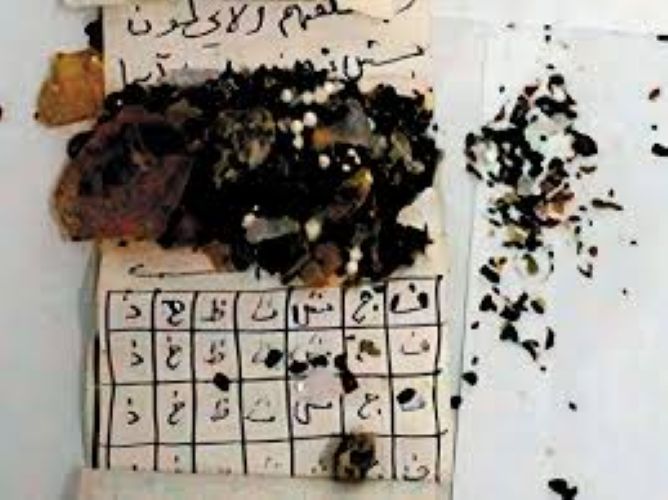 Superstition, when analyzed from an anthropological and epistemological standpoint, represents an early and foundational system of knowledge. It once occupied the central position in human attempts to interpret the world, long before the development of scientific reasoning. Within such a framework, natural phenomena were not explained through causal laws but through symbolic, spiritual, or magical interpretations. This limitation in early human cognition allowed superstition to function as a dominant explanatory system governing perceptions of time, nature, illness, death, and destiny.
In such societies, the figure of the magician or spiritual practitioner was not merely marginal but socially central. He functioned as an intermediary between visible and invisible worlds, between the material and the metaphysical. This role granted him significant authority over collective consciousness, shaping how communities understood reality and responded to uncertainty. In many historical contexts, the magician was regarded not as a deceiver but as a knowledge-holder, someone capable of accessing hidden truths inaccessible to ordinary perception.
These systems of belief did not arise spontaneously or in isolation. Rather, they were produced through long processes of oral transmission and cultural accumulation. In societies lacking formal media or written entertainment systems, oral storytelling became the primary medium of communication. These narratives carried religious meanings, moral instruction, emotional expression, and social memory. As a result, storytelling functioned as a powerful mechanism for reinforcing collective identity and maintaining cultural continuity across generations.
Over time, these oral narratives became embedded within collective memory structures, forming a continuous chain of cultural transmission between ancestors and descendants. The past therefore does not disappear; it persists in transformed ways within the present, especially through repeated storytelling practices. As long as superstition continues to be transmitted, it remains an active element within cultural identity, rather than a static relic of the past.
Folk tales, in this context, provide access to layers of human experience that precede written history. They represent not only early forms of narrative art but also early manifestations of symbolic thinking. Within them, we encounter a world in which belief, imagination, truth, and sacred meaning are deeply interconnected. However, it is important to avoid generalizing all folk narratives under a single interpretive framework. Some tales preserve clearer traces of ancient cognitive structures, while others have been reshaped through cultural and historical transformation.
Arab culture, in particular, preserves a vast and complex superstitious heritage documented across major textual traditions, including pre-Islamic literature, historical chronicles, religious writings, and literary works. Yet contemporary Arab intellectual discourse still reflects significant gaps in addressing this heritage analytically. One of the most important of these gaps lies in the absence of systematic research into the structure of the collective Arab mind and the role superstition plays in shaping perception, behavior, and social interpretation.
A fully rational and balanced epistemological system cannot be established as long as superstitious residues continue to interfere with the interpretation of reality. In many cases, superstition becomes intertwined with scientific knowledge, producing forms of hybrid thinking in which rational explanation and symbolic belief coexist without clear separation. This creates instability at the level of cognition and social interpretation.
In this regard, researcher Ayyash Yahyaoui, in his study on magic and popular superstition, emphasizes that the real danger of superstition lies in its deep embedding within the collective unconscious. Because of this embeddedness, it becomes extremely difficult for individuals to recognize it critically or to analyze its mechanisms. Superstition thus operates not at the surface of awareness, but at deeper psychological and cultural levels that shape perception itself.
From this perspective, it becomes understandable that one of the major obstacles to social, political, and economic development in the postcolonial Arab world is the persistence of superstitious structures within modern value systems. These structures have limited the emergence of a fully balanced scientific mentality and have contributed to a persistent tension between modernity as an external form and tradition as an internal force. Even with the presence of modern technologies and global communication systems, many societies remain affected by deep cognitive and symbolic gaps that continue to be filled by superstition. These appear clearly in collective responses to time, labor, destiny, and political uncertainty.
The Impact of Superstition in the Formation of Women
In academic research, particularly within social sciences and cultural studies, the study of superstition and its role in shaping social structures remains relatively limited. This limitation is evident except in the pioneering works of scholars such as Dr. Mouza Ghobash and Dr. Hind Al Qasimi. It is also noticeable that much of the scholarly production by male researchers has tended to focus on literary, artistic, and theatrical fields, while neglecting the deeper epistemological analysis of belief systems embedded within society.
Dr. Mouza Ghobash, in her studies, has examined superstition as a formative element in shaping women’s social identity and positioning. She critically analyzes a range of traditional practices associated with infertility and women’s health, many of which are rooted in symbolic and ritualistic belief systems rather than medical understanding. These include practices such as drinking water from newly dug wells, crossing bodies of water as a form of destiny alteration, sitting on objects associated with childbirth, walking over graves multiple times, repeatedly changing the orientation of the marital bed, or engaging in ritual cleansing practices such as bathing with water used for washing the dead, as well as participating in “zar” ceremonies intended for spiritual healing or exorcism.
Similarly, Dr. Hind Al Qasimi supports this analytical framework, emphasizing that the social isolation imposed on women historically contributed to the formation of a distinct cultural sphere. Within this sphere, superstition, magic, and folk medicine became dominant interpretive systems for understanding illness, infertility, and social distress. Women, in this context, often developed alternative coping mechanisms grounded in traditional belief systems, which served both psychological and social functions.
Empirical data further indicates that a large percentage of women believe in the existence of the evil eye and jinn. Most respondents identify Quranic recitation as the primary form of protection, followed by incense, traditional remedies, and consultation with folk healers. These findings reflect the persistence of symbolic belief systems within everyday social practices.
 Superstition as Narrative and Artistic Structure
Researcher Khalil Ahmad Khalil argues that myth and science should not necessarily be viewed as mutually exclusive systems. Instead, they can coexist within the same cultural framework. In many Arab intellectual contexts, however, scientific discourse has historically followed mythological structures rather than replacing them entirely, resulting in a complex overlap between rational explanation and symbolic thinking.
From a literary perspective, writer Ali Abu Al-Rish highlights the importance of superstition as a narrative resource. According to his view, superstition enriches literary production by providing symbolic depth, imaginative expansion, and cultural resonance. Mythical figures such as “Umm Al-Duways” and “Baba Darya” function not merely as folkloric remnants, but as active symbolic structures that shape narrative imagination and artistic creation.
Although superstition is often perceived as a remnant of pre-modern thought, it acquires a significant aesthetic and structural role when consciously integrated into artistic production. Literature, particularly the novel, does not emerge from an absolute void; rather, it is continuously shaped by cultural memory, collective imagination, and inherited symbolic systems.
The oral and superstitious heritage of Arab societies should not be dismissed or eliminated. Instead, it must be critically studied, analytically reinterpreted, and creatively transformed into cultural and artistic material. The objective is not the eradication of superstition, but its intellectual transformation into a productive element within contemporary cultural production, ensuring that collective memory remains active while being critically restructured.
Read: Rise and Fall of Modernity in Art
__________________
 Souad Khalil, hailing from Benghazi Libya, is a writer, poet, and translator. She has been writing on culture, literature and other general topics.