


We remain functionally alive, but existentially absent. We keep moving through life as though it were already understood, already exhausted, already known.
By: Raphic Burdo
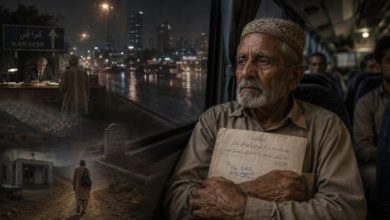
We are not short of time. We are short of presence. Modern life does not always fail through chaos or crisis; more often, it fails through continuity. Days pass in orderly succession, responsibilities are fulfilled, calendars are managed, and yet something essential quietly recedes from awareness. We remain functionally alive, but existentially absent. We keep moving through life as though it were already understood, already exhausted, already known. This is the subtle tragedy of mindless living: not that we do nothing, but that we do everything without fully ‘being’ there.
Here, I would like to emphasize that in a world increasingly governed by speed, repetition, and quiet distraction, the most profound crisis is not technological or political but existential. We are alive in the biological sense, yet often absent in the experiential one. Days pass in habitual cycles, as though time were infinite and attention renewable. Beneath this condition lies a silent assumption: that there will always be more time to reflect, to love, to become.
It is precisely this illusion that mindful traditions, both ancient and modern, seek to disrupt. Against this drift stands a different injunction, ancient and severe in its beauty. The Greek poet Pindar speaks not of survival, but of intensity:
“O my soul, do not aspire to immortal life, but exhaust the limits of the possible.”
To live, in this sense, is not to extend time, but to deepen it. Not to preserve existence, but to fully enter it. It is here that philosophy, psychology, and mysticism converge: in the shared insistence that life is not to be prolonged in abstraction, but awakened in experience. This is not a rejection of life’s continuity, but a radical reorientation of how it is to be lived. Immortality is displaced as an ideal; intensity of presence becomes the aim. Life is not to be stretched endlessly in time, but deepened fully within finitude. Modern life, however, is structured to evade this confrontation. We postpone meaning, defer difficult decisions, and inhabit routines that require function but not awareness. This is what may be called mindless living. It is not ignorance, but, it is unexamined continuity.
The Danish philosopher Søren Kierkegaard diagnosed this condition as ‘despair’: a state in which the self fails to become itself. One may appear socially integrated, professionally competent, and biologically alive, yet remain inwardly absent. This is what Kierkegaard implies when he distinguishes between outward existence and inward becoming. The greatest danger, he suggests, is not death but not having lived while alive. In this sense, there exists a subtle form of existential death: life without awareness, choice, or inward engagement.
The contemporary psychologist Ellen Langer offers a cognitive framework for this condition. In her work ‘Mindfulness’, and widely heard lectures such as “Counterclockwise” and “The Power of Possibility,” she identifies mindlessness as the dominance of fixed categories and automatic behavior. We do not see reality as it is. We see it as we expect it to be. Mindfulness, for Langer, is the continuous creation of new distinctions. It is a way of remaining psychologically alive to novelty, uncertainty, and change. Where mindlessness closes possibility, mindfulness reopens it. In this sense, psychology and philosophy converge: the failure to engage possibility is a form of lived constriction.
 It is in the spiritual poetics of Shah Abdul Latif Bhittai that this philosophy becomes lived experience rather than abstraction. In the ‘Shah Jo Risalo’, mindfulness is not conceptualized. It is enacted through longing, journey, and surrender.
Latif does not speak of awareness as detachment, but as burning presence. His seekers are not observers of life; they are consumed by it.
One of his most resonant themes appears through the voice of the wandering beloved, Sassui:
“The path of love is not for the weak;
it burns the heart and breaks the self.” (Shah)
In the spirit of relentless becoming, at another place in Shah jo Risalo, Shah Latif, says:
“I wandered in search of the Beloved,
leaving behind comfort, shelter, and name.”
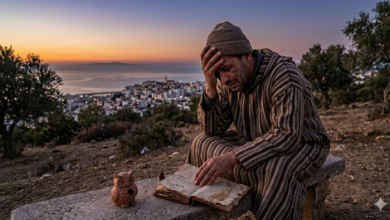
In Sassui’s desert wandering, we encounter mindfulness as total immersion. She does not resist suffering; she inhabits it fully. Each step across the barren land becomes a moment of awareness intensified by longing. Shah Latif’s desert is not empty. It is saturated with presence.
Another recurring motif in his poetry captures this existential surrender:
“He who seeks the beloved must lose himself first;
only then does the path reveal itself.”
Mindfulness, in the sense of Shah Abdul Latif Bhittai is no longer cognitive awareness but existential dissolution. The self is not strengthened. It is stripped. Awareness becomes indistinguishable from love.
In contrast to Latif’s mystical intensity, Pindar frames the human task as the exhaustion of possibility within finitude. The goal is not escape from limits, but full realization within them. Søren Kierkegaard deepens this by warning that unactualised possibility becomes despair. A self that does not choose, does not commit, and does not become is a self in stagnation. Thus, possibility is not neutral. It is ethical. To fail to realize it is to diminish being itself.
Ellen Langer complements this with empirical clarity: mindlessness is not the absence of thought but absence of present engagement. When we act on autopilot, we collapse the richness of reality into fixed categories. Langer’s insight is simple but profound: uncertainty is not a threat; it is the condition of vitality. To remain mindful is to remain alive to possibility.
From these perspectives, a deeper philosophical proposition emerges. It is that mortality is not merely an endpoint, but a structuring principle of meaning. The real danger is not death, but living as though we are not dying. Mindlessness thrives on the illusion of endless time. Mindfulness dissolves it. Mindfulness is
To exhaust the possibility is not to do everything; it is to do what is real, fully. It is to refuse postponement. It is to inhabit each moment as irrevocable.
In Shah Latif’s universe, this exhaustion of possibility takes the form of love in its highest and purest form. Awareness is not neutral observation; it is surrender, longing, and transformation. Sassui’s journey, in this context, again becomes central:
“The desert did not end her path;
it revealed her truth.”
Suffering, here, is not avoided but transfigured. The desert becomes a mirror of consciousness. Latif’s essential teaching is that mindfulness is not calmness; it is intensity. Not control but surrender. Not detachment but total presence.
When read together, Pindar, Kierkegaard, Langer, and Shah Abdul Latif converge on a single insight: to live without awareness is to remain half-alive. Pindar calls us to exhaust possibility. Kierkegaard warns us against existential non-becoming. Langer teaches us to remain cognitively awake to novelty. Shah Abdul Latif calls us to burn with love until the self dissolves into presence. The synthesis of these voices leads to a simple but uncompromising truth:
To be mindful is to refuse the comfort of postponement.
To be mindful is to recognize that time is not infinite.
To be mindful is to live as though each moment is both first and last.
In the end, the question is not how long we live, but whether we ever truly arrive in our own lives. As Shah Abdul Latif Bhittai quietly suggests through the wandering of Sassui, the path is not outside us, it is the awakening of presence within us. And as Pindar reminds us, we are not here to be eternal. We are here to exhaust the limits of the possible. The question is not how to escape mortality, but how to inhabit it so fully that nothing essential remains untouched. And so the final question is not philosophical, but intimate: Are we living as though time is infinite or as though every moment is unrepeatable?
Read: Lose yourself for Greater Cause
_________________
Raphic Burdo is public policy expert focused on impact of digital technologies on leadership, governance, education and markets


Present life has kept us so busy and not connected. It’s as if we are living on autopilot instead of being present in the now. The author has done a tremendous job by highlighting that practicing mindfulness is not simply detaching from the present but rather a deeply intense integral engagement with life itself. Referencing the philosophical innovations and Shah Latif’s poetry, the article states that to live authentically requires one to submit, to surrender whilst being aware and in the midst of it, embracing limitations of life. A beautifully written article