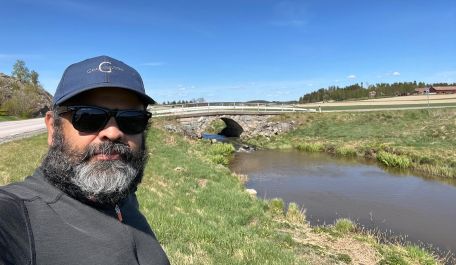
A Spontaneous Road Journey through the Swedish Countryside
By Abdullah Usman Morai | Sweden
“Start going, and you will find your way.” Rumi
Sometimes journeys are planned for weeks, with hotel bookings, maps, and carefully designed itineraries. Yet some journeys begin with nothing more than curiosity, a full fuel tank, and a sudden desire to drive away from routine. Perhaps that is what Rumi meant when he said, “Start going, and you will find your way.”
Maybe he was speaking about life itself. Maybe about long journeys of the soul. Or perhaps about small adventures that unexpectedly become meaningful memories.
This time, those words became the inspiration for a short road trip of nearly 250 kilometers through Sweden’s highways, countryside roads, forests, lakes, and forgotten corners. There was no destination written into a GPS, no detailed plan, and no schedule. The only thought was simple: Let’s see what can be explored today.
 The Freedom of Unplanned Roads
The aim was modest, around 125 kilometers one way, but the experience turned into something much larger than distance. It became a journey between losing and finding oneself.
Sweden, during this time of year, feels almost magical. It is not entirely summer, yet winter has already loosened its grip. The air carries freshness instead of coldness. The days are long, bright, and inviting, as if nature itself is encouraging people to step outside and rediscover the world.
The journey began on the E4 and E20 motorways, part of the great European highway network stretching across countries and borders. Later, the route turned toward the E18 in the direction of Oslo before leaving the larger highways behind for the quieter Swedish national roads Riksväg 70 and 72 and eventually the even smaller länsväg countryside roads marked with the letter “C.”
The further the drive continued, the quieter the world became.
Traffic disappeared. Villages became smaller. The roads narrowed. Pine forests stood silently along the roadside while open agricultural fields stretched endlessly beneath a deep blue sky. Birds crossed overhead, and the constant sound of the vehicle’s engine became the only companion.
There is something deeply peaceful about driving alone through the countryside. One begins talking less and observing more. Thoughts slow down. The mind breathes.
Yet there was one challenge, focusing on the road while the surrounding landscapes continuously demanded attention.
 The Unexpected Beauty of Lake Mörtsjön
Somewhere near road C558, close to Fjärdhundra and Österlunda, nearly 18 kilometers northwest of Enköping, an unexpected discovery appeared: Lake Mörtsjön.
Like many lakes in rural Sweden, Mörtsjön carries a quiet, untouched charm. The lake sits surrounded by forests, countryside homes, and open skies, representing the calm natural beauty for which Sweden is famous. Unlike crowded tourist destinations, places like Mörtsjön remain peaceful and almost hidden, offering visitors solitude rather than noise.
A sudden turn toward the lake revealed a breathtaking scene.
There was no crowd. No loud music. No commercial activity. Only silence.
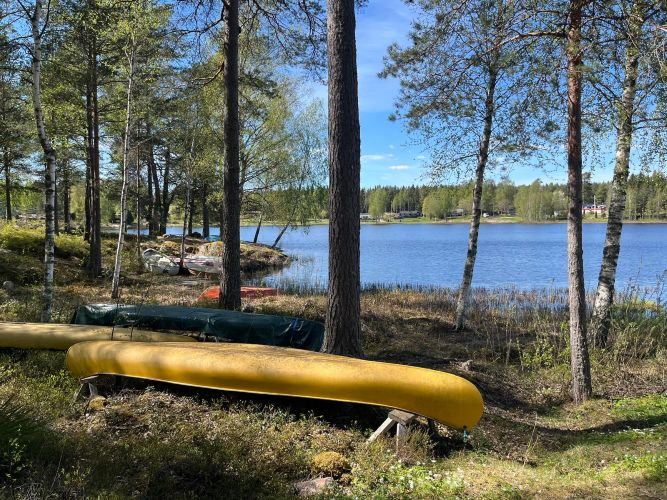
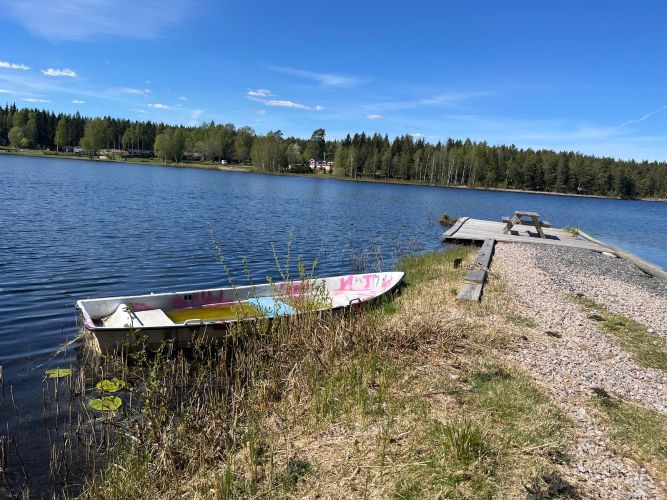
A gravel path led toward the water, where a small wooden platform extended gently beside the lake. Wooden benches faced the calm water, inviting visitors to sit, eat, think, or simply watch the stillness. Nearby, a few boats rested upside down, quietly waiting for another day on the water.
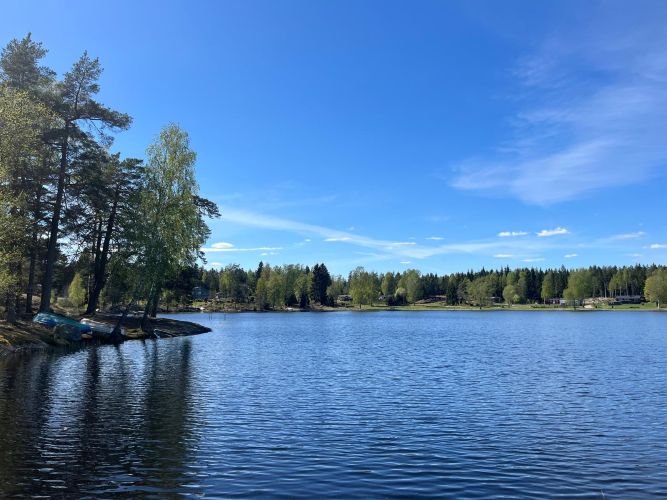 Tall pine trees dominated the landscape, standing proudly around the lake like silent guardians. The combination of blue sky, blue water, and green forest created a view so balanced that it almost felt unreal. Across the lake, a few houses stood peacefully among the trees. One could only imagine how wonderful life must feel in such a place, waking every morning to reflections of nature painted across calm water.
The shadows of the trees dancing upon the lake looked like nature’s own artwork.
A few photographs were taken, though some moments can never truly be captured by a camera.
 Fields, Silence, and the Singing Bird of Vittinge
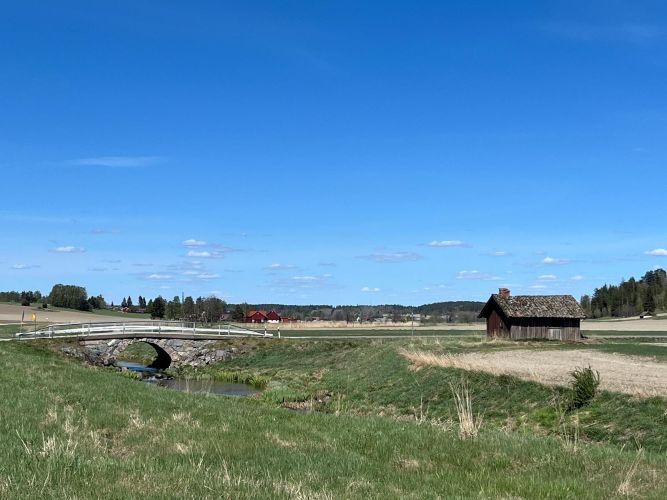
The road continued toward Vittinge, where enormous agricultural fields opened across the landscape.
At one point, curiosity led toward a tiny path seemingly meant more for tractors than ordinary vehicles. The road narrowed into the countryside until there was nothing except fields, grass, silence, and sky.
Stepping outside the car felt like stepping into another world.
The fields were prepared for crops, and the scent of soil mixed with fresh spring air. Somewhere nearby, a bird continuously chirped and sang as if welcoming an unexpected visitor into the middle of nowhere.
Far in the distance stood the church of Vittinge, quietly overlooking the surrounding lands.
Moments like these remind travelers that silence is not emptiness. Sometimes silence itself becomes company.
 Small Bridges and Forgotten Wooden Houses
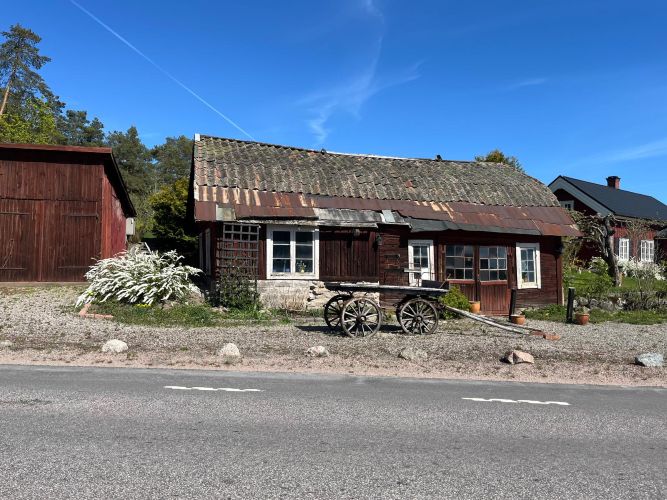
The exploration continued around areas near Vappeby, Norden, and Härled along road C558. Rural Sweden often surprises travelers with beauty hidden in ordinary places, and this stretch of road was no exception.
A small bridge suddenly appeared, charming in its simplicity. Built with small stone walls and graceful arches, it allowed calm water to flow quietly underneath. Beside it stood an old wooden house, seemingly abandoned by time itself.
Its faded appearance somehow made it even more attractive.
Perhaps because old buildings hold stories that modern structures cannot tell.
Tea beside Lake Äspuss
One of the most memorable moments of the journey arrived near Lake Äspuss, close to where roads C558 and C561 meet.
Lake Äspuss represents the peaceful lake culture of rural Sweden, places where nature, fishing, quiet recreation, and slow living remain deeply connected. Surrounded by forests and open countryside, the lake offers calm views rather than dramatic tourism, making it perfect for reflection and rest.
The view was simply extraordinary.
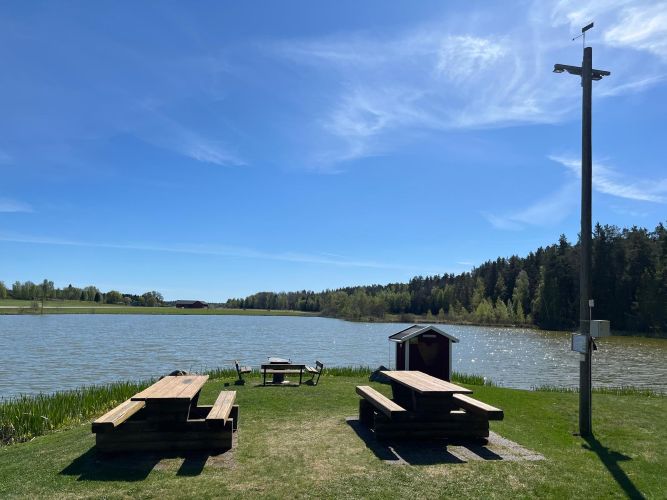 A small resting area overlooked the lake, complete with benches and a tiny cottage-shaped shelter large enough for only two or three people. It felt like a secret resting place designed specifically for travelers needing peace.
That became the perfect spot for tea and a sandwich beneath the sunlight.
While sitting there quietly enjoying the lake view, two ducks appeared from a distance, floating calmly across the water before eventually walking onto the grass nearby. Perhaps they were simply curious. Perhaps hoping for a share of the sandwich.
Either way, they became unexpected companions for a few beautiful minutes.
A selfie with the ducks somehow made the entire experience even more memorable.
Nearby, a lone boat rested beside the shore with its oars still inside, as if someone had just returned moments earlier. A little further away, horses grazed peacefully in an open paddock beneath the sky.
As the journey continued, another old wooden house appeared along the road. Its small white windows decorated with flowers and an old four-wheel horse carriage outside created a scene that felt almost cinematic, a quiet reminder of Sweden’s rural past.
 A Journey Into Medieval Sweden, Härkeberga Church
Eventually, a roadside sign mentioning medieval times and an old church once again awakened curiosity.
That curiosity led toward road C559 and eventually to Härkeberga kyrka.
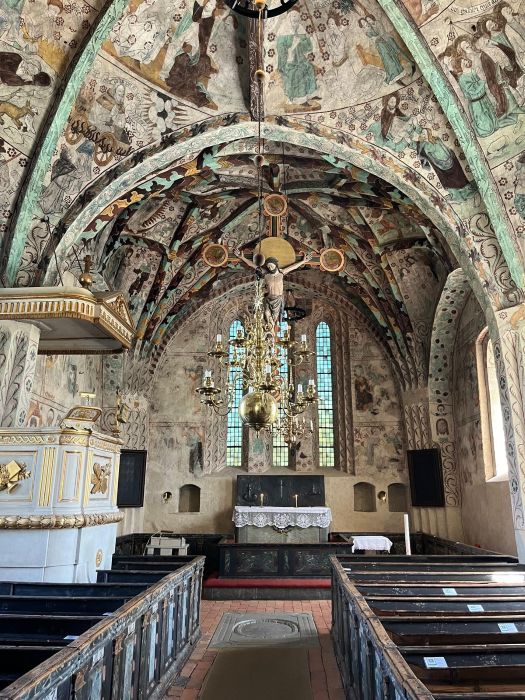
Härkeberga Church is one of Sweden’s remarkable medieval churches, dating back to the late 13th century. It is especially famous for its extraordinary interior paintings created by the renowned medieval artist Albertus Pictor during the 1480s. His artwork, covering ceilings and walls with biblical scenes and symbolic imagery, is considered among the finest examples of medieval church art in Scandinavia.
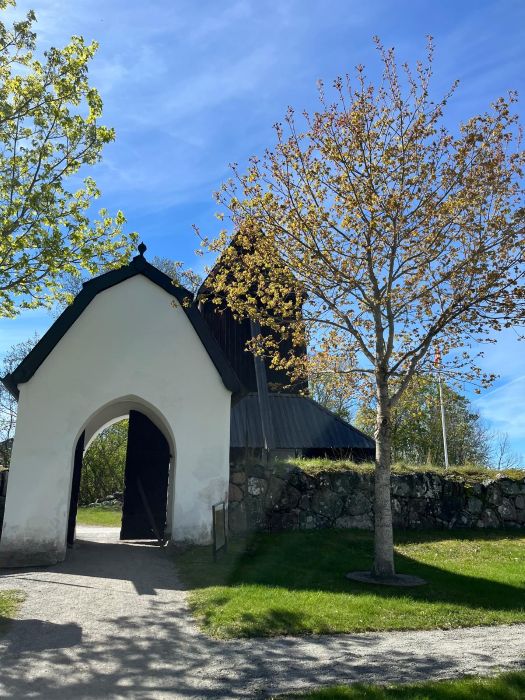
The church stood beautifully amidst green landscapes and open skies.
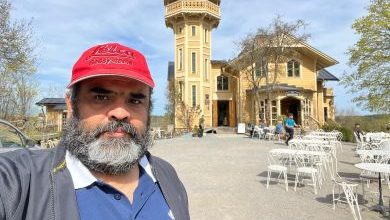
Its exterior carried soft white tones with brownish roofs, simple yet elegant against the surrounding greenery. Upon entering the church grounds, a middle-aged caretaker warmly welcomed the visitor and shared stories about the church’s history.
 Inside, the atmosphere changed completely.
The ancient walls, old wooden details, and extraordinary ceiling paintings transported visitors centuries back in time. The artwork above seemed alive with stories, faith, and history preserved across generations.
Outside, the scenery was equally enchanting: green grass, trees, white buildings, arches, sunlight, and blue skies blending in perfect harmony.
A tall wooden clock tower stood nearby, though closed to visitors.
At one point, the caretaker asked where the journey had started.
“Stockholm,” came the reply.
He looked at his watch and smiled, estimating the arrival back around 4 PM. It was already nearly 2:20 PM.
At that moment, reality gently returned. The journey had reached its natural conclusion.
Returning Home With a Smile
The drive back toward Stockholm felt lighter somehow.
No major tourist attraction had been visited. No expensive adventure had taken place. Yet the journey felt deeply meaningful.
Perhaps because the road had offered something modern life often takes away: silence, slowness, curiosity, and connection with nature.
Sometimes people travel far across the world searching for peace, while peace quietly waits beside an unknown lake, an empty countryside road, or an old medieval church.
That day became more than a drive through Sweden.
It became a reminder that occasionally, by losing ourselves in unknown roads, we unexpectedly find ourselves again.
And perhaps this curiosity, this spontaneous spirit of wandering, will continue leading toward many more unknown roads in the future.
Read: Be a Tourist at Home
___________________
Abdullah Soomro, penname Abdullah Usman Morai, hailing from Moro town of Sindh, province of Pakistan, is based in Stockholm Sweden. Currently he is working as Groundwater Engineer in Stockholm Sweden. He did BE (Agriculture) from Sindh Agriculture University Tando Jam and MSc water systems technology from KTH Stockholm Sweden as well as MSc Management from Stockholm University. Beside this he also did masters in journalism and economics from Shah Abdul Latif University Khairpur Mirs, Sindh. He is author of a travelogue book named ‘Musafatoon’. His second book is in process. He writes articles from time to time. A frequent traveler, he also does podcast on YouTube with channel name: VASJE Podcast.