Japanese wisdom offers something profoundly needed today: a reminder that life’s deepest truths often lie in simplicity, humility, and quiet strength.
By Abdullah Usman Morai |Sweden
In a world where stress, distraction, and uncertainty dominate everyday life, people across cultures are searching for guiding principles that offer meaning and balance. Japan, with its centuries-old traditions and philosophy, has given the world more than just sushi, tea ceremonies, and cherry blossoms. It has also given us wisdom concepts, simple words that carry profound life lessons. Terms like ikigai and wabi-sabi are not just cultural curiosities; they are roadmaps for living with purpose, resilience, and grace.
 Ikigai – The Reason for Being
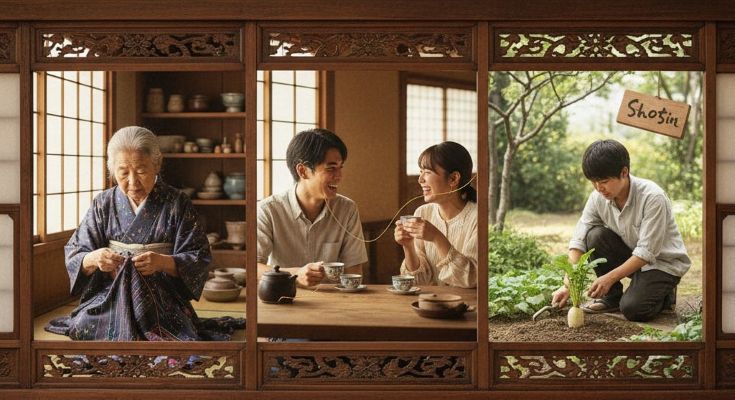
The most famous of these ideas is ikigai (生き甲斐), often described as “a reason for being.” It is the intersection of passion, skill, service, and livelihood. For the Japanese, ikigai is not about achieving grand success but about finding joy in the everyday. It could be raising a family, nurturing a garden, teaching a child, or mastering a craft. In a society often obsessed with achievement, ikigai reminds us that meaning can be found in small acts of dedication.
Wabi-Sabi and Ma – Beauty in Imperfection and Space
Where the West often chases perfection, Japan teaches us to embrace imperfection through wabi-sabi (侘寂). A chipped teacup, an old wooden bench, or even the wrinkles on a face all hold beauty because they carry the passage of time. Similarly, ma (間), the Japanese appreciation of “negative space,” teaches us that silence, pauses, and emptiness are not voids to be filled but vital elements that give balance to life. Together, they challenge the modern addiction to constant noise and flawless appearances.
 Gaman, Ganbatte, and Kaizen – Resilience and Growth
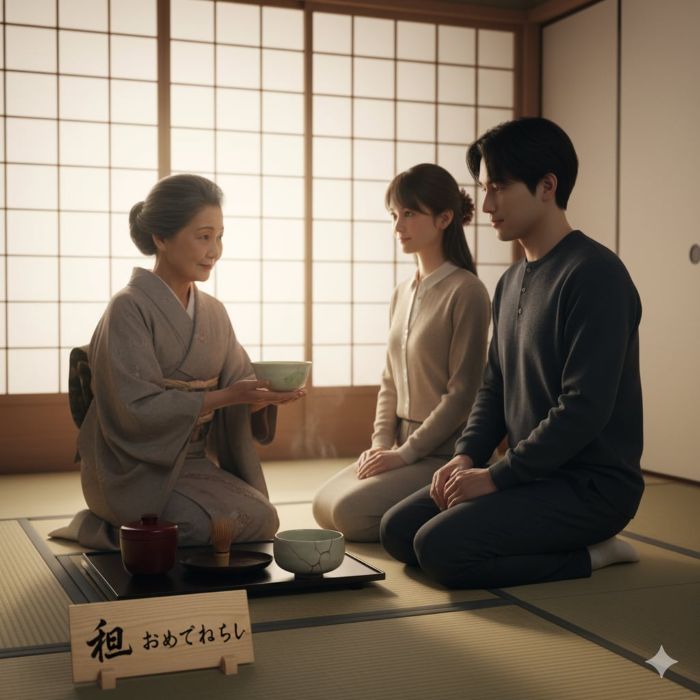
Life is never without hardship. The Japanese respond with gaman (我慢)—enduring trials with patience and dignity. Encouragement often comes with the phrase ganbatte (頑張って), meaning “do your best” or “keep going.” On a broader scale, workplaces in Japan adopt kaizen (改善), the philosophy of continuous improvement. Whether in a factory or in one’s personal life, the focus is on steady, small steps forward. In times when many look for instant success, kaizen offers the wisdom of persistence.
Kintsugi, Mottainai, and Mono no Aware – Embracing Change and Impermanence
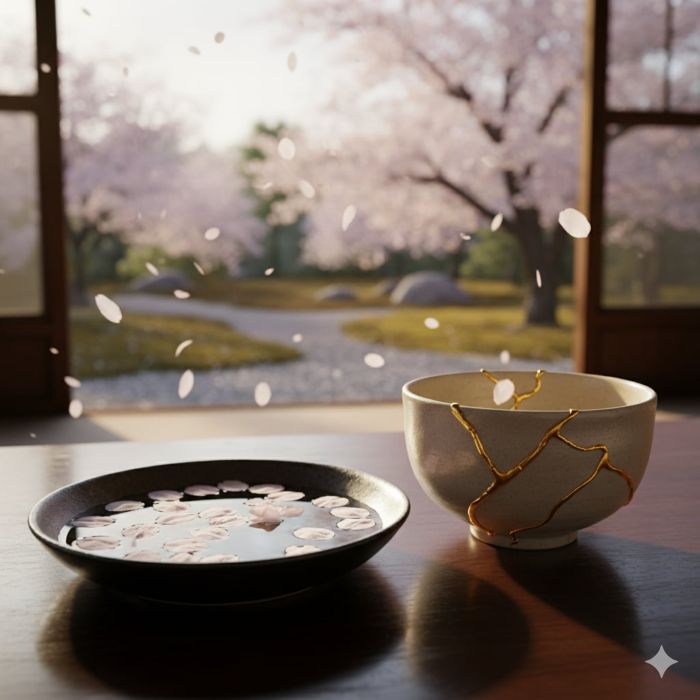
Few philosophies are as poetic as kintsugi (金継ぎ), the art of repairing broken pottery with gold, making the cracks a part of its beauty. It is a metaphor for resilience and finding value in scars, both physical and emotional. Similarly, mottainai (もったいない) conveys regret at waste, encouraging us to treasure resources and use them wisely. Then there is mono no aware (物の哀れ), the awareness of impermanence and the gentle sadness that beauty is fleeting, like cherry blossoms falling in spring. These ideas remind us that fragility and transience do not diminish life’s worth; they enrich it.
Wa, En, and Omotenashi – Harmony and Connection
Japanese culture also emphasizes community and relationships. Wa (和) stands for harmony, encouraging individuals to prioritize group cohesion over ego. En (縁) refers to the invisible threads of fate that connect people, those chance encounters that later change lives. Meanwhile, omotenashi (おもてなし) embodies hospitality, not as a transaction but as a heartfelt act of generosity and care. In an age of individualism, these concepts highlight the value of community and human connection.
 Shoshin, Mushin, and Oubaitori – The Mindset of Living Well
Equally significant are Japanese philosophies of the mind. Shoshin (初心), or “beginner’s mind,” reminds us to approach life with curiosity and humility, no matter how experienced we become. Mushin (無心) means “no-mind”, a state of flow where distractions and ego vanish, often experienced by artists and martial artists. Finally, oubaitori (桜梅桃李) cautions us against comparison; just as cherry, plum, apricot, and peach trees bloom at their own pace, so do humans in their unique ways.
 A Universal Wisdom
While rooted in Japanese culture, these philosophies have universal relevance. They offer counter-narratives to the modern world’s obsession with speed, perfection, and comparison. From the patience of gaman to the hospitality of omotenashi, from the creative resilience of kintsugi to the humility of shoshin, these words are more than vocabulary; they are lenses through which life can be reimagined.
Conclusion: Learning from Japan’s Quiet Wisdom
In the rush of globalization, cultures risk losing their wisdom traditions. Yet Japan shows how language itself can preserve philosophy. These terms are not just phrases but living practices. They invite us to slow down, to notice imperfection, to value relationships, and to keep growing. Whether we are searching for our ikigai or learning to see cracks as gold through kintsugi, Japanese wisdom offers something profoundly needed today: a reminder that life’s deepest truths often lie in simplicity, humility, and quiet strength.
Read: Honey, Dates, and Sindh’s Economic Future
__________________
 Abdullah Soomro, penname Abdullah Usman Morai, hailing from Moro town of Sindh, province of Pakistan, is based in Stockholm Sweden. Currently he is working as Groundwater Engineer in Stockholm Sweden. He did BE (Agriculture) from Sindh Agriculture University Tando Jam and MSc water systems technology from KTH Stockholm Sweden as well as MSc Management from Stockholm University. Beside this he also did masters in journalism and economics from Shah Abdul Latif University Khairpur Mirs, Sindh. He is author of a travelogue book named ‘Musafatoon’. His second book is in process. He writes articles from time to time. A frequent traveler, he also does podcast on YouTube with channel name: VASJE Podcast.