Cities do not burn by chance. They burn when societies decide silently that they can afford to let them.
Without transparency and accountability, the next fire is already waiting.
By Mohammad Ehsan Leghari
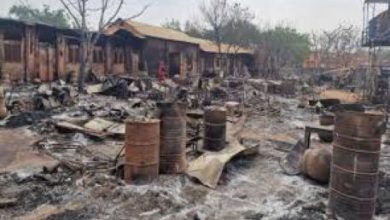
The inferno that engulfed Gul Plaza on M.A. Jinnah Road in Karachi on January 18, 2026, killing at least six people and injuring many more, should not be remembered as just another urban tragedy. It must be understood as evidence which is graphic and lethal, of a systemic collapse in how Pakistan builds, regulates, and inhabits its cities. Fires of this magnitude do not emerge from chance. They are manufactured by neglect, normalized by weak governance, and sustained by a collective tolerance for risk.
What burned at Gul Plaza was not only a commercial complex but the credibility of Pakistan’s urban safety regime.
A Disaster Written Into the Building
 The Gul Plaza fire began late at night, most likely due to an electrical short circuit; an almost ritual cause in Pakistan’s commercial fires. Within minutes, the blaze escalated into a third-degree fire, fed by highly combustible materials: garments, plastics, cosmetics, and chemicals stored across nearly 1,200 shops. The structure behaved exactly as fire engineers would predict: smoke and heat rose rapidly through stairwells and service shafts, creating a lethal chimney effect.
The most damning fact is this: most victims did not die from burns but from asphyxiation. Smoke had nowhere to escape. Only two of the building’s seven emergency exits were accessible; the rest were locked or blocked by merchandise, a widespread but illegal practice in urban markets. During firefighting operations, sections of the building began to weaken under thermal stress, forcing rescuers to operate from the outside and severely limiting rescue options (1–5).
One firefighter lost his life; an outcome that highlights chronic shortages of breathing apparatus and protective gear for first responders.
Karachi: The Epicenter of Predictable Tragedy
Karachi’s fire disasters follow a grim and repetitive script. The 2023 blaze at RJ Shopping Mall killed eleven people, again largely due to smoke inhalation. Investigations revealed a sealed, centrally air-conditioned building with no smoke extraction system and no valid completion certificate—yet fully operational (6, 7, 19).
Weeks later, the Arshi Shopping Mall fire exposed the lethal risks of mixed-use buildings. A foam and mattress shop on the ground floor ignited, sending flames rapidly upward into residential apartments. Five people died as fire raced through façades and internal ducts not designed to contain it (8, 9).
Earlier incidents, including the prolonged basement fire at the Chase Up Departmental Store, demonstrated how poor ventilation and inaccessible basements can render firefighting almost impossible, threatening entire residential towers above.
These are not anomalies. They are symptoms.
Lahore and Islamabad: Different Forms, Same Failure
Lahore’s vulnerability stems from congestion and electrical decay. The 2020 inferno at Hafeez Center wiped out billions of rupees in assets. The inquiry found that internal fire hydrants were dry and non-functional, and the fire originated from a short circuit in a building packed with electronics and lithium batteries (10).
Islamabad, often portrayed as a planned and safer city, offers only an illusion of security. The 2022 fire at Centaurus Mall revealed years of missed inspections due to confusion between civic authorities over jurisdiction. While evacuation succeeded, investigators found that enforcement gaps, not design excellence, defined the outcome (17, 18).
Regulators That Facilitate Risk
At the core of the crisis lies regulatory failure. In Karachi, the Sindh Building Control Authority has repeatedly been accused of enabling illegal construction and later “regularizing” violations for a fee. Investigations have documented thousands of illegal buildings facilitated over recent years (13). As of April 2025, hundreds of structures were officially declared “dangerous,” yet most remain occupied due to litigation, political pressure, or inertia (14–16).
In Islamabad, the Capital Development Authority and municipal bodies have struggled to act as the legally defined “authority having jurisdiction,” creating enforcement vacuums that allow safety systems to decay unchecked (17,18).
Utility companies further compound the danger by providing electricity to buildings without verifying completion or fire safety certification, effectively energizing hazards (6, 19).
Laws That Exist Only on Paper
Pakistan possesses a comprehensive Building Code of Pakistan (Fire Safety Provisions 2016), developed by the Pakistan Engineering Council and aligned with international standards. It mandates fire exits, sprinklers, smoke control, and material specifications. Yet implementation remains negligible. Existing buildings were given deadlines to comply—deadlines that expired years ago without consequence (20, 21).
Recent regulatory shifts, such as Punjab’s Unified Building Rules 2025 and Islamabad’s renewed crackdowns, signal reactive awareness rather than systemic reform. Enforcement remains sporadic and politically vulnerable.
Engineering the Disaster
The technical causes of urban fires are well known. Substandard electrical cabling floods the market, despite recent crackdowns by the Pakistan Standards and Quality Control Authority (23). Daily reliance on diesel generators accelerates wiring degradation. Flammable aluminum composite cladding allows fires to leap vertically. Sealed glass façades trap smoke, turning buildings into gas chambers.
None of this is accidental. It is the result of cost-cutting, weak oversight, and professional malpractice.
Health Systems and Firefighters at the Edge
The aftermath is equally alarming. Karachi’s main burn center has fewer than 70 beds, instantly overwhelmed in a mass-casualty event (24). Islamabad serves an entire region with limited surge capacity. Firefighters routinely operate without adequate breathing apparatus or protective gear—a failure that directly cost a life at Gul Plaza.
Culture, Economics, and the Illusion of Normalcy
A fatalistic culture treats safety as optional and inspections as negotiable. Insurance penetration for commercial property remains around one percent, leaving small traders economically annihilated after fires (25, 26). Traders’ associations often resist enforcement through political pressure, forcing authorities into compromise and delay.
In this environment, fires become extinction events for livelihoods, and recurring headlines for cities.
A Crisis of Choice, Not Fate
Gul Plaza was not destiny. It was design, policy, and governance failure converging at midnight.
Pakistan must depoliticize building enforcement, mandate insurance for high-risk structures, replace compromised inspections with independent third-party certification, modernize fire and medical response capacity, and make public the list of dangerous buildings. Without transparency and accountability, the next fire is already waiting.
Cities do not burn by chance. They burn when societies decide silently that they can afford to let them.
References
- Massive fire kills 6 in Karachi and destroys shopping Centre, The Straits Times.
- Massive fire in Pakistan’s Gul Plaza kills six, IndiaBlooms.
- Karachi: 40pc Gul Plaza fire brought under control, The Nation.
- Analyzing Fire Incidents in Karachi, ResearchGate.
- Pakistan: Death toll rises to 6 in Karachi’s Gul Plaza fire, ANI.
- Report on RJ Mall fire incident submitted, The Express Tribune.
- 2023 Karachi mall fire, Wikipedia.
- Three die as fire rips through another shopping mall in Karachi, Dawn.
- SBCA clears four floors of fire-ravaged Arshi Mall, The News International.
- ‘Short circuit primary cause of Hafeez Centre blaze’, Dawn.
- Fire rips through Gulberg mall, The Express Tribune.
- Probe fails to find cause of mall fire, The Express Tribune.
- A Shocking Report Unearthing the Corruption of SBCA, Scribd.
- List of Dangerous Buildings, Karachi (April 2025), Scribd.
- SBCA launches campaign to demolish dangerous buildings, Dawn.
- Sindh High Court judgment on dangerous buildings, SHC.
- MCI facing difficulties in enforcement of Building Codes, The Nation.
- CDA intensifies crackdown on building bylaw violations, CDA.
- Interim charge sheet filed in RJ Shopping Mall fire case, Dawn.
- Building Code of Pakistan (Fire Safety), PEC.
- Building Code of Pakistan – Fire Safety Provisions 2016, HEC.
- Islamabad Fire Prevention and Life Safety Regulations, CDA.
- PSQCA launches crackdown on substandard products, Pakistan Today.
- The First Burns Center in Pakistan, Burns Centre Karachi.
- Global Insurance Market Report 2025, IAIS.
- Massive fire at Karachi electronics market causes millions in losses, Arab News.
Read: Governance Crisis: Air Quality Worsens
__________________
 Mohammad Ehsan Leghari is a water expert, former Member (Sindh), Indus River System Authority (IRSA), and former Managing Director, SIDA.