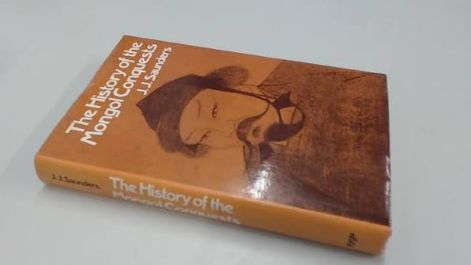
Through meticulous synthesis of medieval sources, J. J. Saunders reveals how the Mongols transformed scattered steppe tribes into a brilliant, highly organized world empire. This analytical passage details the military innovations, administrative systems, and cultural integration that permanently reshaped global trade and geopolitics.
By Noor Muhammad Marri Advocate | Islamabad
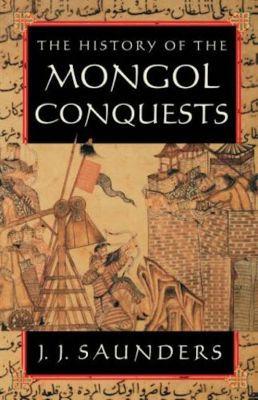
The rise of the Mongol Empire remains one of the most extraordinary phenomena in human history, an event that radically transformed the political, commercial, and cultural landscape of the medieval world. In his masterly 1971 work, The History of the Mongol Conquests, the British historian J. J. Saunders provided scholars and general readers alike with a unified, deeply analytical account of how a collection of scattered, illiterate pastoral tribes from the windswept steppes of Inner Asia managed, within a few decades, to forge the largest contiguous land empire in recorded history. Born in 1910 and serving for many years as a Reader in History at the University of Canterbury in New Zealand, John Joseph Saunders was a pioneer in medieval Eurasian and Islamic studies who sought to transcend Eurocentric historical biases. Writing with remarkable clarity and relying on a synthesis of Persian, Arabic, Chinese, Russian, and Latin primary sources, Saunders approached the Mongols neither as romanticized steppe nomads nor as mindless barbarians sent to destroy civilization. Instead, he treated their explosive expansion as a rational, highly organized, and institutionally brilliant project that broke down the ancient barriers separating East Asia, the Islamic world, and Western Europe, inaugurating an unprecedented era of Eurasian integration.
To fully grasp the magnitude of the Mongol achievement, one must examine the unpromising environment from which they emerged. The Mongolian plateau was a harsh, unforgiving crucible of extreme weather and scarce resources, inhabited by pastoral nomadic tribes—including the Mongols, Tatars, Keraits, Naimans, and Merkits—who lived in a state of endemic warfare. Survival depended on horsemanship, archery, and tribal solidarity, yet these tribes were endlessly divided by blood feuds, livestock raids, and treacherous aristocratic rivalries. Into this fractured world was born Temüjin around the year 1162. Following the murder of his father, Temüjin experienced extreme poverty, tribal betrayal, and captivity, hardship that shaped his profound understanding of power. He realized early on that traditional tribal structures built on hereditary bloodlines were inherently fragile and unstable. If the steppe was ever to be unified, the old tribal aristocracy had to be dismantled and replaced by an entirely new system of organization.
 It was in this restructuring that the true merit and genius of the Mongols first emerged. Temüjin instituted a strict meritocracy, promoting men based entirely on competence, tactical intelligence, and absolute loyalty rather than noble birth or tribal lineage. Common herdsmen could rise to become high-ranking generals, while aristocratic birth offered no protection against incompetence. Legendary commanders like Subutai and Jebe, who would later orchestrate campaigns spanning thousands of miles, rose through the ranks purely because of their operational genius. Furthermore, Temüjin systematically broke up the old tribal units, scattering warriors from different clans across newly formed military divisions based on a decimal system of tens, hundreds, thousands, and tens of thousands. This eradicated old tribal loyalties and forged a disciplined, unified national identity bound directly to the central ruler. When a supreme council of tribal leaders assembled along the Onon River in 1206 to proclaim Temüjin as Genghis Khan, or Universal Ruler, they were not merely crowning a tribal chief; they were sanctioning the creation of a streamlined, merit-based military state built for expansion.
The military machine created by Genghis Khan and refined by his successors was arguably the most efficient and adaptable fighting force of the medieval era. The merit of the Mongol army lay not in overwhelming numbers, but in discipline, operational mobility, intelligence gathering, and an astonishing ability to adapt to foreign technologies. Every male nomad was effectively a lifelong soldier, trained from early childhood in horsemanship and composite bow archery through the communal hunting drives known as the nerge. On the battlefield, Mongol armies operated with the precision of a clockwork mechanism, communicating via signal flags, drums, and smoke signals across vast distances. They perfected the art of feigned retreats, drawing overconfident enemy armies out of formation into deadly ambushes. Recognizing their own limitations in siege warfare when confronting the walled cities of China and Persia, the Mongols demonstrated a remarkable lack of military arrogance. Instead of discarding foreign engineering, they immediately recruited, organized, and deployed Chinese and Persian siege engineers, turning catapults, siege towers, battering rams, and early gunpowder weapons against the very civilizations that invented them.
Complementing this military flexibility was an exceptionally sophisticated intelligence and psychological warfare apparatus. Long before an army marched into a new territory, Mongol spies, disguised as long-distance merchants or envoys, gathered precise data on local political factions, economic vulnerabilities, road networks, and weather patterns. When campaigns commenced, the Mongols used terror deliberately and strategically as an instrument of psychological warfare. Cities that surrendered without resistance were spared, integrated into the taxation system, and protected; cities that resisted were subjected to horrific destruction and mass slaughter. This calculated dual policy was designed to break the psychological will of neighboring cities, causing entire provinces to capitulate without a single arrow being fired. Through this blend of meritocratic leadership, tactical mastery, intelligence gathering, and psychological dominance, Genghis Khan rapidly subjugated Northern China and destroyed the vast Khwarazmian Empire in Central Asia and Persia after its governor foolishly executed Mongol trade emissaries.
Following the death of Genghis Khan in 1227, the momentum of Mongol expansion did not falter, proving that the empire was built on durable institutional merit rather than the charismatic personality of a single man. Under his son and successor Ögedei Khan, as well as his grandsons Batu, Hulagu, and Kublai, the empire expanded simultaneously in multiple directions. Batu Khan and his brilliant general Subutai launched a devastating campaign into Eastern Europe between 1237 and 1242, crushing the Rus’ principalities and destroying the combined chivalric armies of Poland and Hungary at the battles of Legnica and Muhi. Europe was saved from total conquest only by the sudden death of Ögedei Khan, which required the royal princes to ride thousands of miles back to Karakorum for the succession council. In Western Asia, Hulagu Khan eliminated the Assassin strongholds at Alamut, captured Baghdad in 1258, ended the classical Abbasid Caliphate, and established the Ilkhanate across Persia and Iraq. Meanwhile, Kublai Khan completed the long, complex conquest of the Southern Song Dynasty, establishing the Yuan Dynasty in 1279 and uniting all of China under a single sovereign power for the first time in centuries.
As the empire grew to encompass vastly different cultures, the Mongols demonstrated an extraordinary merit in statecraft, administrative pragmatism, and legal governance. Central to this success was the legal foundation known as the Yassa, the fundamental law code attributed to Genghis Khan. The Yassa transformed traditional nomadic customs into a universally binding statutory code that applied equally to common herdsmen and royal princes alike. Its primary merit lay in its ruthless suppression of internal strife. It strictly outlawed blood feuds, cattle theft, kidnapping, and unauthorized plundering among soldiers, channeling all the aggressive energies of the steppe outward toward external expansion. Furthermore, the code established clear rules for military service, property rights, environmental conservation around water sources, and the equitable division of war booty.
Perhaps the most remarkable feature of Mongol administrative merit enshrined in the Yassa was their institutionalized policy of religious tolerance and tax exemption. Coming from a traditional background of steppe shamanism, where spiritual forces were viewed through a pragmatic lens, the Khans maintained a surprisingly neutral and utilitarian view of world religions. They recognized that attempting to forcibly convert millions of sedentary subjects would provoke constant rebellion. Instead, they extended broad religious freedom across their domains, exempting Christian priests, Muslim imams, Buddhist monks, Daoist masters, and Jewish scholars from state taxes, military service, and forced labor. In return, the Khans demanded only that these religious leaders pray for the health and victory of the Khan. In the imperial capital of Karakorum, Nestorian churches, Islamic mosques, Buddhist temples, and Daoist monasteries flourished side by side, creating a degree of state-sponsored religious pluralism that was completely unheard of in contemporary Europe or the Middle East.
To hold this colossal landmass together and maintain central control, the Mongols developed one of the greatest technological and organizational marvels of the medieval world: the imperial postal relay system, known as the Yam or Örtöö. Designed to carry dispatches, administrative orders, and royal envoys across thousands of miles of rugged terrain, the Yam consisted of a vast network of permanent relay stations situated roughly twenty-five to thirty miles apart along major arterial routes. Each station maintained fresh horses, military guards, food reserves, and comfortable lodgings. Express couriers, wearing bells attached to their belts to alert stations of their approach, rode continuously day and night, transferring to fresh mounts at each relay house. This system allowed dispatches to cover over two hundred miles in a single day, granting the Khans a level of informational velocity and administrative control over Eurasia that was not equaled until the invention of the telegraph. To grant authorized passage through this vast network, the Mongols issued metal passport tablets made of bronze, silver, or gold called paizas. Inscribed with script demanding obedience in the name of the Khan, the paiza allowed diplomats, royal messengers, and honored merchants to demand horses, food, and protection anywhere within the imperial frontiers.
This extraordinary administrative infrastructure laid the groundwork for what modern historians call the Pax Mongolica, or Mongol Peace. By bringing the entire expanse of the Silk Road under a single unified political authority, the Mongols eliminated petty border tariffs, suppressed banditry, and created a secure commercial highway spanning from the Black Sea to the Pacific Ocean. Trade flourished on a scale never before seen in human history. To actively encourage commerce, the Mongols formed state-backed financial partnerships called ortogh, where imperial elites pooled capital with Muslim and Western merchants to fund long-distance trading caravans, sharing both the commercial risks and the lucrative profits. Raw silk, porcelain, precious metals, spices, paper, and furs flowed freely across continents. European merchants, most famously the Venetian Marco Polo, were able to travel safely across the entire breadth of Asia, returning with detailed accounts that expanded the geographic horizons of the Western world.
Beyond the exchange of commercial goods, the merit of the Mongol peace lay in its facilitation of massive intellectual and technological cross-pollination. The Mongols routinely engaged in the systematic relocation of skilled artisans, physicians, astronomers, scholars, and engineers from one end of their empire to the other. Persian astronomers were brought to China to assist in building imperial observatories and calculating precise calendars, while Chinese physicians and herbalists enriched the medical literature of Islamic Persia. Fundamental technological innovations that would later shape the modern world—including gunpowder, paper money, block printing, and the magnetic compass—diffused rapidly westward across the Mongol trade routes toward the Mediterranean and Europe.
In the decades following the death of Möngke Khan in 1259, the unified imperial structure gradually dissolved into four semi-autonomous realms or khanates: the Yuan Dynasty in China and Mongolia, the Ilkhanate in Persia and Iraq, the Golden Horde in the Russian steppes, and the Chagatai Khanate in Central Asia. A comparative examination of the Yuan Dynasty and the Ilkhanate offers a striking demonstration of the adaptability and merit of Mongol governance when confronted with vastly different sedentary traditions.
In China, Kublai Khan established the Yuan Dynasty by adopting traditional Chinese court rituals, declaring the Mandate of Heaven, and moving the imperial capital to Dadu, modern-day Beijing. However, fearful that his relatively small Mongol population would be completely absorbed by the massive native Han population, Kublai instituted a pragmatic system of administrative separation. He created a four-tiered social hierarchy that placed Mongols at the top, followed by foreign non-Chinese experts known as Semu—including Central Asian Muslims, Nestorian Christians, and Europeans—with Northern Chinese and Southern Chinese placed at the bottom. By suspending the traditional Confucian civil service examinations for decades and using foreign Semu administrators to manage taxation and government departments, Kublai successfully maintained Mongol political dominance while continuing to patronize Tibetan Buddhism, traditional Chinese drama, and major public works projects such as the extension of the Grand Canal.
In Persia, by contrast, the Ilkhans adopted a policy of deep cultural integration and assimilation. Ruling over a region with a deeply entrenched tradition of Islamic statecraft and Persian literature, rulers like Hulagu and his successors quickly recognized that long-term stability required active cooperation with local elites. The decisive turning point occurred in 1295 when Ghazan Khan formally converted to Sunni Islam, making it the official religion of the state and reinventing himself as a traditional Persian Islamic sovereign. The Ilkhans delegated the day-to-day administration of their empire to brilliant local Persian viziers, most notably the scholar Rashid al-Din, who was commissioned to write the famous Jami’ al-Tawarikh, the world’s first true universal history. Under the Ilkhanate, Persian miniature painting, architectural innovation, tile work, and historiography experienced a golden age, demonstrating how effectively the Mongols could transform from destructive conquerors into passionate patrons of high urban culture.
In his final assessment, J. J. Saunders emphasized that while the initial Mongol conquests inflicted immense suffering and urban devastation upon parts of Central Asia, Persia, and Eastern Europe, the long-term historical legacy of their empire was profoundly constructive and transformative. By dismantling the rigid political boundaries that had isolated civilizations for centuries, the Mongols created an interconnected Eurasian world system. Their merit lay in their extraordinary military adaptability, their meritocratic social organization, their legal clarity under the Yassa, their informational dominance through the Yam, and their unprecedented patronage of international trade and religious freedom.
Even the eventual collapse of the Mongol states carried monumental geopolitical consequences that shaped the modern world. The political vacuum left by the decline of the Golden Horde enabled the Grand Duchy of Moscow to consolidate power and forge the unified Russian state. In China, the fall of the Yuan Dynasty birthed the native Ming Dynasty, while in Western and South Asia, the collapse of the Mongol realms laid the structural foundations for the rise of the great gunpowder empires: the Ottoman, Safavid, and Mughal Dynasties. Tragically, the very trade network that made the Pax Mongolica so prosperous also served as the highway for the Black Death in the mid-14th century, a devastating pandemic that swept across continents, killing millions and accelerating the decline of the Mongol khanates themselves. Yet, as Saunders masterfully demonstrates, the world that emerged after the Mongol storm had passed was permanently altered—a world far more interconnected, dynamic, and conscious of its shared global geography.
Read: Karl Polanyi’s Concept of Mediation
____________
 Noor Muhammad, Advocate and Mediator, Islamabad