

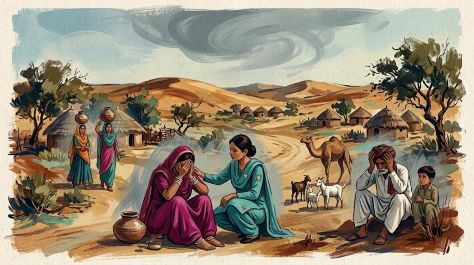
An alarming concern in Tharparkar is the reported rise in suicide cases. Media reports suggest that 122 people died by suicide between January and September 2026 in Tharparkar.
- The desert district of Tharparkar suffers from widespread poverty, drought-induced displacement, and a rising toll on mental health. To protect its vulnerable population, immediate mental healthcare investments and long-term socio-economic solutions are critically needed.
Ali Nawaz Rahimoo
Despite being rich in mineral and other natural resources, the people of desert district Tharparkar continue to face severe socio economic challenges such as poverty, unemployment, drought, food insecurity and limited access to healthcare.
An alarming concern in Tharparkar is the reported rise in suicide cases. Media reports suggest that 122 people died by suicide between January and September 2026 in Tharparkar. These numbers underline the need to investigate the underlying causes of suicide and to strengthen mental health services in Tharparkar.
The total population of Tharparkar District was 1,778,407 according to the Pakistan Bureau of Statistics’ 2023 census. Despite its population and spread across seven talukas, Tharparkar has limited access to specialized mental health services. Reports indicate that two trained professionals have been appointed by the Health Department to address mental health concerns in Tharparkar. The shortage of staff, the lack of adequate healthcare facilities and poor road infrastructure make it difficult for people living in remote villages in Tharparkar to access timely medical and psychological support.
Recurring droughts have further intensified the hardships faced by communities in Tharparkar. Most rural households in Tharparkar depend on rainfall and livestock for their livelihoods leaving them vulnerable to climate change, crop failure, water shortages and the loss of animals. During drought families in Tharparkar are often forced to migrate to barrage areas in Sanghar, Mirpurkhas and Badin districts in search of agricultural work and daily‑wage labor.
Seasonal migration disrupts family life the education of children and community relationships in Tharparkar. Under circumstances men in Tharparkar often migrate alone in search of employment. However during droughts and famine‑like conditions whole families in Tharparkar may be compelled to leave their villages in search of drinking water, food and livelihood opportunities. Such displacement increases insecurity, psychological distress and uncertainty about the future in Tharparkar. Rising temperatures and difficult living conditions add to the challenges faced by these vulnerable communities in Tharparkar.
Children in Tharparkar are among the worst affected by poverty and migration. Frequent displacement interrupts their education while financial pressures often force families to prioritise survival over schooling in Tharparkar. Tharparkar also faces concerns about child marriage, gender inequality and limited opportunities for people. These interconnected challenges can contribute to long‑term economic vulnerability in Tharparkar.
Women in Tharparkar face burdens. Alongside responsibilities women in Tharparkar often travel long distances to collect drinking water gather firewood and support their families through agricultural labor, such as cotton harvesting. These responsibilities, combined with poverty access to healthcare and in some cases domestic violence, place women in Tharparkar under considerable physical and psychological stress. The reported emergence of suicide cases involving women in Tharparkar well as cases in which children have also died in Tharparkar demands serious investigation and a compassionate evidence‑based response.
Although suicide is an issue and cannot be attributed to a single cause in Tharparkar, persistent poverty, unemployment, family conflicts, social pressures, displacement and inadequate mental health support may contribute to psychological distress in Tharparkar. However the specific factors behind the reported increase in suicide in Tharparkar require research rather than assumptions. A comparison with data from previous years in Tharparkar is also necessary to establish the actual trend.
Access to healthcare is an essential component of the right to health in Tharparkar. The Sindh government must strengthen health services across Tharparkar by appointing qualified psychiatrists, psychologists and counsellors at taluka headquarters hospitals and rural health centres in Tharparkar. Mobile mental health teams and referral services should also be introduced to reach communities in Tharparkar where transport facilities and healthcare access remain limited.
Furthermore regular community awareness sessions should be organized in Tharparkar to promote health literacy reduce stigma and help people recognize early signs of psychological distress. Teachers, community health workers, religious leaders, local organizations and community representatives in Tharparkar can play a role in identifying people who need support and referring them to qualified professionals. Confidential counselling and accessible helplines should be made available to people experiencing crises in Tharparkar.
The government should also collaborate with universities, research institutions and public health experts to investigate the root causes of suicide in Tharparkar. Research should examine the relationship between drought, unemployment, migration, domestic violence, gender inequality, family pressures and access to healthcare in Tharparkar. The findings should inform district‑level policies and targeted prevention programs in Tharparkar.
At the time long‑term solutions must address the structural challenges that affect people’s well‑being in Tharparkar. Sustainable livelihood opportunities, improved drinking water supplies, drought‑resilient agriculture, livestock protection, social protection programs and better educational facilities can help reduce the pressures faced by vulnerable households in Tharparkar. Special attention should be given to women, children, young people and families affected by repeated displacement, in Tharparkar.
The reported suicide cases in Tharparkar should serve as a wake-up call for the government, civil society, health professionals and academic institutions. The mineral wealth of Tharparkar must be matched by investment in human development, public health and social protection. Preventing suicide requires more than awareness campaigns; it demands mental healthcare, evidence-based policies and sustained action against poverty and social exclusion.
The people of Tharparkar deserve not economic development but also dignity, security, hope and access to essential services. Addressing the root causes of distress and ensuring timely support for those in crisis must become a priority, for the government and all stakeholders.
Read: Suicide: An Unspoken Crisis
____________
 Ali Nawaz Rahimoo, based in Umerkot, Sindh is a social development professional. He can be contacted on anrahimoo@gmail.com

No doubt Thar is rich in minerals and fertile desert but every third year drought drinking water is major issue.