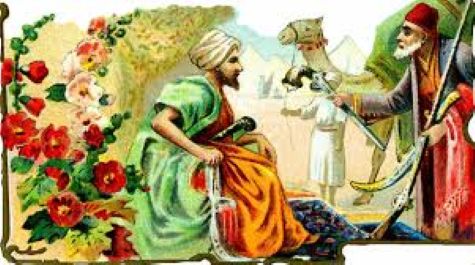
When we speak of heritage, we encompass everything related to this cultural legacy: from folk tales to oral narratives, from myths and ancient religious rituals to the storyteller, the puppeteer, shadow theatre, and others
Souad Khalil | Libya
Heritage remains one of the richest sources of artistic inspiration, particularly in theatre, where it intersects with collective memory, identity, and lived experience. Rather than being confined to the past, heritage continues to resonate within contemporary cultural practices, offering creative possibilities that bridge tradition and modern expression. In theatrical work, engaging with heritage is not a matter of imitation or nostalgic revival, but a process of reinterpretation that allows inherited forms, stories, and symbols to speak to present concerns. This article reflects on the role of heritage in theatre and explores how it can be creatively employed to enrich theatrical expression while preserving its cultural depth and human significance.
Art is considered one of the most important aesthetic manifestations of culture within any social entity. It is also an expression that is directly related to prevailing cultural trends and embodies a creative perspective through which societies, in all their strata, articulate their vision.
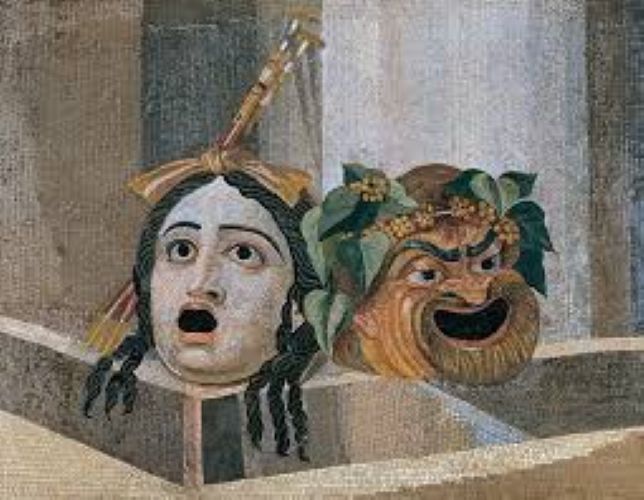 In this sense, art is a living presence in which the experiences of a given social entity accumulate, allowing it to express its culture and interact with it through a distinctive and unique existence.
Heritage in art is regarded as evidence of authenticity and of adherence to the emotional roots of peoples. It also represents an affirmation of the self, through attachment to identity and to a particular creative originality that distinguishes it from other human creative expressions. This specificity does not contradict others; rather, it seeks to contribute to the enrichment of the human conscience and to participate positively in the creativity of others through a distinct, singular, and authentic creative act. This is what I mean by authenticity in heritage.
When we speak of heritage, we encompass everything related to this cultural legacy: from folk tales to oral narratives, from myths and ancient religious rituals to the storyteller (ḥakawātī), the puppeteer (Aragoz), shadow theatre, and others. All these forms confirm that, as Arabs, we were familiar with religious drama or ritualistic performance. What was known as the Abydos Passion Play, dating back to the second or third millennium BCE, was practiced in ancient Egypt, as mentioned in the book Drama in the World by the researcher Ardais Nikoll.
This heritage represents an essential element in human development. If we reflect upon our culture, customs, lifestyles, and beliefs, we will find that we are indebted to previous generations who passed down these traditions and beliefs to us. Human beings are distinguished from other creatures by the phenomenon of folk heritage—that is, tradition. This heritage is transmitted from ancestors to descendants, from generation to generation.
Folk heritage is an oral legacy transmitted by word of mouth and preserved by oral memory. In other words, it is intangible heritage, encompassing beliefs, myths, and forms of verbal expression. This intangible cultural heritage is inherited through memory, which performs this preservative function. Through this memory, which has safeguarded this oral and intangible heritage, we can identify major historical events that were documented and preserved through poetry, sung arts, folk proverbs, and beliefs. These means once served to preserve the prevailing culture of their time.
These remarks constitute a brief clarification of some of the concepts related to heritage, which is the subject of this article, and how it may be employed in theatrical works—whether as oral heritage or other forms abundant in our cultural legacy.
In a study by Professor Mohamed Abu Al-Ela Al-Salamouni, he explains that a theatre practitioner—especially the creative playwright—cannot afford to ignore or overlook the heritage of theatre from the Greek era to the present day. He argues that it is a significant advantage that we did not historically experience theatre in its contemporary form; therefore, we are not bound by a traditional theatrical structure, as is the case, for example, with Arabic poetry. Perhaps the difficulty our poets faced in liberating themselves from the constraints of the traditional poetic form, and the literary battles that accompanied this struggle for years, explains why Arabic poetry did not effectively keep pace with contemporary movements.
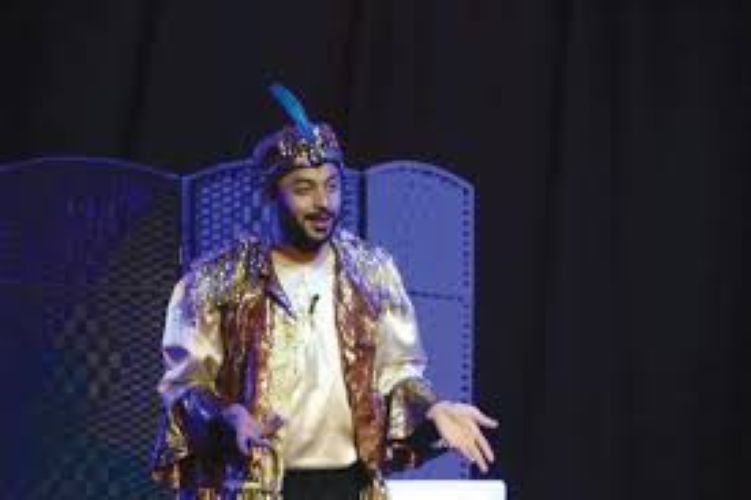 Conversely, in another artistic form with which we had no deeply rooted tradition—namely the novel and the short story—our writers, benefiting from their freedom, were able to draw from world narrative art. This freedom allowed creative talent to flourish, and the fruit of this achievement ripened when world literature recognized our narrative art through Naguib Mahfouz’s receipt of the Nobel Prize in Literature.
Adherence to heritage in art must be approached with profound study, so as not to fall into what some call formalism or chaotic formalism, where theatrical performances rely heavily on heritage-based visual elements while neglecting the dramatic text as theatrical substance. In other words, we should not focus excessively on spectacle and heritage motifs—overloading performances with musical and performative elements—at the expense of the theatrical text, which is fundamentally the basis of what is presented in terms of a coherent dramatic structure.
Heritage is merely a means to create a bond with the audience’s collective consciousness and to attract them through popular spectacle and artistic enjoyment. Ultimately, the performance must convey a respectable message that reaches the intellect and conscience of the audience. We are not clowns, fashion models, or nightclub singers.
Therefore, we must strive to avoid falling into this kind of heritage-based formalism, and ensure that the theatrical text remains central, protecting us from the temptation of dubious aesthetic superficiality. These are among the crucial issues we must avoid when presenting theatrical works that draw upon our heritage.
These lines are drawn from a study written by Mohamed Abu Al-Ela Al-Salamouni on heritage in theatre.
Arab theatre exerts great effort in exploring the depths of the human unconscious, searching for the characteristics of its formation and exposing the pains that shaped it—writing them down to avoid daily confrontation with them. It affirms that contemporary human beings are nothing but psychological, social, and intellectual outcomes of a vast civilizational heritage. Such a human being will not be able to conquer the future unless armed with a serious scientific stance toward heritage, reality, and the future.
In response to a question posed to Dr. Hoda Wasfi regarding how to benefit from modern theatrical forms in drawing inspiration from heritage, she states:
“Heritage is lived reality in some of its aspects, as we live through active motifs that accompany us in daily life. Drawing inspiration from heritage does not mean looking back to the distant past; rather, it means viewing it as something capable of being effective in the future. We seek addition from heritage. Our connection to heritage is not archaeological; it is a connection that searches for living components in order to reshape and benefit from them. This makes heritage a protector of identity, capable of safeguarding the individual’s character against the overwhelming invasion of modern lifestyles, which tend to become homogenized through mass media. This challenge can only be met by searching for effective elements that help individuals sustain a more refined life.”
The benefit of theatrical performance inspired by heritage lies in the integration of text, scenography, body language, and visual arts that reflect the era we live in. This is achieved through scenography, which constitutes a philosophical vision, as well as through visual writing on stage. All of this must remain connected to the specificity of global forms, which are themselves the products of particular peoples and individuals.
The use of heritage in our theatrical works must occur within a sound framework. All genuine creativity and renewal must be linked to the historical moment and deserve preservation. If we are to draw inspiration from heritage, we must plant it in soil capable of absorbing and embodying it.
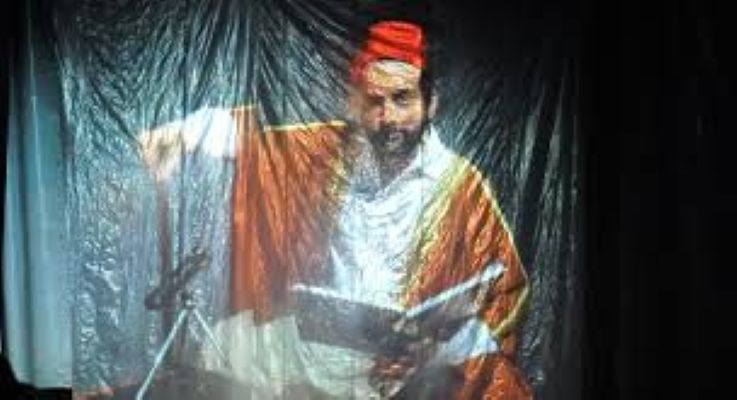 Cultural elements derive from diverse heritages. Theatre, like all cultures, is a cumulative source of identity elements and an affirmation of human and historical characteristics. When we present a theatrical work inspired by heritage, we attempt to retrieve it and grant it renewed vitality in harmony with the contradictions of the era and prevailing tastes.
The playwright who seeks to employ heritage in their work must first reread heritage—not for the sake of merely presenting it, but through a detailed and analytical reading that enables deep engagement with its roots. Only then can they offer a creative vision that is serious, innovative, and distinct from traditional approaches.
Reviving our heritage in a new form constitutes a method of new creativity with new meanings. It offers subtle connotations that cold, fragmented, direct writing cannot convey.
Thus, heritage is a great legacy that we must invoke in our works, activating its illuminating methods and diverse concepts, so that we affirm our identity within our theatre.
Reviving heritage in our theatrical works while keeping pace with the contemporary era represents one of the most crucial issues amid the congestion of modern cultural transformations, so that our culture does not fade in the face of others. We must highlight its role in foundation, authenticity, and pride in its originality and antiquity. It is a national and cultural duty, as heritage is a criterion of a nation’s authenticity and is directly linked to the depth of its civilization. Therefore, we must present it in our works while updating it through contemporary mechanisms of treatment and encouraging its presence, as it forms our identity and history.
The vitality of heritage in theatre lies in its ability to remain alive through renewal and creative transformation. When approached thoughtfully, heritage serves as a means of connecting audiences to their cultural roots while opening spaces for dialogue with contemporary realities. Its function is not to dominate the theatrical form or reduce it to spectacle, but to support meaningful dramatic content and authentic artistic vision. Reviving heritage within modern theatrical practice thus becomes an act of cultural continuity and creative responsibility, ensuring that theatre remains a living art capable of expressing identity, memory, and change in a constantly evolving world.
Read: The Philosophy of the Arts
____________________
 Souad Khalil, hailing from Libya, is a writer, poet, and translator. She has been writing on culture, literature and other general topics.