Throughout the collection, Dr. Vinod Asudani’s language remains deliberately lucid, conversational, and entirely free of dense academic pretense. It reads like a long, late-night conversation with a wise friend—a soul-talk filled with vulnerability and intellectual depth.
Reviewer: L N Kolli
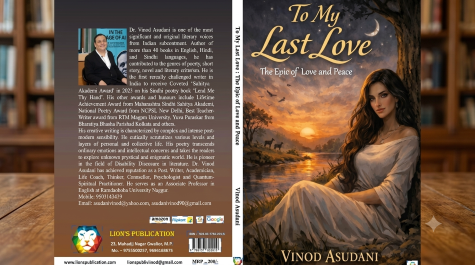
Dr. Vinod Asudani’s tenth book of poetry, “To My Last Love”, is a refreshing and monumental work. Subtitled “The Epic of Love and Peace,” this collection pulls off a brave feat. It reclaims the majestic structure of the classical epic. Yet, it fills that framework with the raw heart of modern emotional realism. The poems are written in free verse. Even so, musical cadences anchor the lines. They echo the rhythmic pulse of traditional bhajans and Sufi qawwalis. The book unfolds across seven meticulously crafted cantos. It is an intense, vulnerable piece of “soul-talk.” Indian readers will instantly connect with its deep cultural and emotional sensibilities.
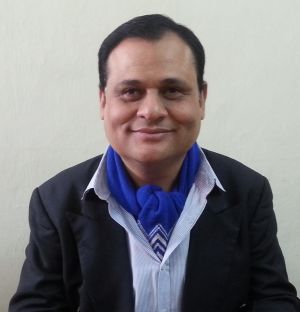
The emotional foundation of this book is uniquely poignant. Dr. Asudani writes from the lived experience of visual impairment. Instead of allowing darkness to turn into bitterness, he beautifully transmutes personal loss into universal empathy. We witness this distillation of struggle right from Canto 1: To My Brother. Here, the poet transports us to a nostalgic, sun-drenched Indian childhood spent flying kites and playing hide-and-seek in narrow lanes. Yet, beneath the innocent games lies a quieter, deeper ache. Reflecting on his loss of sight, he writes:
“Stumbling block was lurking darkness in eyes
Mum and Dad would never make us realize”
This line strikes a deep chord with anyone familiar with the quiet, sacrificial nature of Indian parenting. Mothers and fathers build the protective shield so that the “undercurrent of life’s chill and cough” doesn’t wither a child’s spirit. In the same canto, the poet pays an incredibly touching tribute to his late father in Salute to Sire. Choosing to bypass lofty Western imagery, he grounds his reverence in the everyday reality of a middle-class Indian household:
“Lord thou may be proud of Peter, Michael
I salute my Sire seated on cycle”
The narrative shifts from familial ties to a philosophical quest for an “Unattained Vision”. The book builds toward its central, enigmatic focus: a figure named ‘Oasis’. Oasis is far more than a romantic partner; she is an archetype representing the ultimate synthesis of art, intellect, emotion, and instinct.
In Canto 2: To Oasis, the poet unpacks his heart with absolute honesty, contrasting his spiritual devotion to her against the superficial judgments of society. Addressing her, he proclaims:
“World calls me atheist, it’s not right
I worshipped thee with my full might”
This elevated devotion transforms human romance into something akin to Bhakti or Sufism, where the beloved becomes the ultimate bridge to the divine. The language here sheds all artificiality— it feels immediate, urgent, and spoken in a single, breathless confession.
What makes “To My Last Love” truly remarkable is how seamlessly Dr. Asudani bridges the deeply personal with the grandly civilizational. In Canto 6: In the Valley of Civilizations, the perspective expands beautifully from individual yearning to a global plea for harmony. The poet anchors his geographical and spiritual setting firmly in the subcontinent’s heritage. He invites the reader to meditate where the holy Ganges originates and sailing his ship into the cradle of the Indus Valley. He calls out to Oasis to restore a fractured, warring modern world, writing:
“Thou art soul from Indus valley
Epitome of love, peace and mercy…
Hear, Mohenjo-Daro still speaks
To torn world, gives message of peace”*
By intertwining global catastrophes like Hiroshima with the local, historical scars of the Jallianwala Bagh massacre, the poet masterfully highlights the ultimate futility of violence across time and space.
The epic culminates beautifully in Canto 7: The Last Testament, where the poet evokes a pluralistic spiritual lineage. He draws upon the teachings of the Buddha at Sarnath and the philosophy of Osho. The book’s final verdict is simple yet transformative: love is the only true antidote to historical violence and societal decay. The poet writes with absolute, final conviction:
“Love is only pure pious deed
It is last fruit, it is first seed”
Throughout the collection, Dr. Vinod Asudani’s language remains deliberately lucid, conversational, and entirely free of dense academic pretense. It reads like a long, late-night conversation with a wise friend—a soul-talk filled with vulnerability and intellectual depth.
For any reader searching for a contemporary work, this book is an essential journey. It echoes the spiritual weight of Tagore’s “Gitanjali.” It captures the philosophy of Sri Aurobindo’s “Savitri.” Yet, it remains entirely relatable to everyday life. It speaks directly to our daily struggles. The experience is deeply rewarding. This is a rare piece of literature. It does not just demand to be read. It deserves to be felt. It lives in the quiet spaces of the heart.
Read: Silent Lips – A Short Story by Dr. Vinod Asudani
___________________
 (L N Kolli – English Faculty, Bilingual Author, Translator, and Book Reviewer from Andhra Pradesh, India)