One day, future generations will ask what we did when this priceless heritage was in danger. Will they say that we stood by silently as history disappeared? Or will they say that we came together to protect one of humanity’s greatest treasures?
The answer depends on what we do today. Let us raise our voices before it is too late. Let us protect the city that has stood for millennia. Let us honor the people who built it. Let us save Mohenjodaro. Because once it is gone, no amount of regret will bring it back.
Save Mohenjodaro. Save the Indus Civilization. Save the memory of humanity itself.
Debasree Chakraborti | Kolkata
After Rakhaldas Banerji, has there truly been any deep and sincere research on Mohenjo-daro in that real sense?
Yesterday I had a long discussion with Nasir Aijaz Nasir ji about Mohenjo-daro. With great sadness, he said that today there is no longer any research on Mohenjo-daro in that true sense. During the monsoon, when floods occur, nearby landlords cut channels to divert the water toward Mohenjo-daro in order to protect their own agricultural lands. As a result, Mohenjo-daro is suffering irreparable damage.
 At one time, an international committee was formed to protect Mohenjo-daro as a “World Heritage” site. Fundraising efforts were also initiated to save Mohenjo-daro. A “Mohenjo-daro Save Committee” was created, headed by a retired Chief Irrigation Engineer. But in reality, nothing came of it. In front of the media, they made grand statements, but inwardly their core attitude was—what is the point of preserving a “Hindu monument”?
Even today, many layers of Mohenjo-daro remain buried beneath the soil. From 1922 to 2026—104 years have passed along the banks of the Indus River. When will we again see research in the spirit of Rakhaldas Banerji? The very person who tried sincerely was removed. Foreign researchers come, write reports based on their own opinions, and leave—this is how so-called research is being conducted today.
 Hindu is not a religion; Hindu is a profound philosophy. The people who lived along the banks of the Indus believed in this philosophy. Today, swept away by the currents of change, they are denying the roots of their own civilization, denying their true identity. What could be more terrifying than this?
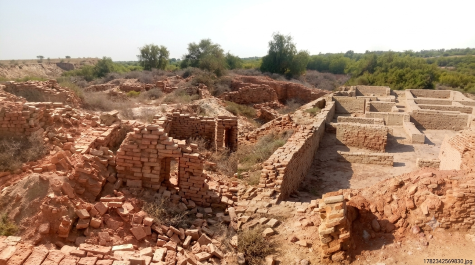
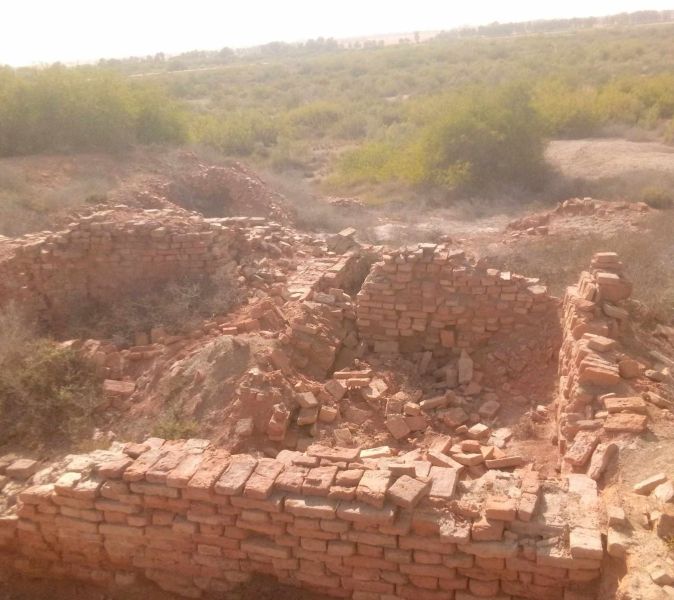
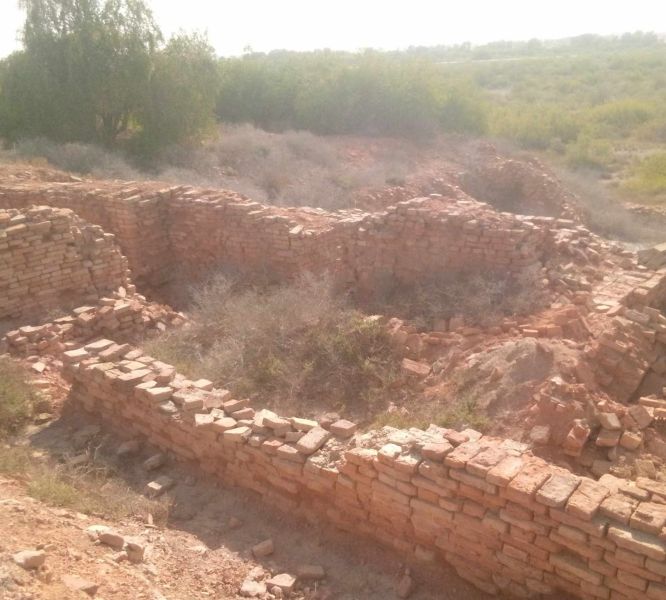
“These collapsing walls are located on the western side of the H-R Area of the great civilization of Mohenjodaro. They represent the hard work of the American archaeologist George F. Dales, my late maternal uncle Muhammad Waris Abro, and many other laborers and workers. The scene of destruction that you see before you today raises an important question: are the officials of UNESCO not also responsible for this devastation?
First and foremost, I hold the UNESCO delegates and inspectors accountable for the destruction of Mohenjodaro. Whenever they visit, they are welcomed with great ceremony. The Ajrak, a symbol of Mohenjodaro, is draped over their shoulders; traditional caps are placed on their heads; drums, flutes, and various forms of entertainment are arranged for them. Lavish meals are served, gifts are presented, and they are treated with excessive hospitality. In such an atmosphere, they seem to forget their actual responsibilities. They enjoy the festivities, accept gifts, and then return home.
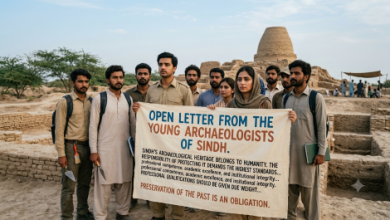
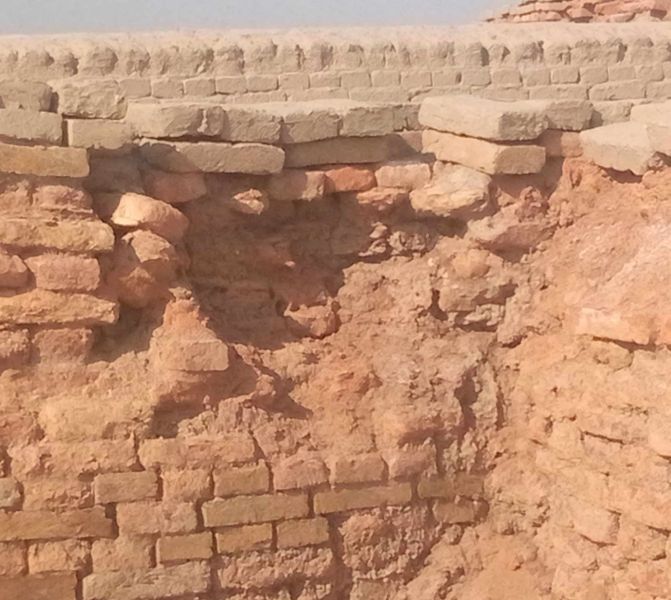 I have often seen visiting experts who appear to know little about mud-brick conservation work. It reminds me of how, here, people with degrees in completely unrelated subjects have been appointed through recommendations and connections, only to become “archaeologists” on paper. The result has been nothing but destruction. Meanwhile, young graduates who have studied Archaeology, Anthropology, and related disciplines at universities are ignored, while politically connected individuals secure appointments.
Mohenjodaro is a World Heritage Site, yet for nearly fifteen to twenty years, no highly experienced senior archaeologist has been appointed here. Instead, inexperienced and politically connected individuals have been recruited, many of whom seem skilled only at signing documents.
When one witnesses the destruction of Mohenjodaro, there is little left to do except shed tears. Millions of rupees are allocated in budgets, but much of that money disappears into paperwork rather than genuine conservation efforts. This is why the walls of Mohenjodaro continue to crack, erode, and collapse.
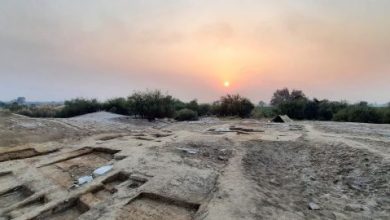
The hidden lessons and secrets preserved within the ruins have been erased and destroyed. Villages and roads have been constructed on top of ancient archaeological remains. Local residents continue to remove bricks from the site from time to time, while livestock are allowed to wander through and trample the ruins.
Saline and rainwater are being directed toward the ancient remains through drainage channels. The lands surrounding Mohenjodaro have become increasingly fertile due to salinity-related changes, and now the pressure of saline groundwater is advancing toward the site itself. Fish ponds have been dug around Mohenjodaro, and rice cultivation is also taking place despite the risks it poses to the archaeological remains.
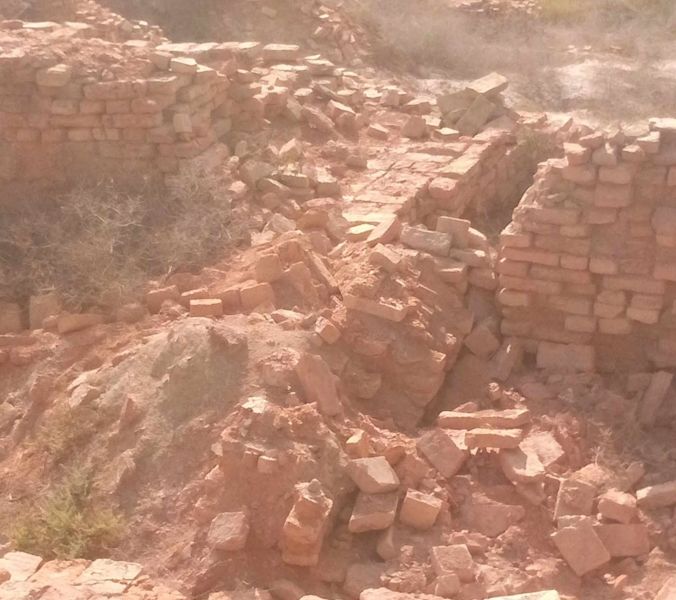 If urgent and decisive measures are not taken immediately to protect this great civilization, and if political interference is not brought to an end, then within ten years not a single original wall of Mohenjodaro will remain. Within twenty years, there may not be a single brick on the site untouched by salinity. The entire site could be transformed into reconstructed walls and modern replacement bricks, leaving little of the original ancient city behind.
Perhaps, for the survival of Mohenjodaro, it would be better if the Government of Pakistan were to lease or auction its management to a competent organization. At least then Mohenjodaro might survive. Otherwise, because of those who sit with closed eyes and indifferent hearts, this great heritage of humanity is being destroyed before our very eyes.
As a laborer, guardian, and lover of Mohenjodaro, speaking from fifty-five years of experience, I say this with complete conviction: if my words prove false and I die, then hang garlands of shoes upon my grave.”
– (Meer Abro belongs to a family that has been involved in the excavation activities and heritage conservation efforts at Mohenjodaro for many decades.)
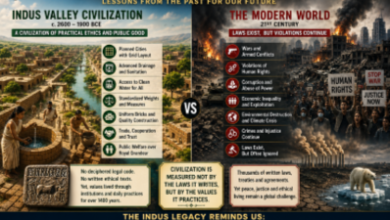
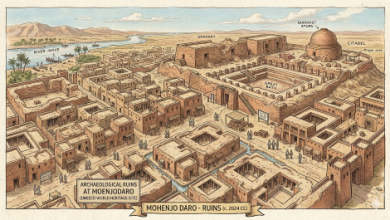
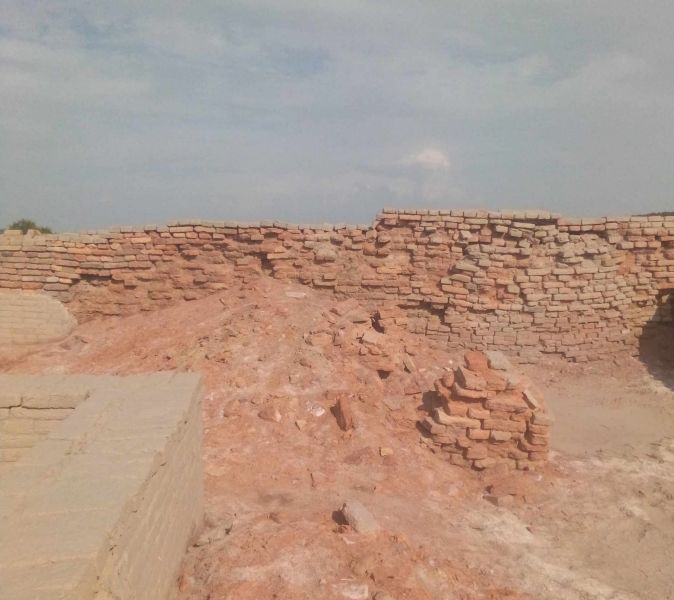 More than 4,500 years ago, when much of the world was still struggling to build organized societies, the people of the Indus Valley Civilization created a magnificent city on the banks of the Indus River. They built streets with remarkable precision, developed advanced drainage systems, traded across vast distances, and created a culture whose mysteries still fascinate the world today.
Today, however, that great city stands in silence.
Its ancient walls are crumbling. Its bricks, once touched by the hands of our ancestors, are slowly being eaten away by time, salinity, climate change, neglect, and human indifference. Every year, a little more of Mohenjodaro disappears. Every fallen brick is a page torn from the book of human history.
The tragedy is not only that Mohenjodaro is dying.
The greater tragedy is that it is dying while the world watches.
Imagine if Mohenjodaro could speak. What would it say to us? Perhaps it would ask why we have abandoned the legacy of those who built one of the world’s earliest cities. Perhaps it would ask why humanity spends billions preserving modern structures but struggles to protect one of the foundations of civilization itself.
Mohenjodaro has survived floods, invasions, wars, and the passage of thousands of years. Yet today its greatest enemy may be neglect.
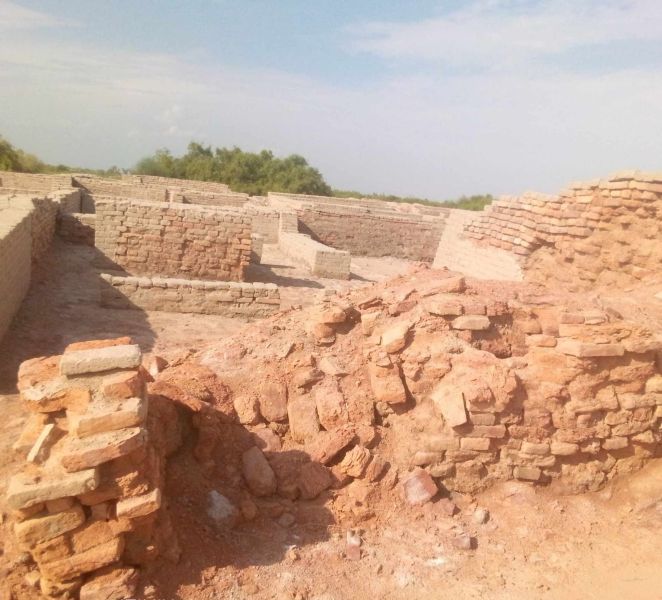 This ancient city is not just a collection of ruins. It is the voice of our ancestors. It is proof of human creativity, resilience, and achievement. It reminds us that long before modern nations existed, people dreamed, built, loved, traded, and created communities that shaped the course of history.
If Mohenjodaro is lost, we lose more than an archaeological site.
We lose a part of ourselves.
We lose the opportunity for future generations to walk the streets of one of humanity’s earliest urban centers. We lose stories that have not yet been discovered. We lose knowledge that may never be recovered.
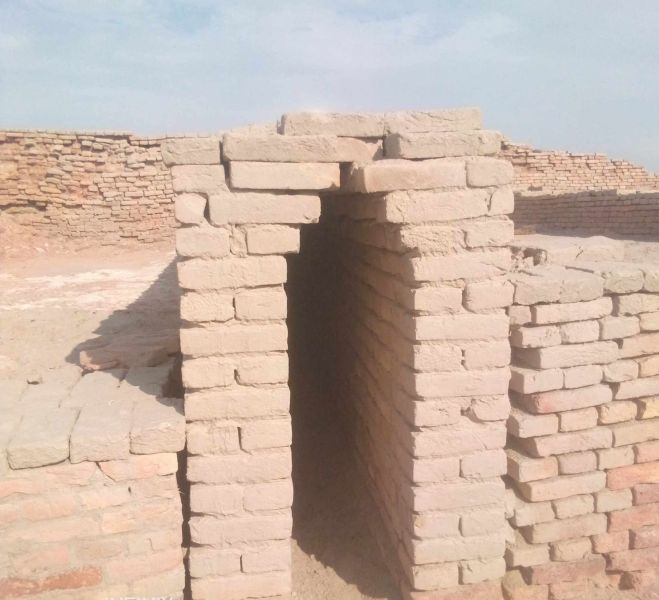 The responsibility to save Mohenjodaro belongs to all of us—governments, historians, archaeologists, educators, journalists, students, and ordinary citizens. Conservation efforts must be strengthened. Research must continue. Awareness must grow. The world must recognize that protecting Mohenjodaro is not a luxury; it is a duty.
One day, future generations will ask what we did when this priceless heritage was in danger.
Will they say that we stood by silently as history disappeared?
Or will they say that we came together to protect one of humanity’s greatest treasures?
The answer depends on what we do today.
Let us raise our voices before it is too late.
Let us protect the city that has stood for millennia.
Let us honor the people who built it.
Let us save Mohenjodaro.
Because once it is gone, no amount of regret will bring it back.
Save Mohenjodaro. Save the Indus Civilization. Save the memory of humanity itself.
Read: Tracing a Name Lost to Time
___________________
 Debasree Chakraborti is a renowned novel writer of Bengali language. Based in Kolkata, West Bengal, India, she has done Master’s in Modern History from the Kolkata University, and authored some thirty books, mostly the novels, with historical perspective and themes. Her novel is ‘Maharaja Dahir’ that covers the history of Sindh from 662, the year of first attack on Sindh by the Arab armies till date, was published last year and translated by Nasir Aijaz into Sindhi language.