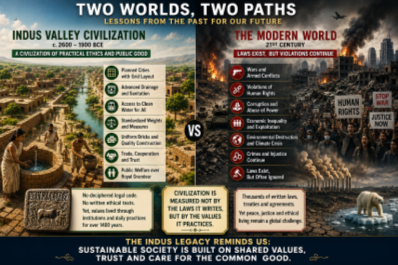
Can a Civilization without Written Laws Teach the Modern World About Ethics?
Dr. Nisar Solangi
The modern world is governed by an unprecedented network of constitutions, legal codes, international treaties, and human rights conventions. From the United Nations Charter to national constitutions and environmental agreements, humanity has never possessed so many written laws intended to protect peace, justice, and human dignity. Yet wars continue, corruption flourishes, environmental destruction accelerates, and international law is frequently violated.
This paradox invites a fascinating historical reflection. More than four thousand years ago, the Indus Valley Civilization—one of the world’s earliest urban societies—appears to have maintained remarkable civic order without leaving behind any deciphered legal code or written ethical literature.
The Indus script remains undeciphered. No equivalent of the Code of Hammurabi has been discovered. No philosophical treatises, moral sermons, or legal manuals survive. Archaeologists therefore cannot identify the civilization’s formal ethical doctrines or legal principles.
Yet the archaeological evidence tells an extraordinary story.
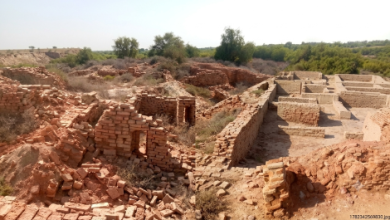
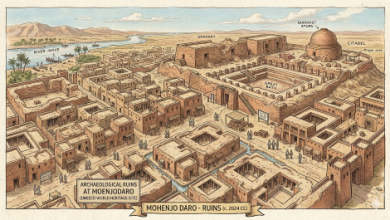
Across an area extending from present-day Pakistan to northwestern India, Indus cities displayed remarkable uniformity in their urban planning. Streets followed carefully designed grids. Sophisticated drainage systems carried wastewater beneath cities. Public wells provided access to clean water, while standardized brick sizes and weights promoted consistency in construction and commerce.
Unlike contemporary civilizations in Mesopotamia and Egypt, the Indus world produced no colossal royal palaces, pyramids, or monumental tombs celebrating kings and military conquest. Instead, enormous resources appear to have been invested in civic infrastructure that benefited the entire community.
Many archaeologists interpret these features as evidence of a society that emphasized cooperation, public welfare, and standardized civic norms rather than conspicuous royal power. While this should not be mistaken for proof of democracy or formal equality, it suggests an unusually collective approach to urban life for the Bronze Age.
The contrast with today’s world is striking. Modern societies possess detailed legal systems enforced by courts and governments, yet written laws alone have not prevented armed conflicts, corruption, inequality, financial crimes, or violations of international humanitarian law.
Political philosophers have long argued that laws are effective only when supported by social values and institutions that encourage voluntary compliance. A legal system written on paper cannot guarantee ethical conduct if public trust and civic responsibility are absent.
The Indus Civilization appears to illustrate the opposite phenomenon. Although no readable ethical texts survive, its cities embody what may be called “practical ethics”—values expressed through infrastructure, standardization, sanitation, and collective investment in public goods. The civilization’s material remains suggest that cooperation and public welfare were embedded in everyday urban life rather than proclaimed through surviving written commandments.
This does not mean that the Indus Civilization possessed a moral code comparable to the Ten Commandments or other later religious traditions. Such a conclusion would exceed the available evidence because the script remains undeciphered and no legal or philosophical texts can be read. Nevertheless, its archaeological legacy demonstrates that ethical principles may sometimes be reflected more powerfully in institutions and daily practices than in written declarations.
Perhaps the enduring lesson of the Indus Valley Civilization is that civilization is measured not merely by the laws it writes but by the values it practices. In an age when legal frameworks are increasingly challenged by conflict and division, the silent cities of the Indus remind us that public trust, civic responsibility, and investment in the common good may be among humanity’s oldest—and most necessary—foundations of social order.
(Written with the support of AI)
Read: Uncovering the Secrets of the Indus Valley Civilization and Its Un-deciphered Script
_________________________
Dr. Nisar Solangi is based in Saudi Arabia