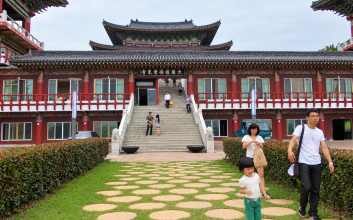
A Small Subcontinent and a Touch of Africa in England
By Abdullah Usman Morai | Sweden
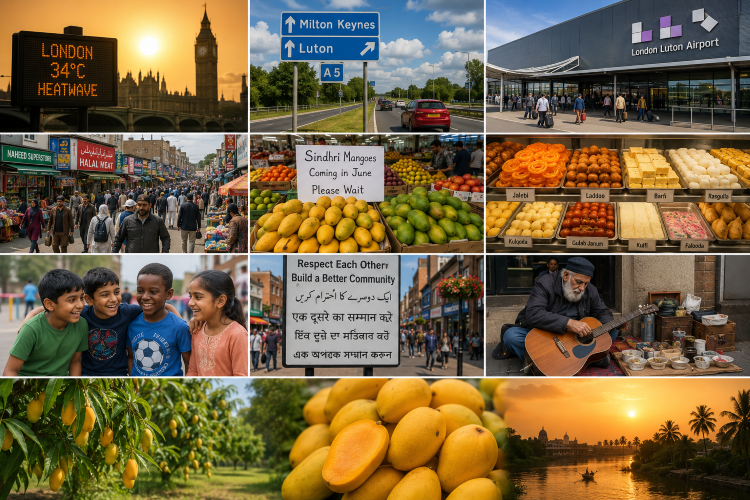
The last week of May 2026 was unusually hot in England. An exceptional and intense heatwave had swept across the country, with temperatures in London, Milton Keynes, and the surrounding areas reaching nearly 34°C. Having spent eighteen years in the cool climate of Sweden, I found this heat completely unexpected, intense, and somewhat overwhelming.
To escape the scorching weather, it became necessary to take a shower four or five times a day. The heat reminded me of my hometown, Moro, where such temperatures are part of daily life and summer is not merely a season but an integral part of existence itself. Memories of Nangar Nawal’s cool thadhal shade came flooding back, along with the refreshing glasses of chilled milk malai served by Haji Nawal.
 Only a few days remained before Eid al-Azha. The atmosphere was filled with excitement and anticipation. Conversations with family members revolved around Eid preparations, special foods, and nostalgic memories of home. During these discussions, one particular topic kept resurfacing, awakening in all of us a strong desire to eat Sindhri mangoes.
On the weekend, we decided to take a trip to Luton. The town is home to many South Asian stores, and we hoped that perhaps the season’s first Sindhri mangoes had arrived there. Accompanying me on this journey were Bhao Dr. Mushtaq, Adi Sakina, Dr. Saleem, and Moiz.
The Journey from Milton Keynes to Luton
We set off from Milton Keynes. The journey to Luton is not particularly long and normally takes around half an hour, although weekend traffic made the trip somewhat slower.
As we drew closer to Luton, the surroundings began to feel strangely familiar. When we finally arrived, it felt as though we had left England and entered a completely different South Asian country.
Luton is an interesting English town. Once famous for its hat-making industry, it later became a major center for automobile manufacturing. Today, it is also well known because of London Luton Airport, through which millions of travelers pass on their way to destinations across the world.
Yet, more than the town’s history, it was its people who fascinated me.
 A Small Subcontinent and a Touch of Africa
Walking through Luton felt as though I had entered a miniature version of the Indian subcontinent. I could easily describe the city as a “Mini Subcontinent” blended beautifully with a touch of Africa.
Wherever I looked, I saw South Asians, Pakistanis, Sri Lankans, Nepalese, Indians, and Bangladeshis, living their lives alongside vibrant African communities.
South Asian grocery stores, modern halal butcher shops, sweet shops, restaurants, tea houses, and businesses of every size all evoked memories of the subcontinent.
The Search for Sindhri Mangoes
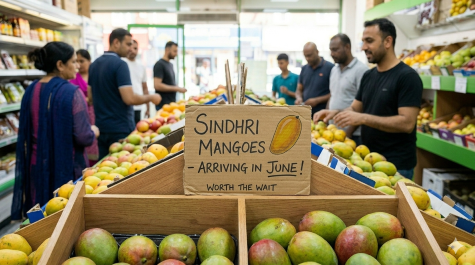
However, our real objective was to find Sindhri mangoes.
The pride of Sindh, the Sindhri mango is rightfully known as the “King and Prince of Mangoes.” In my opinion, it is among the finest mango varieties in the world.
Sindhri mangoes are primarily grown in Mirpurkhas, Tando Allahyar, and the surrounding regions of Sindh. Their distinctive elongated shape, impressive size, bright golden-yellow color, and fiberless, exceptionally sweet, aromatic flesh have made them famous around the globe.
For Sindhi and Pakistani people living abroad, Sindhri mangoes are much more than a fruit. They are a fragrant memory of home, carrying with them the breeze and spirit of one’s homeland.
We visited numerous grocery stores and fruit markets. Everywhere we looked, there were piles of mangoes from India, Africa, and other countries, but the Sindhri mangoes had not yet arrived.
Whenever we asked a shopkeeper about them, a smile would appear on their face, and the answer was always the same:
“They’ll arrive in June.”
“Just wait a few more days.”
We could have bought other varieties of mangoes and enjoyed them, but we decided to wait. Some things are worth anticipating. Sometimes pleasure lies not only in enjoying something but also in waiting for its arrival.
Familiar Scenes, South Asian Culture, and the Colors of the Market
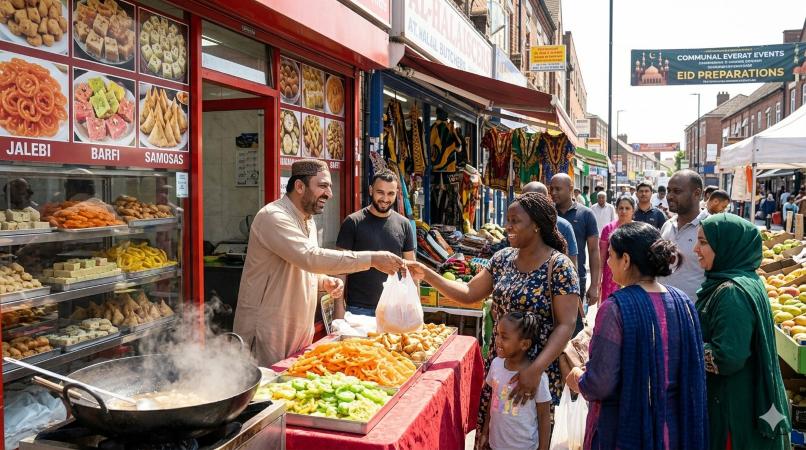
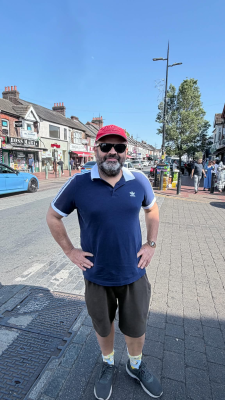 Luton’s commercial center is deeply infused with South Asian character. Many of its streets reminded me of scenes from back home.
Street vendors had set up stalls along the roadsides. Small traders were selling their goods. Crowds moved through the streets while the aromas of spices and freshly prepared food filled the air.
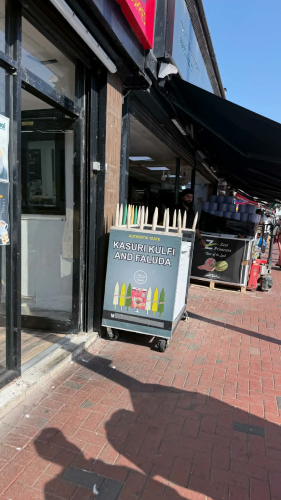
At sweet shops such as Nirala Mithai and others like it, colorful sweets were beautifully displayed behind glass counters. Jalebi, laddoon, barfi, rasgulla, gulab jamun, kulfi, falooda, samosas, pakoras, papri, chaat, and countless other delicacies were readily available.
Even the shop signs carried a distinctly South Asian appearance. Looking at many of them, one could easily forget that they were in England.
People of South Asian origin also appeared to have a significant presence in local politics. Considering the city’s demographic composition, this seemed entirely natural.
Instead of Mangoes, We Found an Unexpected and Beautiful Truth
Although we did not find Sindhri mangoes, we discovered something else, something perhaps even more valuable.
Luton offered a beautiful example of human tolerance and peaceful coexistence within a living, breathing representation of the subcontinent.
People from various South Asian countries, together with individuals from many other parts of the world, lived side by side with mutual respect. Everywhere we looked, people treated one another with dignity. We saw no signs of hatred.
Children played together. Families shopped together. Business partners ran stores together.
For a moment, a thought crossed my mind: Perhaps ordinary people never truly desire hatred.
People everywhere share similar aspirations. They seek peace, dignity, employment, security, and a better future for their families.
 Yet politicians across the subcontinent often trap people into webs of hostility for their own interests. Many differences are amplified by political rhetoric and historical disputes, while ordinary people generally prefer peaceful coexistence.
If left to themselves, many would choose harmony and brotherhood over conflict.
Another observation was that although Luton possesses the energy and atmosphere of a South Asian town, it is noticeably cleaner than many cities in our region.
Roadside stalls operate in a distinctly South Asian fashion, yet within an environment shaped by Western organization and discipline. The result is a fascinating blend of two worlds.
An Elderly Man and a Guitar: A Sad Moment
On our return journey, one scene from the day remained deeply etched in my memory.
It was a scene that filled me with sadness.
On a sidewalk sat an elderly man, probably in his eighties, selling a few personal belongings and household items. Among them was an old guitar.
I do not know why he was selling his possessions. Perhaps he needed money. Perhaps he was clearing up his home. Perhaps there was another reason entirely.
But the sadness and helplessness on his face were unmistakable.
Perhaps life had forced him to part with something he deeply loved.
I looked at the guitar and thought about how musical instruments are never merely wood and strings. They carry memories. They hold dreams. They contain years of a person’s life.
It was painful to witness.
 That elderly man was not simply selling a guitar. Perhaps he was selling the music of his life, his memories, and a lifelong passion.
Sometimes life becomes so harsh that it compels people not only to sell their possessions but also to surrender their passions, dreams, and deepest emotional attachments. At times, people are forced to part with the very activities that nourish their souls.
Watching that elderly man struggle during this stage of his life was heartbreaking.
We continued our way, but the image remained with me.
In essence, the purpose of sharing this story is simple.
That day, we left Milton Keynes in search of Sindh’s beloved Sindhri mangoes. Yet the journey became far more than a search for fruit.
We did not find the mangoes, but we found a miniature subcontinent.
We found shades of Africa. We rediscovered memories of home.
We witnessed the beautiful coexistence of people from different nations, languages, cultures, and religions.
We found evidence that people from diverse backgrounds can live together peacefully.
We learned a lesson about life’s hardships through the silent eyes of an elderly man.
The Sindhri mangoes would likely arrive a few days later, but the sweetness that this journey provided was greater than the sweetness of any mango.
Sometimes the true purpose of travel is not the destination itself, but the people, scenes, emotions, and lessons encountered along the way.
We returned carrying an unforgettable lesson about peace, love, human solidarity, and the bittersweet realities of life, a lesson that became permanently etched in our hearts during that unusually hot English summer.
Read: Echo of Sindh in Kenyan Affections
____________________
Abdullah Soomro, penname Abdullah Usman Morai, hailing from Moro town of Sindh, province of Pakistan, is based in Stockholm Sweden. Currently he is working as Groundwater Engineer in Stockholm Sweden. He did BE (Agriculture) from Sindh Agriculture University Tando Jam and MSc water systems technology from KTH Stockholm Sweden as well as MSc Management from Stockholm University. Beside this he also did masters in journalism and economics from Shah Abdul Latif University Khairpur Mirs, Sindh. He is author of a travelogue book named ‘Musafatoon’. His second book is in process. He writes articles from time to time. A frequent traveler, he also does podcast on YouTube with channel name: VASJE Podcast.