There is always a bright full moon hanging over nights long gone.
Between heaven and earth, our houses, trees, mountains and rivers glow as bright as day.
Wherever moonlight falls, human figures shrink small and slight.
Han Wenge
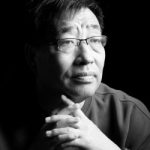 Han Wenge, male, born in 1964, is from the mountainous eastern Hebei region and currently lives in Shijiazhuang. He began writing poetry and published his first poem in 1982. He has released numerous poetry and prose collections, including A Auspicious Village, The Fading Summer, Beneath the Clear Sky, All Living Things, Epic of Yan Village, Xugu Ancient Town, Where Blossoms Bloom, and To the Yanshan Mountains. He has received a variety of poetry awards.
韩文戈,男,1964年生,冀东山地人,现居石家庄。1982年开始诗歌写作并发表第一首诗,先后出版诗(文)集《吉祥的村庄》《渐渐远去的夏天》《晴空下》《万物生》《岩村史诗》《虚古镇》《开花的地方》《致燕山》等多部,获多种诗歌奖。
Translated by Ma Yongbo
The Moon and Wild Geese
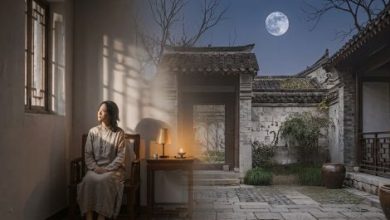
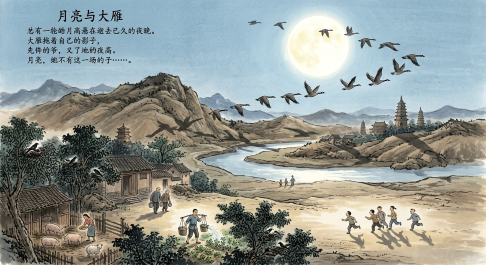
There is always a bright full moon hanging over nights long gone.
Between heaven and earth, our houses, trees, mountains and rivers glow as bright as day.
Wherever moonlight falls, human figures shrink small and slight.
The smaller these figures drift deeper into my memory, the hazier they grow.
Silvery plumes of the moon drift across the pale blue sky; dreams are older than night itself.
Wild geese drag their own shadows behind them,
Shadows cast over mountain ridges, river bends and ancient temples.
They drift slowly across the Yanshan Mountains, glide past upturned faces, flying south or north.
As they soar over borders, they gaze down upon humankind below,
Watching our aged grandfathers and grandmothers, our young fathers and mothers.
Grandpa and Grandma carry grey clay chamber pots, trundling back to old rooms.
Fathers fresh from work carry shoulder poles to draw water under the moon, watering their vegetables and tobacco plants.
Mothers feed swill to pigs and fodder to sheep in the pens.
Magpies and crows that flitted by day have retreated to treetop nests to slumber.
The geese stretch out their cries, clear as moonlight piercing autumn chill and spring frost.
(As if they are the souls of ancient kin, brushing across the vast night sky.)
My playmates and I dragged our thin, frail shadows too,
Running across this plain yet barren old homeland—back then, not one of us was missing.
月亮与大雁
总有一轮皓月高悬在逝去已久的夜晚
天地之间,我们的房屋、树木、山河亮如白昼
凡月光照临的地方,人们又矮又小
矮小的人越往我记忆深处游走,愈加模糊
淡蓝色夜空飘浮月亮银色的羽毛,梦比夜更古老
大雁拖着自己的影子
那影子投射到山脉丘陵、河湾寺庙
缓慢移过燕山,移过仰起的脸庞,飞向南方或北方
它们一边俯视低处的人类,飞过国境线
一边看着我们年老的祖父祖母、年轻的父亲母亲
祖父、祖母提着灰陶尿盆慢慢走回旧房间
刚收工的父亲们在月亮地里挑水浇灌自家的蔬菜和烟草
母亲们往猪圈、羊棚投喂着猪食、草料
白天的喜鹊、乌鸦都已躲进树顶的窝巢打盹
大雁拉长叫声犹如通透的月光穿透秋凉与春寒
(仿佛总是它们,古老亲人的灵魂,擦过夜晚的长空)
我和我的伙伴们也拖着瘦小单薄的影子
奔跑在简单但贫瘠的旧大陆,那时我们一个也不少
***
Labour
In the terraced orchard, a man trims fruit trees
Gripping his pruning shears, perched atop a wooden ladder.
He bends branches that barely survived the winter,
Humming a song amid thawing winds.
It is early March, a fading morning.
The sun climbs over the eastern hill, half-lighting his face and fully mine.
Behind us, the rising black mountain slope blazes pale white.
Grass shoots in wind-sheltered nooks, sharp magpies, crows and sparrows—
They must listen to him sing often, happier than I am.
Soon sap will quicken inside the tree trunks at the sound of his tune,
Swelling tiny buds upon every bough.
This is a song I long forgot; he must be my contemporary.
It has been years since I heard tunes from our youth,
Years since I saw anyone labouring,
Humming an old song from a distant age.
Spring has come. Try it yourself, just as I do now.
劳动
梯田果园里,那个为果树剪枝的男人
紧握着修枝剪,骑坐在木梯顶上
他一边弄弯越冬不久的枝条
一边在解冻的风里,哼起一首歌
这是三月上旬正在逝去的清晨
太阳越过东山,照着他半张脸也照着我整个脸庞
在我们身后抬升的黑山坡亮得发白
避风处的草芽和凛冽的喜鹊、乌鸦、麻雀
一定常常听他唱歌,应该比我幸福
过不了多久,歌声中的果树树液
就要在树干内加速,催出枝头小小的花蕾
这是一首被我遗忘的歌,他应属于我的同龄人
很久没有听到我们年轻时代的歌了
很久没有目睹,还有人一边劳动
一边哼着一首遥远年代的老歌
春天来了,你也试试吧,就像此刻的我
***
Song of the Accordion
(Dedicated to a village female teacher of my teenage years)
The young woman of yore walks down the old street with a worn accordion slung over her back.
She carries the love of those days, a secret love newly requited.
She hums old songs from that era, stepping in time as if to ancient drumbeats.
Her pace quickens, growing lighter as she passes lines of schoolchildren heading home.
The children sing too, white teeth shining, bright lips parted.
Red scarves tied round their necks, their small heads bobbling.
She blends in with them, passing plain carpenters, bricklayers,
Blacksmiths, bamboo weavers and metal menders.
They wander past cattle and sheep, farmlands, lakes, woods,
And tidy yet impoverished villages and towns.
In an instant, she and the children take flight,
Floating just like their songs. Her white silk scarf drifts like a wisp of cloud,
As tender as her secret love, now finally affirmed.
Now she shifts the accordion to her chest, as if cradling an armful of blooming flowers.
Above plants and livestock, she draws music from the bellows.
Her melody merges with the earth’s steady rhythm, intertwined with her youth.
She soars across the blue sky, the sole lyrical poet of that age.
手风琴之歌
(献给一位我少年时代的乡村女教师)
那个旧时的姑娘身背旧手风琴走在旧时的街道上
怀着那时的爱情,秘密的爱情刚刚得到回应
她唱着那时的老歌,踩着那时的步伐,像踩在老鼓点上
她越走越快,越走越轻,穿过成队放学的孩子
孩子们也唱歌,白白的牙齿,明亮的嘴唇
他们系着红领巾,晃动小小的脑袋
她和他们成了一伙,穿过朴素的木匠、泥瓦匠
以及铁匠、篾匠、焗锅匠
穿过牛羊、田野、湖泊、树林和干净又贫穷的村镇
不一会,她和他们就飞了起来
像他们的歌那样飞,她的白纱巾她的白云
像她秘密的刚刚得到确认的爱情
现在,她把琴挪到前胸,像抱着一捧盛开的花
在植物与动物的上空,拉响了手风琴
像她的琴音和大地的鼓点,像她的青春
她开始在蓝天上飞,成了那个时代唯一的抒情诗人
____________________