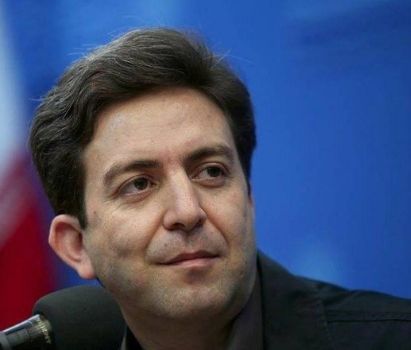
In Iran, Alireza Bahrami is widely respected and recognized as a liberal poet and a journalist who champions freedom; he has consistently stood on the side of the people, opposing both the enemies of human liberty and the warmongers.
By Alireza Bahrami
TEHRAN: Journalists are the modern chroniclers of our contemporary era—historians who document the slow, steady drip of human blood and sorrow into an endless, unfolding narrative. If we are all inhabitants of an ongoing story, then journalists are, more than anyone else, the most adept at recounting what has transpired in our times, and what the times themselves have inflicted upon us.
This is precisely why, when a journalist shifts their focus to other creative realms—be it poetry, fiction, or film—the resulting work is compelling and worth engaging with. It is rooted in a documentary connection to the human experience—a connection forged in these bitter times, where we consume news of one war over breakfast, only to be met with news of yet another by dinner.
Born in 1977, Alireza Bahrami—a senior journalist for Iranian news agencies—is one such figure. He is a product of his own era. He tracks the news, traversing the world street by street; yet, he also crafts poetry, drawing the titles of his poems from the memories of the countless alleys he has witnessed—within a homeland that spans the entire globe. He is the author of several collections of poetry and various research-based books, with others frequently in the pipeline for publication. His work has been recognized with both national and international awards.
In Iran, Alireza Bahrami is widely respected and recognized as a liberal poet and a journalist who champions freedom; he has consistently stood on the side of the people, opposing both the enemies of human liberty and the warmongers.
For millennia, the Middle East has been a realm of poetic exchange—a *moshā’ereh*—rather than the arena of bitter conflict—*moshājerah*—that it has become today. It is a poetic dialogue as vast as the living languages spoken there, characterized by the coexistence and friendship of the ancient peoples who inhabit the region.
Amidst this, the voices of Arabs and Iranians have resonated most eloquently in poetry; it is therefore vital that their poets be more widely introduced—so that, instead of the endless wars we see, there might be only one kind of “contest”: a rivalry to see who among you is the greater poet, or who feels a deeper sorrow over the death of a bird on the streets of Beirut, Baghdad, Tehran, or Damascus…
And if we were to leave matters to the poets of this turbulent region, we would see that children in the Middle East have nothing to do but laugh aloud, and that women cherish the sunlight even more than men do. In such a world, we might—in a perfectly pleasant and ordinary fashion, devoid of any bloody, “Western-style” finale—bid farewell to life while smiling with sheer contentment, gazing toward the sky, much like drifting into a midday nap under the sun.
Yes, we ought to entrust things to the poets of this land; then, even when journalists report a simple, sorrowful story—perhaps about a grandmother mourning a bird that died in some dead-end alley in the Middle East—that sorrow would be felt by everyone.
What is truly remarkable about Alireza is that, despite living in the Middle East and working as a journalist—chronicling killings and explosions—his poetry remains deeply peace-oriented and anti-war. Throughout a significant portion of his poems and his journalistic work, he consistently expresses concern for the fate of children caught in war. Amidst the onslaught of darkness and the stench of blood and gunpowder, he also strives—through his delicate, romantic poems—to open a window for his people to breathe, looking out toward a flower garden.
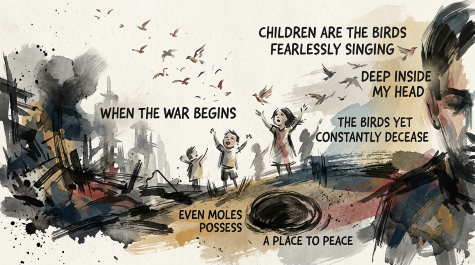
The War
When the war begins
I think about the birds
Even moles possess
A place to peace
The birds yet
Constantly decease
When the war begins
Children are the birds
Fearlessly singing
Deep inside my head
____
The Scarecrow
I whisper poetry
To a scarecrow;
He grows wings
And betrays
The birds.
_____
Housecleaning
This year housecleaning
Was so tough;
So demanding;
Your stuff
Had to be taken out.
____
When…
When a sea
Is condensed
Into a glasscube,
You must be the mermaid;
And I, the pirate
Making love to a box
Full of gold.
When everything is artificial,
Even legends
Grow pale;
However, the more aged
The charm of yours,
The more engaging
And the more enticing
The function.
____
The situation of Love
The old cab
Is the first on watching scenes
But not enjoying as much as an asleep passenger does
Reminding the situation of love after reunion.
____
Loneliness in Odongdo*
Loneliness means when you wake up
It takes a while to remember you are too far from others
Loneliness means there is no one to tell
Awake window’s sleep
Loneliness means walking with wind in darkness
Loneliness means whistling loudly in your mother tongue
*Odongdo is the name of a tiny island near Yeosu City, in southern South Korean coasts. The Lighthouse Tower is the most important part of the tiny island in which no house has been built. Walking along side of the island is the same as walking on a ship deck on an ocean.
_____
Cafes
From Pyongyang to Seoul, from Yeosu to Tokyo
Cafes are the same
Night cafes are poetic and pleasant in all cultures
May be that is why
Faces are familiar to us
A sip of music and smile
A piece of glance
Who always order friendship
Cafes have a pre-defined situation
They are not casinos
For you to test your chance
As definitions say
Cafes can’t put up with every thing
I don’t mean overcrowding
I mean intense light
Which have nothing to do with calmness in cafes
Think about it
In a narrow lane
Covered with old pavement
Two windows
Face to face
Shouting at each other
Yeah dear friend!
There is no chance for us in this gamble
We have mortgaged our women
Crying, blaming the destiny or unknown winds that slamming windows.
_______________