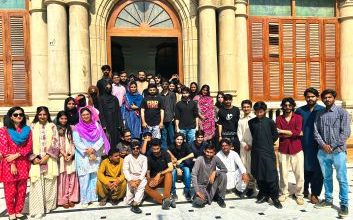
𝗔𝗻𝘁𝗵𝗿𝗼𝗽𝗼𝗹𝗼𝗴𝘆 & 𝗔𝗿𝗰𝗵𝗮𝗲𝗼𝗹𝗼𝗴𝘆 𝗦𝘁𝘂𝗱𝗲𝗻𝘁𝘀 𝗘𝘅𝗽𝗹𝗼𝗿𝗲 𝗦𝗶𝗻𝗱𝗵’𝘀 𝗛𝗲𝗿𝗶𝘁𝗮𝗴𝗲 𝘁𝗵𝗿𝗼𝘂𝗴𝗵 𝗙𝗶𝗲𝗹𝗱 𝗥𝗲𝘀𝗲𝗮𝗿𝗰𝗵 𝗩𝗶𝘀𝗶𝘁 𝘁𝗼 𝗖𝗵𝗮𝘂𝗸𝗵𝗮𝗻𝗱𝗶 𝗧𝗼𝗺𝗯𝘀𝗮𝗻𝗱 𝗠𝗼𝗵𝗮𝘁𝘁𝗮 𝗣𝗮𝗹𝗮𝗰𝗲 𝗠𝘂𝘀𝗲𝘂𝗺
Karachi: The Department of Anthropology & Archaeology, University of Sindh, Jamshoro, organized an academic field research and study tour to two significant heritage sites of Sindh — Chaukhandi Tombs and Mohatta Palace Museum, Karachi — providing students with an opportunity to connect classroom learning with practical exploration of heritage, architecture, material culture, and heritage conservation.
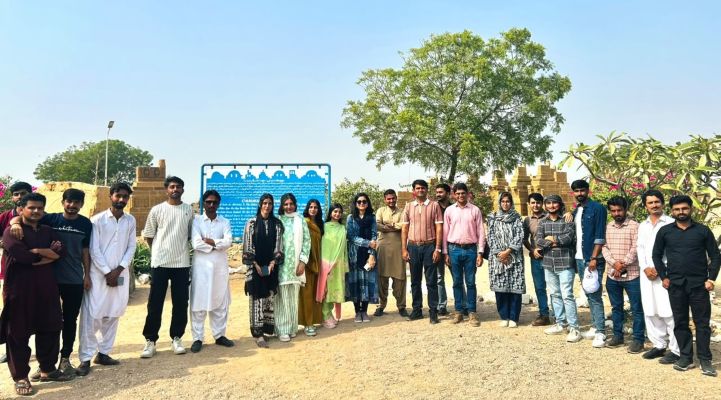 The delegation was led by Dr. Abdul Razaque Channa, Chairman, Department of Anthropology & Archaeology, accompanied by Dr. Rafique Wassan, Dr. Zahida Rehman Jatt, Teaching Assistants Ms. Qurat-ul-Ain and Mr. Abid Mahar, along with students.
Adil Korejo, associated with the Endowment Fund Trust for Preservation of the Heritage of Sindh (EFT), coordinated the academic visits.
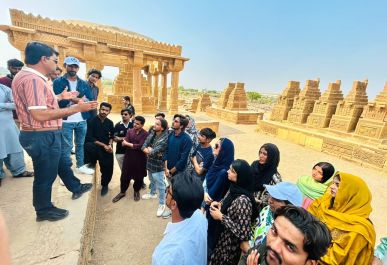
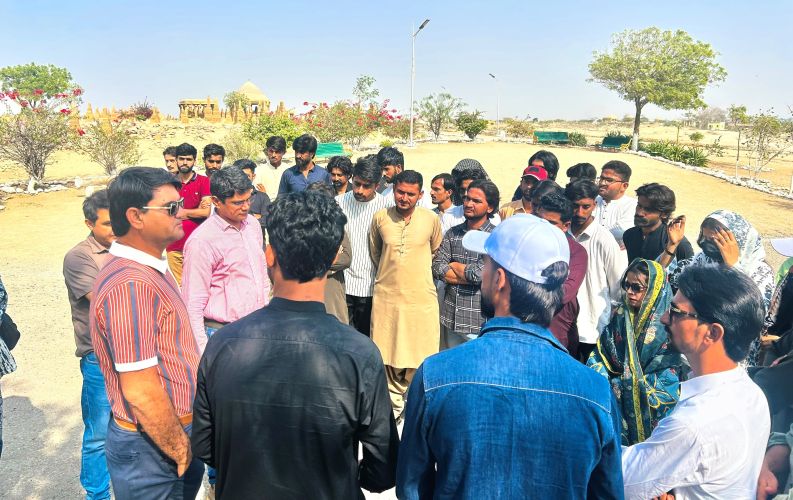 At Chaukhandi Tombs, the delegation was welcomed by Raja Ishfaque Channa, Site In-charge under the Directorate of Antiquities & Archaeology, Government of Sindh. He briefed students about the historical significance of the necropolis of the prominent Jokhia Jam tribe settled in Karachi areas, its seventeenth and eighteenth-century origins, and the unique sandstone tombs decorated with intricate carvings representing social identity, gender symbolism, occupation, and cultural traditions. Students participated in an interactive question-and-answer session focusing on conservation challenges and heritage management.
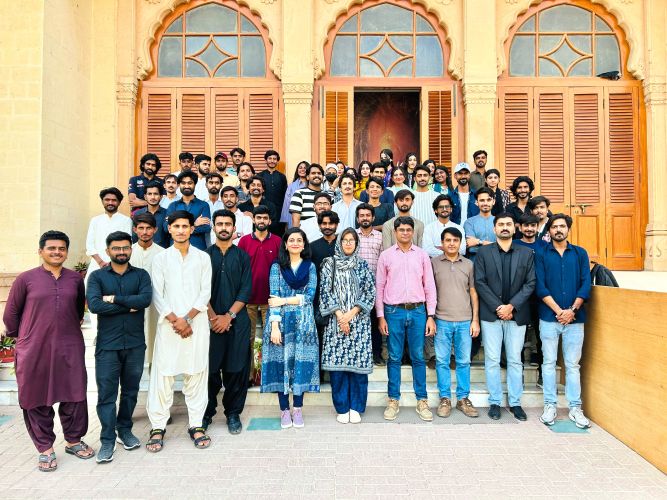 The delegation later visited Mohatta Palace Museum, where they were welcomed by Akber Khushk, Administrator Mohatta Palace Museum. Museum guides Ms. Anooshy and Dilawar Abro provided detailed insights into the palace’s history, architecture, and collections.
Students learned about the palace’s construction in 1927, its distinctive Mughal Revival architectural style, and its transformation into a museum preserving Pakistan’s artistic and cultural heritage.
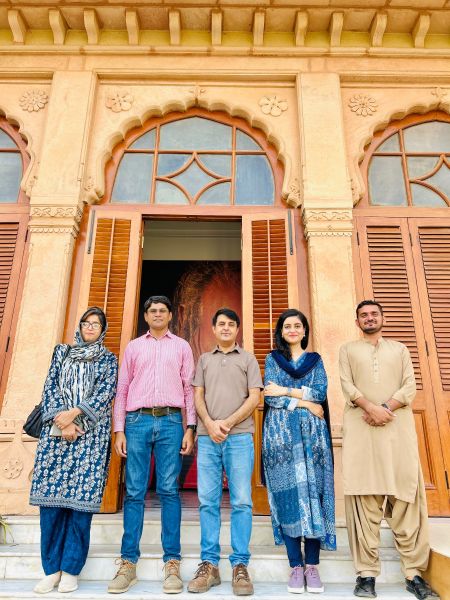 Speaking on the occasion, Dr. Abdul Razaque Channa emphasized that heritage sites are living archives that preserve memories, identities, and cultural histories of communities.
He highlighted the importance of field-based learning in anthropology and archaeology, enabling students to understand societies through their material expressions, architecture, and historical landscapes.
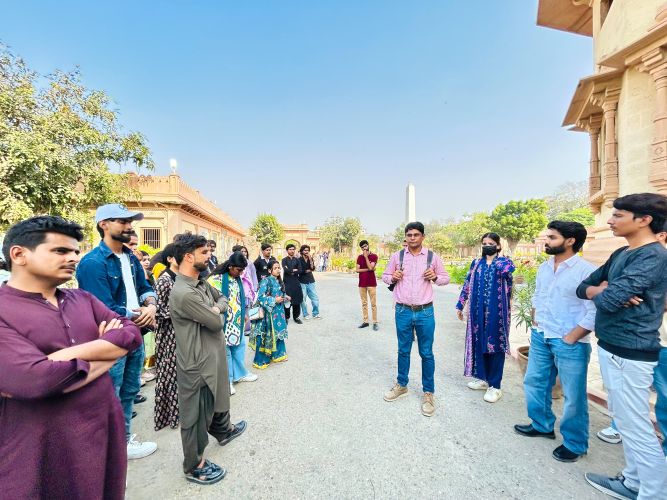 Dr. Rafique Wassan and Dr. Zahida Rehman Jatt highlighted the importance of heritage sites as research spaces where students can examine material culture, urban history, social change, and cultural memory.
The visit concluded with group discussions and photographs at both heritage sites. Dr. Channa thanked the site representatives, Adil Korejo, faculty members, and students for making the field research tour a successful academic experience. The department reaffirmed its commitment to promoting experiential learning and strengthening students’ engagement with Sindh’s rich cultural heritage. (Press Release)
____________
Read: Exploring the Hyderabad Heritage