𝐀𝐧𝐭𝐡𝐫𝐨𝐩𝐨𝐥𝐨𝐠𝐲 𝐚𝐧𝐝 𝐀𝐫𝐜𝐡𝐚𝐞𝐨𝐥𝐨𝐠𝐲 𝐒𝐭𝐮𝐝𝐞𝐧𝐭𝐬 𝐄𝐱𝐩𝐥𝐨𝐫𝐞 𝐇𝐲𝐝𝐞𝐫𝐚𝐛𝐚𝐝’𝐬 𝐋𝐢𝐯𝐢𝐧𝐠 𝐇𝐞𝐫𝐢𝐭𝐚𝐠𝐞 𝐭𝐡𝐫𝐨𝐮𝐠𝐡 𝐅𝐢𝐞𝐥𝐝-𝐁𝐚𝐬𝐞𝐝 𝐋𝐞𝐚𝐫𝐧𝐢𝐧𝐠 𝐕𝐢𝐬𝐢𝐭
Jamshoro, Sindh
The Department of Anthropology and Archaeology, University of Sindh, Jamshoro, organized an academic field research and learning visit to three significant heritage institutions of Hyderabad—Radio Pakistan Hyderabad, K.B. Azeem Khan Sindh Government Library, and Mukkhi House Museum—under the theme “Learning Beyond the Classroom: Exploring Tangible and Intangible Heritage – Urban Heritage Walk and Living Music & Art Experience.”
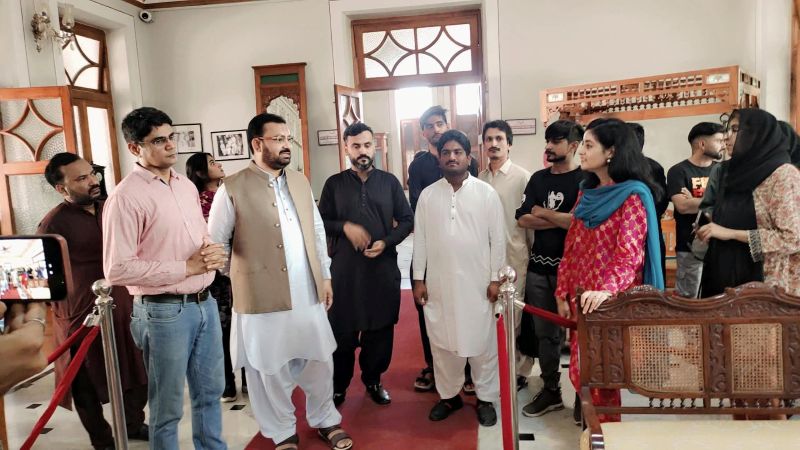 The visit was organized for third-year and final-year students as part of the courses Anthropology of Art and Music, convened by Dr. Rafique Wassan, and Urban Anthropology, convened by Dr. Zahida Rehman Jatt.
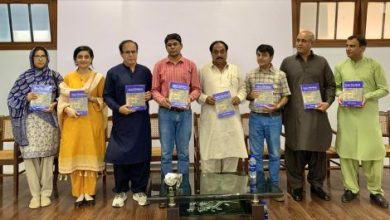
The delegation was led by Dr. Abdul Razaque Channa, Chairman, Department of Anthropology and Archaeology, and included Prof. Dr. Farhat Naureen, Director ORIC, University of Sindh, faculty members, Teaching Assistants Ms. Qurat-ul-Ain, Ms. Aneela Paras, Mr. Abid Mahar, and students.
Speaking before the visit, Dr. Abdul Razaque Channa highlighted that anthropology and archaeology are field-based disciplines where meaningful learning emerges through direct engagement with communities, archives, museums, libraries, historical buildings, and cultural institutions. He said such visits enable students to connect academic theories with real-world heritage practices and develop a deeper understanding of society, culture, and historical change.
 At Radio Pakistan Hyderabad, the students were welcomed by Mr. Ali Akbar Hingorjo, Station Director, who briefed them about the historic role of the institution in preserving Sindh’s intangible cultural heritage. He highlighted the station’s contribution to recording Sindhi Sufi poetry, folk traditions, oral histories, and musical heritage, including the works of great poets such as Shah Abdul Latif Bhittai and Sachal Sarmast.
He also discussed the contribution of Radio Pakistan Hyderabad in promoting renowned artists, including Abida Parveen, Rubina Qureshi, Sushila Mehtani, Mehtab Akbar Rashidi, Mustafa Qureshi, Muhammad Ali, Amar Jaleel, and Agha Saleem.
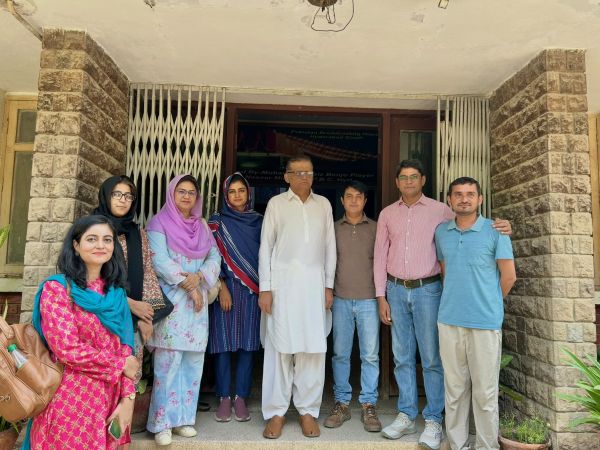 Dr. Rafique Wassan explained that Radio Pakistan serves as a living archive for anthropological research, preserving voices, sounds, languages, music, and memories that reflect changing social realities. He emphasized that such archives are essential sources for understanding cultural identity and safeguarding intangible heritage.
At K.B. Azeem Khan Sindh Government Library, Ms. Saba Ayoub introduced students to the history and transformation of the historic library, highlighting its role in promoting reading culture, women’s education, and access to knowledge.
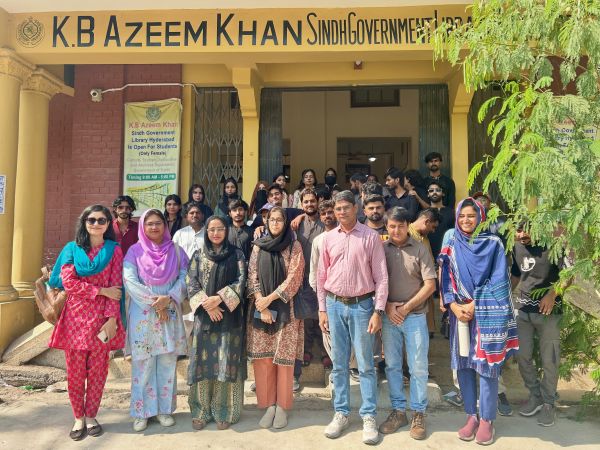 She briefed the delegation about its rich collection, digital facilities, computer laboratory, and sustainable solar-powered infrastructure.
Dr. Zahida Rehman Jatt remarked that libraries are important urban institutions where knowledge, identity, gender, and social development intersect, making them valuable spaces for urban anthropological research.
The final destination was Mukkhi House Museum, where students were welcomed by Mr. Naeem Ahmed, In-charge of the Museum. He introduced students to the architectural significance and social history of the nineteenth-century merchant residence, highlighting the role of trading communities in shaping Hyderabad’s urban landscape.
Students explored the building’s architecture, artefacts, and historical narratives, learning how heritage spaces preserve collective memory and community histories.
 During interactive question-and-answer sessions at all three institutions, students discussed heritage conservation, archival research, urban transformation, and the role of cultural institutions in preserving history. Dr. Channa appreciated the cooperation of all host institutions and thanked Prof. Dr. Farhat Naureen, Mr. Naqash Sahito, alumnus of the department and currently serving in the Culture Department, Government of Sindh, faculty members, Teaching Assistants, and students for making the field visit a successful academic experience.
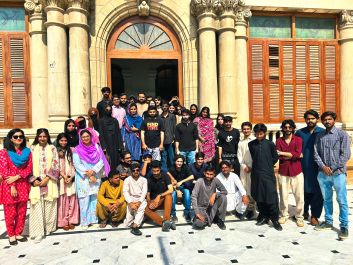
The visit concluded with group photographs at the heritage sites, followed by an informal academic interaction over lunch.
The Department reaffirmed its commitment to promoting experiential learning and preparing students to become socially engaged researchers contributing to the documentation and preservation of Sindh’s rich cultural heritage. (Press Release)
__________