A kinder world may begin with something as small as a bowl of water, a rescued cat, or a cup of coffee that helps another living creature survive.
We often talk about making the world a better place. We discuss development, education, technology and economic progress. All these things matter, but perhaps the character of a society is also reflected in how it treats those who have no power, no voice, and no way of demanding their rights.
By Abdullah Usman Morai | Sweden
There is something extraordinary about cats. They do not need to speak our language, understand our problems, or ask for our attention to become an important part of our lives. Sometimes, their quiet presence, playful movements, innocent expressions, and unexpected affection are enough to bring a little happiness into an otherwise ordinary day. Perhaps that is why cats have found a special place in the hearts of millions of people around the world.
I am not sure whether many people genuinely dislike cats. Even those who do not keep them as pets often find themselves smiling when a little cat walks past them, curls up somewhere comfortably, or looks at them with those curious eyes. Cats have a special ability to make an environment feel warmer and more welcoming.
My own appreciation for these beautiful creatures has grown through different encounters during my travels.
At the end of 2012, I travelled to Reykjavik, the capital of Iceland, to celebrate the New Year. During my stay, I had the pleasure of meeting Eyvi and his family. I also met his maternal uncle, whose name, if my memory serves me correctly, was Bardi. He invited us to his apartment, which immediately caught my attention. The place looked almost like a miniature museum, filled with interesting objects, decorations, and things that seemed to have their own stories.
However, what made the strongest impression on me was not the collection of objects but the cats living there. There must have been five or six of them, perhaps even more, and each seemed to have its own personality. I remember that their names were inspired by religious personalities, including both male and female names. My impression was that he had adopted these cats and given them a comfortable, warm, and secure home. It was a beautiful example of how a person can turn affection into responsibility.
Years later, I found another expression of this affection in Istanbul, Türkiye. Anyone who has visited Istanbul will understand why the city is so closely associated with cats. They are everywhere in narrow streets, outside shops, near restaurants, around historic buildings, and sometimes even occupying the most comfortable seats as if they own the place. And perhaps, in a way, they do!
The people of Istanbul often treat their feline neighbors with remarkable affection. It is common to see residents leaving food and water for them, providing shelter and making sure they are not forgotten. Cats are not merely tolerated in the city; they have become part of its identity, its everyday rhythm and its charm. Watching them move freely through the streets makes one realize that a city can be beautiful not only because of its architecture and monuments but also because of the kindness shown to its smallest inhabitants.
I experienced another heartwarming sight in Valletta, the capital of Malta. I was particularly happy to see small wooden houses built for cats. These modest shelters may not look impressive, but their meaning is enormous. Someone had taken the time to think about animals that could otherwise be left exposed to changing weather and the difficulties of street life. Such small gestures reveal something important about society: compassion is often visible in the way it treats those who cannot ask for help.
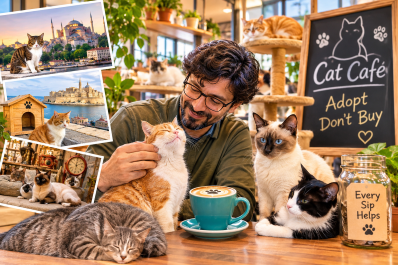
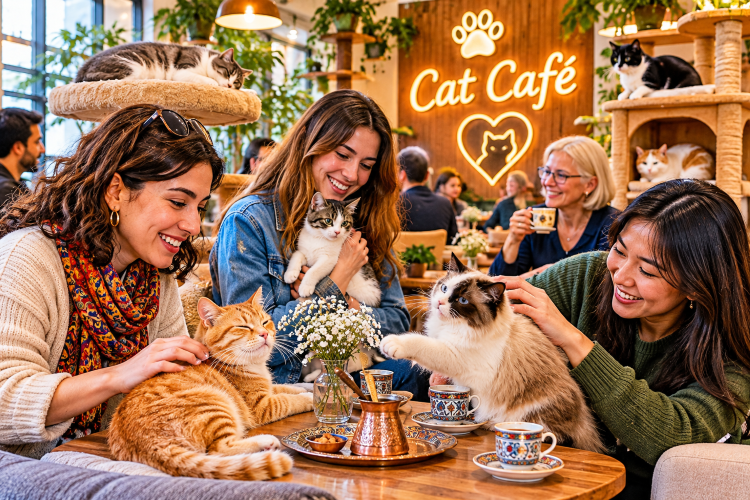 Recently, I came across another inspiring example through Mr. Joseph, who owns a café near Mega Bangna Shopping Mall in Bangkok, Thailand. His establishment is called Siamese Cat Café.
The inspiration behind the café was a family cat named Lucy. What began with affection for one beloved animal developed into a welcoming place where people can enjoy food and coffee while spending time with rescued cats. The café has created a relaxed, family-friendly environment, bringing together traditional hospitality, interesting decorations, comforting food and, of course, its furry residents.
According to the café’s introduction, it provides a home for 16 adopted cats. It also cares for six rabbits, a corgi, a stone turtle and some tiny fish. Its menu includes Thai, Vietnamese, and other food choices, along with coffee served with a distinctive Siamese Cat Café touch.
But the most beautiful part of this initiative is its philosophy: adopt, don’t shop.
Instead of buying animals simply because a particular breed or appearance is fashionable, the idea is to give abandoned or rescued animals an opportunity to live in a safe and loving environment. A portion of the café’s income supports animal rescue work and medical care in Thailand. In other words, customers are not simply purchasing a meal or a cup of coffee; they are also contributing, in their own small way, to the well-being of animals.
The café’s message, “Every sip helps”, captures this idea beautifully. Imagine enjoying your coffee, meeting a few friendly cats, relaxing with family or friends, and knowing that your visit also helps provide food, shelter and medical treatment for animals in need. It is a lovely example of how an ordinary commercial activity can be connected with a meaningful social purpose.
There is also a wider lesson here. Businesses do not always have to measure their success only through profits. They can create experiences that bring people together, support vulnerable creatures and encourage responsible behaviors. A café can become more than a place to eat and drink; it can become a small center of awareness, empathy, and community participation.
Of course, loving animals also means understanding their needs. Adoption should come with a commitment to proper food, clean surroundings, vaccinations, veterinary care, adequate space, and respect for their natural behaviors. Animals are not decorations or temporary sources of entertainment. They are living beings that depend on us once we take responsibility for them.
Perhaps we should also think about the many cats living on the streets of our own towns and villages. They do not need grand buildings or expensive arrangements. Clean water, suitable food, a safe corner during extreme weather, and access to veterinary assistance can make a tremendous difference. Communities, cafés, shops and individuals can all contribute according to their capacity.
From the apartment in Reykjavik to the streets of Istanbul, from the wooden shelters of Valletta to the welcoming café in Bangkok, I see one common thread: kindness does not require a particular language, nationality, religion or financial status. It only requires a little sensitivity towards another living creature.
We often talk about making the world a better place. We discuss development, education, technology and economic progress. All these things matter, but perhaps the character of a society is also reflected in how it treats those who have no power, no voice, and no way of demanding their rights.
A cat may never understand the generosity behind a warm shelter or the purpose of a cup of coffee sold to support its care. But it will feel the difference between hunger and food, cold and warmth, fear and safety.
And perhaps that is enough.
A kinder world may begin with something as small as a bowl of water, a rescued cat, or a cup of coffee that helps another living creature survive.
Read: The Social Media Etiquettes
_____________
 Abdullah Soomro, penname Abdullah Usman Morai, hailing from Moro town of Sindh, province of Pakistan, is based in Stockholm Sweden. Currently he is working as Groundwater Engineer in Stockholm Sweden. He did BE (Agriculture) from Sindh Agriculture University Tando Jam and MSc water systems technology from KTH Stockholm Sweden as well as MSc Management from Stockholm University. Beside this he also did masters in journalism and economics from Shah Abdul Latif University Khairpur Mirs, Sindh. He is author of a travelogue book named ‘Musafatoon’. His second book is in process. He writes articles from time to time. A frequent traveler, he also does podcast on YouTube with channel name: VASJE Podcast.