Korean Poet Kang Byeong-Cheol Wins First Prize in the Non-European Poetry Category at the 2026 International Oscar Wilde Literary Award in Italy
Castiglion Fiorentino, Italy
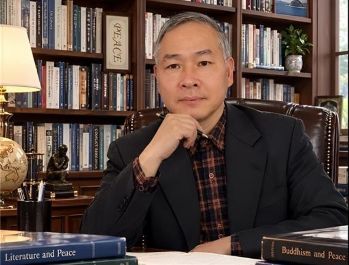
Korean poet Byeong-Cheol Kang has won First Prize in the Non-European Poetry Category (I Premio Poeti Extra-Europei) at the 2026 International Oscar Wilde Literary Award (Premio Internazionale Oscar Wilde 2026), held in Italy.
The award ceremony took place on November 14, 2026, at the historic Church of Sant’Agostino in Castiglion Fiorentino, near Arezzo in Tuscany, Italy. The event celebrated the value of literature and the arts while recognizing the creative achievements of writers and artists from around the world.
Inspired by the literary legacy of Oscar Wilde, the ceremony brought together literary awards, lifetime achievement honors, commemorations, and honorary degrees. The event was presided over by Professor Luca Filipponi, while the award committee was chaired by Maria Concetta Borgese.
Kang’s achievement is particularly meaningful as it highlights the literary accomplishments of a non-European poet on an international stage traditionally dominated by European literary traditions. Based in Jeju, South Korea, Kang has introduced Korean literature to international audiences through poetry, fiction, literary criticism, and international cultural exchange.
A Literary Journey Connecting Korean Poetry with the World
Byeong-Cheol Kang is a poet, novelist, and literary scholar from Jeju Island, South Korea. He holds a Ph.D. in Political Science from Jeju National University. Since making his literary debut in 1993, he has continued to explore themes of nature, human existence, life and death, peace, coexistence, and Eastern philosophy.
Rooted in the natural environment and historical experiences of Jeju Island, his literary world addresses universal questions of human existence. His poetry is particularly distinguished by its integration of Eastern philosophy and Buddhist thought into contemporary poetic expression, reflecting on the relationships between humanity and nature, the individual and the world.
Through literary awards and international literary activities, Kang has introduced his works to readers across different linguistic and cultural communities.
In 2025, he was named Best Asian Poet of the Year at the Silk Road International Poetry and Art Festival in Dubai. In 2026, he received the Prix d’Honneur, pour œuvres complètes from the Naji Naaman Literary Prizes in Lebanon, an honorary award recognizing his complete body of work.
The 2026 International Oscar Wilde Literary Award represents another significant milestone in this continuing international literary journey.
Kang has also devoted considerable energy to fostering literary connections between Korea and the international community. He founded the Korean Association of World Literature (KAOWL) to promote international literary exchange and introduce writers and poets from different countries to Korean literary circles. Through this organization, he has worked to bring Korean poets’ works to international literary magazines and anthologies while creating opportunities for writers from different cultural backgrounds to communicate through literature.
Based in Jeju, he continues to expand the foundations of international literary exchange, helping writers from different languages and cultures discover common ground through poetry and literature.
An International Gathering of Literary and Cultural Figures
The award ceremony brought together Italian writers, artists, and cultural representatives.
Mario Agnelli, Mayor of Castiglion Fiorentino, and Massimiliano Lachi, the municipality’s Councillor for Culture, attended the event and expressed their support for the initiative.
The award committee consisted of Maria Concetta Borgese as President, Sabrina Morelli as Vice President, Paola Biadetti as Director of Communications, Sandro Costanzi, historian and literary critic, and Francesco Petrillo, representing the University and Academic Committee.
Professor Mauro Capitani, President of the Mauro Capitani Foundation for Art and Culture, also participated, further strengthening the dialogue between literature, the arts, and cultural scholarship.
The published literature and lifetime achievement categories recognized numerous writers and artists for their contributions.
In the unpublished literature section, Rita Scelfo received first prize in the short story category, followed by Arianna Iovino in second place and Patricia Luongo in third place.
In the unpublished poetry category, Floria Bufano won first prize, while Anna Maria Stefanini and Roberto Croce shared second place.
Additional awards recognized achievements in various literary fields, including European poetry, humanistic medicine, and academic literature. Among these distinctions, Byeong-Cheol Kang received First Prize in the Non-European Poetry Category.
Literature Preserves Memory: A Tribute to Nicolò Giuseppe Brancato
One of the most meaningful moments of the ceremony was a tribute to the memory of Nicolò Giuseppe Brancato, a professor and artist who had recently passed away.
A special issue of the magazine Giovani Europei, published on the occasion of the award ceremony, was dedicated to his memory, with a commemorative tribute featured on its cover.
The tribute symbolized literature’s enduring ability to preserve and transmit the human and intellectual legacy of those who have made meaningful contributions to art and knowledge.
The ceremony was also enriched by the conferment of several honorary degrees, bringing together recognition of individual achievement and the celebration of knowledge.
An Award Looking Beyond the Present
The event in Castiglion Fiorentino marked another important step in the evolution of the International Oscar Wilde Literary Award. It reaffirmed the award’s commitment to creating connections across generations, languages, and diverse cultural experiences.
In an age when the rapid flow of information often leaves little room for reflection, the written word once again takes center stage, demonstrating its enduring ability to question the present and build bridges toward the future.
For Byeong-Cheol Kang, this award is not merely a personal literary achievement. It also represents an opportunity to introduce Korean poetry to a wider international readership and to strengthen cultural connections between Korea and the world.
His literary vision extends beyond individual recognition. Through international literary exchange, he seeks to encourage mutual understanding among people of different cultures and languages, explore the coexistence of humanity and nature, and share the values of peace, compassion, and consolation.
Literature acquires a wider life when it travels beyond the boundaries of its original language, finding new readers through translation and cultural exchange.
The 2026 International Oscar Wilde Literary Award is therefore not only a significant achievement in Byeong-Cheol Kang’s literary career but also another milestone in the growing international presence of Korean literature.
______________