While World expanded its railway network, Pakistan allowed an inherited national asset to shrink
Pakistan, meanwhile, inherited a railway network of around 12,000 kilometers if the wider pre-Partition network figures are considered, but its present operational route network is only around 7,500–7,800 kilometers, representing a decline of roughly 35–38 per cent, depending on the historical and current baseline used.
By: Ramesh Raja
Pakistan’s transport story over the past eight decades tells a troubling tale. We have built motorways, highways, flyovers and bridges across the country, but at the same time we have allowed one of the most efficient forms of mass transportation, the railway, to decline. The consequences are now visible everywhere: overloaded roads, thousands of heavy trucks, rising fuel consumption, pavement deterioration, traffic congestion, higher logistics costs and increasing pressure on public finances.
The railway was not a luxury inherited from the British. It was a strategic economic asset designed to connect markets, ports, agricultural areas, industrial centers and cities over long distances. Yet Pakistan has failed to develop that asset in proportion to its population, economy and transportation needs.
The really interesting question is which actual services in the world give the best time-cost-comfort combination. There are some excellent examples in Japan, China, Europe, India, Australia, Canada and the Middle East, and the differences are quite striking.
The comparison with India is particularly revealing. Around Independence, the railway network in the territories that became India was approximately 53,000 kilometers. Today, India’s railway route network is around 70,000 kilometers, an increase of roughly 32 per cent. Pakistan, meanwhile, inherited a railway network of around 12,000 kilometers if the wider pre-Partition network figures are considered, but its present operational route network is only around 7,500–7,800 kilometers, representing a decline of roughly 35–38 per cent, depending on the historical and current baseline used.
The precise figures require care because Partition changed the boundaries of the railway system and historical sources use different definitions of route-kilometers and track-kilometers. But the broad conclusion is unmistakable: India expanded and modernized its railway system, while Pakistan largely preserved, neglected and in some cases abandoned what it inherited.
Railways are not merely another mode of transport
A modern country does not choose between roads and railways. It needs both.
Roads are best suited to flexible, door-to-door movement, short and medium-distance journeys and the first and last mile of freight. Railways are particularly efficient for large numbers of passengers and heavy freight travelling over long distances.
One freight train can replace a very large number of trucks. This means fewer heavy vehicles on highways, lower pavement damage, lower fuel consumption, reduced congestion and lower emissions. For a country struggling with foreign-exchange shortages and a large petroleum import bill, this is not merely an engineering consideration. It is an economic necessity.
Pakistan has instead allowed an enormous amount of long-distance freight to migrate from rail to road.
The result is a vicious cycle. More trucks require stronger pavements. Stronger pavements require greater investment. Heavy axle loads accelerate deterioration. More vehicles increase congestion and crashes. More diesel consumption increases the import bill. The government then spends more money repairing roads that are being damaged partly because the railway system is unable to carry the freight it should be carrying. This is economically inefficient.
The highway cannot carry everything
Pakistan’s highway network is indispensable. The National Highway Authority and provincial governments have an important responsibility to expand, rehabilitate and maintain roads. But highways cannot be expected to perform the job of railways.
Consider the movement of coal, cement, wheat, fertilizer, sugar, minerals, containers, petroleum products, steel and other bulk commodities over several hundred kilometers. Transporting all of these commodities by thousands of individual trucks is neither the most economical nor the most environmentally sustainable solution.
The road should be the feeder, not necessarily the entire journey.
A better system would allow a truck to collect cargo from a factory, farm or warehouse and take it to a nearby rail terminal. Rail would then carry the shipment hundreds of kilometers to another terminal, where trucks would complete the final delivery.
This is modern multimodal transportation.
Pakistan’s ports need rail connectivity
The railway question becomes even more important when viewed through Pakistan’s ports.
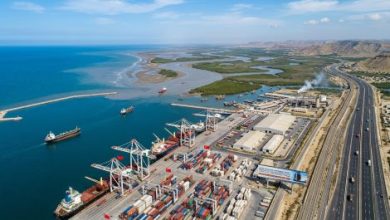
Karachi Port, Port Qasim and Gwadar are gateways to international trade. Yet a port’s economic value depends not simply on how much cargo it can handle, but on how efficiently that cargo can move into and out of the country.
Pakistan needs strong rail freight corridors connecting its ports with major inland economic centers.
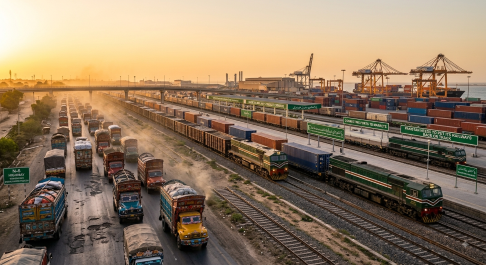
Containers arriving at Karachi should be capable of moving efficiently by rail to Lahore, Faisalabad, Multan, Peshawar, Quetta and other industrial and commercial centers. Agricultural products should be able to reach ports. Imported raw materials should be transported efficiently to factories. Export goods should reach ports at predictable cost and within predictable time.
Without an efficient rail freight system, Pakistan’s ports remain partially disconnected from the national logistics network.
The geography of Pakistan makes rail particularly important
Pakistan has a long north-south economic corridor. Karachi and Port Qasim are located in the south, while major population and industrial centers are spread across Sindh, Punjab, Khyber Pakhtunkhwa and Balochistan.
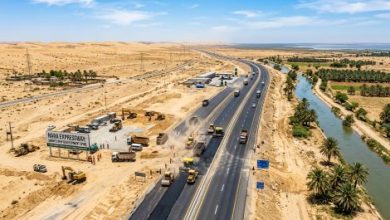
This geography naturally creates long-distance freight flows. The country’s principal road corridors, including the N-5, N-55 and motorway network, carry an enormous amount of traffic. Instead of asking roads to carry an ever-increasing proportion of this freight, Pakistan should develop parallel high-capacity railway corridors.
The principle should be simple: long-distance bulk freight should move by rail, short-distance and door-to-door freight by road, international maritime freight by sea, and high-value, time-sensitive cargo by air. Together, these modes should function as an integrated national transportation system, with each mode performing the role for which it is most efficient.
The neglected opportunity of freight rail
For decades, Pakistan’s railway debate has focused heavily on passenger trains, fares, punctuality and locomotives. These are important issues, but the strategic economic opportunity may lie even more strongly in freight rail.
Pakistan Railways should be transformed from primarily a passenger railway into a commercially oriented national logistics system.
Dedicated freight trains, container trains, modern terminals, electronic tracking, efficient loading and unloading, reliable schedules and competitive tariffs could make railway freight attractive to industry.
Railway stations alone are not enough. Pakistan needs freight terminals, dry ports, inland container depots, logistics parks and industrial sidings connected to the railway network.
The objective should be to move cargo from “factory to port” or “farm to market” with minimum handling and predictable delivery time.
Modernization, not nostalgia
Reviving Pakistan Railways does not mean simply repairing old tracks and bringing back old trains; Pakistan needs a modern railway system designed to meet the demands of a growing economy. Priority should be given to the rehabilitation and strengthening of existing tracks, double-tracking of heavily used corridors, modern signalling and train-control systems, electrification where traffic volumes justify it, high-capacity freight corridors, modern locomotives and rolling stock, containerized freight services, dedicated freight terminals, port-to-rail connectivity, dry ports and inland logistics centers, improved level crossings, better maintenance systems, digital freight tracking and scheduling, and professional, commercially accountable railway management. The railway should also be fully integrated with the highway network, so that every major logistics center is not designed as a road-only facility but is assessed for rail connectivity from the very beginning, enabling efficient movement of freight between roads, railways, ports, dry ports, industries and markets.
The cost of doing nothing
The cost of railway neglect is not confined to Pakistan Railways’ balance sheet. It is distributed across the entire economy.
It appears in the cost of diesel. It appears in the deterioration of highways. It appears in the price of imported goods. It appears in the cost of agricultural products reaching markets. It appears in congestion and travel delays. It appears in road accidents. It appears in carbon emissions. It appears in the government’s annual expenditure on road rehabilitation.
In other words, the railway’s weakness creates costs elsewhere in the economy.
This is why railway investment should not be evaluated merely by asking whether Pakistan Railways itself will make a profit. The proper question is whether an integrated railway system will reduce the overall logistics cost of the country.
Pakistan should learn from India, but not copy it blindly. India’s experience provides an important lesson. India did not abandon its inherited railway system when road transportation expanded. Instead, it continued investing in railway expansion, gauge conversion, doubling, electrification, modern signalling and dedicated freight corridors.
Pakistan can follow the principle without simply copying India’s projects. Our railway network must be designed around our own geography, trade patterns and economic priorities.
The most urgent objective should be to connect ports, industrial zones, agricultural regions, mineral-producing areas, dry ports and major cities through a reliable national rail network.
A new national transport policy is needed
Pakistan should develop a long-term National Multimodal Transport Strategy in which railways and highways are planned together rather than separately.
Before constructing a major new highway or motorway, planners should first assess what proportion of the expected traffic will consist of long-distance freight, whether some of that freight can be shifted to rail, where the appropriate rail freight terminal should be located, and how the road network can provide efficient first- and last-mile connectivity. Asking these questions at the planning stage would help create a much more rational, integrated and cost-effective national transport network.
The objective should not be to build the maximum number of kilometers of roads or railway tracks. The objective should be to build the most efficient national transportation system.
The railway is an economic necessity
Pakistan cannot afford to continue treating railways as a declining public-sector organization whose problems are dealt with through occasional bailouts and temporary repairs.
Railways are strategic infrastructure.
A strong railway can carry people, move national freight, connect ports with markets, reduce pressure on highways, save fuel, support exports, reduce logistics costs and improve regional connectivity.
Pakistan has already invested billions in its highway network, and the answer is not to stop building roads but to rebalance the national transport system. We need roads for flexibility and railways for capacity, trucks for first- and last-mile connectivity and trains for long-haul transportation, while ports must be connected to railways, industries to freight terminals, and highways to logistics hubs. The choice before Pakistan is therefore not between railway and road, but between an integrated railway-and-road transport system and an increasingly expensive road-dependent economy. After nearly eight decades of Independence, Pakistan should stop asking whether it can afford to revive its railway; the more important question is: Can Pakistan afford not.
Read: Tando Masti Khan: Trade Corridor Reimagined
______________________
 The author of this article, Engr. Ramesh Raja, is a Civil Engineer, visionary planner, PMP certified and literary enthusiast with a passion for art and recreation. He can be reached at engineer.raja@gmail.com