New units would not help address the challenges faced by the country.
Ambassador M. Alam Brohi
How can our rulers think of shredding the existing federal units into pieces without the consent of the people who own them? Do they really hold the size of the provinces responsible for the collapse of the systems being practiced for the past seven decades? How do other states manage their big and populous federal units? India has many big Union states with large populations and geographical territories. One of its states is of almost Pakistan’s numerical size, with sprawling and populous cities. Has it never encountered any challenge in self-rule? India has faced, and is still facing, separatist movements. However, it has successfully addressed such challenges.
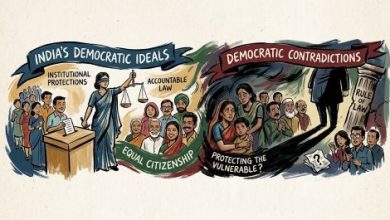
The journalist and author, M.J. Akbar, in his “India: The Siege Within” of 1985, has thoroughly surveyed the internal threats to India’s unity, and given all credit to uninterrupted democratic, representative and inclusive governance working as a safety valve against political strains. Regular elections, emergence of new and alternate leadership, and recurring choice for changes in the political leadership provide an outlet for the accumulated public anger that undermines the federal spirit. Surely, it must be so. Jawaharlal Nehru guided his nation to the path of parliamentary and participatory democracy. We were unlucky.
Pandit Nehru died on 27 May 1964. By this time, democracy and the parliamentary form of governance with civilian supremacy over national institutions had taken strong roots. Lal Bahadur Shastri was democratically elected as his successor. Though short and diminutive, he was a strong-willed leader. He ordered his commanders to attack Pakistan in the 1965 war. We were confident that India would not cross the international border. He died in Tashkent after signing the Tashkent Treaty. Nevertheless, he succeeded in excluding the mention of Jammu and Kashmir, the core dispute, in the Treaty.
Pandit Nehru established a ‘States Delimitation Commission’ in 1953 to reorganize the Union states based on geographical affinity, cultural and linguistic or ethnic affiliation, and administrative convenience. Nehru was well aware that India has never been a united country. It was a geographical and cultural entity sprawling over a subcontinent, consisting of independent states before the advent of the British Empire. The British imperialists welded it into one country comprising 585 semi-autonomous states, princedoms, territories, presidencies and provinces. The states were governed by governors or lieutenant governors, or Residents and Agents General under the Viceroy. The semi-autonomous states recognized the suzerainty of the British India administration.
This Commission submitted its recommendations after a thorough process of deliberations, surveys and consultations with local leaders for over two years, for the reorganization of the Union states. Gradually, the Union states were increased to 28, along with 8 territories ruled directly by the Union authority. These states, created by acts, owe their existence to the Union. In contrast, Pakistan’s federal units were independent nations occupied by British imperialists, and later they consented to become part of – and provide territory for – the new country.
The separation of East Bengal has shrunk the size of Pakistan to four federal constituents mentioned in the 1973 Constitution as the territory of Pakistan along with Islamabad. This amounts to the constitutional recognition of the territories as separate political and geographical entities. Their territorial integrity enjoys constitutional sanctity. The Constitution makes any changes in their geographical boundaries subject to approval by their representative Assemblies and Parliament by a two-thirds majority vote.
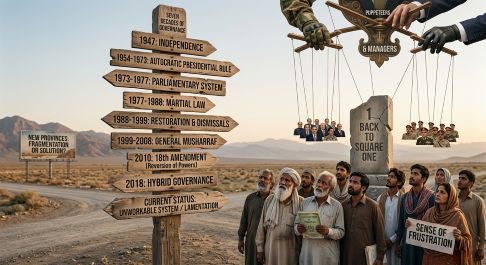
The Quaid played his role and achieved his dreamland at the cost of his personal life and health. He lived hardly a year in independent Pakistan. The successors of the Quaid failed the nation which had rallied behind this frail man in search of a country. They failed to frame the Constitution and to build democratic national institutions. The military takeover of 1958 and subsequent political blunders led to the demise of Jinnah’s Pakistan.
General Ayub Khan not only patronized the powerful political dynasties, he prepared a new crop of public servants, industrialists and political leadership. They supported Ayub Khan’s political and electoral system; partnered in power with him; and also gradually captured state resources. The economic development and industrial expansion were lopsided. The industrial units were concentrated within Punjab. The industrial units in Sindh were restricted mostly to Karachi, with a scant number in Hyderabad and Sukkur. Barring Karachi, Sindh remained an agrarian society dominated politically and economically by the landlords, feudal chiefs, Sardars, Pirs and Sajjadah-nashins made powerful by Ayub Khan in his Convention Muslim League and his successors, including Zulfikar Ali Bhutto, who invited them to jump on his PPP’s popular bandwagon.
All good hospitals and educational institutions in both public and private sectors are also concentrated in Karachi and Hyderabad. In the interior of the province, there are only small branches of the big and reputable hospitals, and those too in Sukkur. Karachi is a cosmopolitan city and hosts people of diverse ethnic, linguistic, cultural and religious backgrounds. It has been the capital of the province for centuries, and the center of culture, art and literature, journalism, scholarship, and political activity of the people of Sindh. It has welcomed all seeking shelter, livelihood and labour for their bread and butter. Sindh will be a headless torso without Karachi and Hyderabad. This would be tantamount to pushing the people of Sindh a century back.
The social and economic development Pakistan has made is also lopsided. Is any province of Pakistan comparable to Punjab in economic and infrastructural development? The second biggest province of Sindh lags far behind Punjab. Karachi is comparable with Lahore and Rawalpindi in terms of educational institutions, hospitals, trade and economic activities, and is far ahead of the cities of the country in revenue collection. Balochistan, though a large territory, has a small population, and gives the look of the most neglected land despite its vast natural resources. Similarly, the former tribal regions of KPK are among the least developed regions of Pakistan, while our so-called elite devours $25 billion of our scarce resources. This class remains untouched and unchanged.
In the absence of iron-fisted accountability, an independent judiciary, proper, fair and free elections, and democratic and representative governance, the new units would not help address the challenges faced by the country.
Click here for Part-1, Part-2, Part-3, Part-4,
__________________
 The writer is a former member of the Foreign Service of Pakistan and has served as Ambassador for two terms. He is the author of five books.