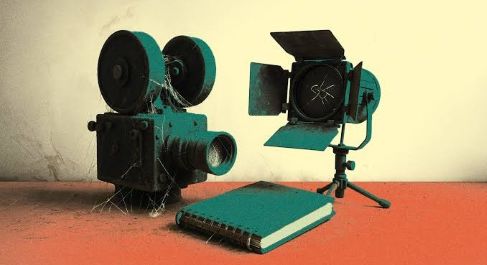
The film is the art of tangible, material reality, regardless of how imaginary its subject may be.
- Expression through images requires particular abilities, a specific number of shots, and carefully chosen angles. Expression through sound and image, however, takes another form and reveals additional possibilities available to the filmmaker.
Souad Khalil | Libya
Part One
Cinema is an art of the image. Cinema may differ from photography and sculpture in the purpose of each art and in the material from which each image is formed, but ultimately they are all considered visual arts that depend on the sense of sight for their appreciation and evaluation. Mustafa Muharram
Since its emergence, cinema has relied on the image as its primary means of expression, to the extent that it was called the “moving image.” From the very beginning, human beings attempted to record the world around them through images rather than sound.
In 1926, Abel Gance wrote: “The age of the image has arrived.” His statement was supported, to a considerable extent, by the great films produced during the final years of the silent era, including Sunrise, Eisenstein’s October, and Gance’s own Napoleon.
The problem that subsequently preoccupied theorists and those interested in cinematic art revolved around the concept of cinematic language: Does cinema really possess a language? And to what extent is this language comparable to the languages of other arts?
The central question raised by Christian Metz in his essay Cinema: Language or Language System – How cinema should be situated and understood as a language. Metz concluded that cinema is indeed a language, but one without a linguistic system.
Alexandre Astruc, however, affirmed that cinema possesses a language and that the camera is the pen with which the director writes this language in order to create his film. He emphasized that the image constitutes the fundamental language of this art.
The theories of art that became widespread during the 1920s regarded the silent film, despite its silence, as the culmination of all the arts and the ultimate synthesis that brought them together. They saw it as a form of music whose melodies were images.
When we speak of cinema, therefore, we are speaking of an art that communicates what it seeks to express primarily through the image. In its early stages, cinema did not attempt to give the ear the same attention it gave the eye. After Thomas Edison’s and Eugène Lauste’s attempts to integrate sound with the image had failed, the eye became the principal means through which cinema reached its audience.
Indeed, the efforts of the great pioneers of cinema were directed toward adapting the image so that it could become capable of expression in the same way as any other art.
While James Joyce was spending years writing Ulysses, skillfully and consciously drawing upon the enormous linguistic wealth that had accumulated in English prose over centuries, D. W. Griffith was working to establish specific rules for film and to adapt the medium to them.
 At that time, the art of film was taking its first steps as a form of narrative expression. It was therefore not yet capable of matching the complex artistic sophistication found in Joyce’s novels.
We cannot overlook the enormous difference in historical development between the novel and cinema, nor the degree of maturity that the novel had achieved after centuries of practice and experimentation. Yet, by 1917, Griffith had developed the art of film to such an extent that cinema had acquired a narrative capacity comparable to Dickens’s storytelling and a dramatic power approaching that which nineteenth-century melodrama had achieved.
Sound did not become one of cinema’s principal concerns until filmmakers sought to develop the medium so that it could reproduce the fullness of lived experience—or perhaps when they realized that they could no longer express a wide range of subjects through images alone.
They came to understand that their moving characters sometimes needed to speak if their messages were to reach the spectator fully and clearly.
Nevertheless, despite the introduction of sound, the image remained the primary element of cinematic art. Whenever a critic or researcher discusses cinema, attention is generally directed toward the possibilities of the image and the filmmaker’s ability to express through it.
For example, James Agee, in an article criticizing Carl Theodor Dreyer’s Day of Wrath, states that there is one principle concerning filmmaking that interests him above all: the film attracts the eyes and presents the work of art to those eyes.
Edward Murray observes that Agee sometimes went too far in his appreciation of silent cinema.
In his essay The Greatest Age of Comedy, Agee states, without hesitation, that the only shortcoming of contemporary screen comedy is that it is presented on a talking screen.
Edward Murray comments on Agee’s statement, attempting to soften its severity. It does not seem, therefore, that Agee wanted characters to stop speaking altogether in films; rather, he wanted them not to speak to such an excessive degree.
Even so, Agee perhaps went too far in his hostility toward the talking films of the 1930s and 1940s. One may recall gangster films such as Little Caesar, The Public Enemy, and Scarface, in which dialogue was skillfully integrated with visible action.
Among Agee’s well-known observations is the distinction that while a theatre audience listens, a cinema audience watches.
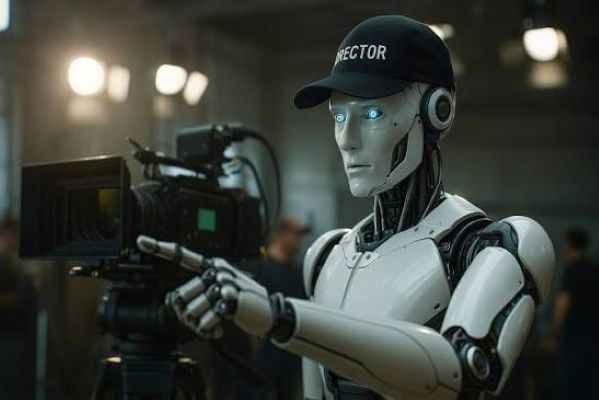 Cinema also differs from the other arts in that its fundamental material, from which its overall texture is formed, depends entirely upon reality, regardless of the nature of that reality—even when it consists merely of drawings or statues—and regardless of the degree of significance attached to what is being represented.
We see things on the screen much as we see them in life, and we do not require great intellectual effort to recognize or interpret them. This differs from what we encounter in literature and, to some extent, even in painting and sculpture.
The film, therefore, is the art of tangible, material reality, regardless of how imaginary its subject may be. Representation is explicit within it.
For this reason, the difficulty confronting the filmmaker is far greater than that confronting creators in many other arts. Simply transferring reality is not, in itself, art.
Likewise, reproducing literary works on the screen in a literal manner cannot, from a cinematic perspective, be regarded as genuine artistic creation. It becomes merely an illustrated story.
A process of new artistic creation is therefore necessary if a literary work is to leave behind its original form and assume the form of a new art. Its texture and effect must become different from what they were before.
This means that the literary work must submit to the requirements and aesthetics of the image and to its dramatic possibilities—possibilities for which there are no exact equivalents in other arts.
It consequently becomes a different language, with its own vocabulary and expressive mechanisms.
This is precisely what gives cinematic art its power and its independence from the other arts.
A film is not merely a purely visual medium. It contains visual elements as well as non-visual ones, and its shots possess a rhythmic dimension.
Although the arrangement of shots may sometimes be ideological and may depend upon visual elements, their rhythmic content is not itself visual.
Rhythm is movement, and movement is connected to time. Time cannot be seen, but it can be felt.
The film, therefore, as a medium of communication, relies heavily on time, just as it relies on the visual presentation of concepts. Its rhythm derives from the filmmaker’s control over the temporal duration of different shots.
This is one of the characteristics that distinguishes film from a purely visual medium such as photography or sculpture.
Mustafa Muharram adds that perhaps theatre seemed more realistic than silent cinema, particularly because its characters appeared before us on stage and spoke as people speak in everyday life.
This may have encouraged silent-film makers, once they felt that the medium had exhausted some of its possibilities, to search for a means by which the actor appearing on the screen could speak in the same way as an actor moving across the theatrical stage.
Yet, since some regard cinema ultimately as a visual medium, the introduction of sound may be considered, from one perspective, a reduction in the film’s aesthetic value.
If, for example, we look at a statue, we do not expect it—or even imagine—that it should speak. We are satisfied with the particular emotional or intellectual effect it produces within us.
Nevertheless, there has been perhaps no more intense controversy over this issue among critics, researchers in film aesthetics, and cinema practitioners.
Rudolf Arnheim, for example, regarded the introduction of sound into cinema as a step backward and an unforgivable setback for the art.
Some believe that the image, or the cinematic frame itself, is sufficient to express everything.
Gilles Deleuze writes that the cinematic frame consists of a large number of parts—that is, elements which themselves enter into larger groups and can be analyzed as such.
These parts exist within the image itself. In Roman Jakobson’s view, they constitute objects and signs. In Pier Paolo Pasolini’s view, cinematic units may be compared to phonemes, that is, sounds.
If the cinematic frame has an equivalent, he argues, it would belong to the information system rather than to the linguistic system.
Roger Manvell, in his book The Film and the Public, argues that silent film was capable of achieving only a limited degree of aesthetic beauty before the invention of sound.
The addition of sound to the image, he believes, enhanced the realism of cinema because it enabled us to see on the screen something that extended the world in which we live—something that silent film had been unable to achieve.
The fundamental strength of the talking film lies in its ability to wear the mask of truth, while in reality it remains an artificial image, carefully constructed and capable of being controlled by the artist in every respect.
Manvell also sees one of the characteristics of silent film as its presentation of a world different from the one in which we live. It was rare for the actors who imitated reality to convey the sensation of reality itself.
The characters we watched on the screen could not express themselves realistically. Instead, they relied on certain movements of the hands and body as substitutes for speech.
The filmmaker was therefore compelled to resort to explanatory symbols. Images of statues of nude women, for example, might be used to suggest romantic scenes that could not be openly represented at the time. Similarly, shots of storms and raging waves could serve as objective correlatives for scenes of conflict and violence between characters.
Although Gilles Deleuze tends to give priority to the image in cinematic expression, he sometimes recognizes the importance of sound alongside it, provided that the image remains primary.
He argues that the image does not merely present itself for viewing; it is also readable insofar as it is visible.
The frame possesses an implicit function: it records information that is not merely auditory but visual as well. If we are able to see only a limited number of things within an image, this is because we do not perceive all of its elements in their entirety.
Edward Murray, in his discussion of Joe Simon, observes that it is doubtful whether any responsible critic or theorist of cinema would agree with Simon when he claims that the word is equal to the image in significance.
Sound expanded the horizons of cinema as an art form. Speech allows the filmmaker to reveal character more deeply and to explore the subject of the film in greater detail than was possible during the silent era.
However, saying that sound has become an integral part of the film does not mean that words and images are equal in importance.
The film remains—and I say “remains” because even in Griffith’s time words appeared on the screen—an art fundamentally dependent upon images.
If this were not the case, why would Simon himself say that dialogue conveys only part of what happens in a film?
We must therefore ask an important question:
Does synchronized sound actually help make the image more realistic, or make it appear more realistic to the spectator, thereby increasing the imaginative dimension of the cinematic film?
Is sound more realistic than the image because it is the product of an actual auditory experience, whereas the image is a two-dimensional representation of visible reality?
Marcel Martin, despite his rejection of silent cinema and his view that its silence resulted not from artistic genius but from the inability to discover sound and incorporate it into the film strip, states that sound adds an important element that greatly expands the possibilities of film.
He further argues that sound frees the image, to some extent, from its explanatory role and allows it to devote itself more fully to its expressive function.
At the same time, André Bazin believed that the issue had essentially been settled and that there was little reason to return to the old debate.
He emphasized the great importance of sound in cinema and argued that sound had not come to destroy or abolish the earlier cinematic tradition, but rather to complete it.
Some had believed that cinema could never compete with theatre because it lacked the expressive impact of the spoken word.
Others, meanwhile, believed that the introduction of spoken language, in the attempt to confront theatre on its own ground, brought the great era of formalist theory to an end.
They argued that the incorporation of sound into the film strip had transformed the nature of cinematic form, perhaps even representing a transition from one art into another.
We, however, believe that sound represented a development of cinematic form, comparable to the developments that occur within other arts.
Expression through images requires particular abilities, a specific number of shots, and carefully chosen angles. Expression through sound and image, however, takes another form and reveals additional possibilities available to the filmmaker.
The Birth of Sound Cinema
In 1927, the miracle occurred: cinema began to speak.
One of the most important American film companies, Warner Bros., was facing bankruptcy. Had it not searched for a lifeline capable of saving it from the crisis that had overtaken it, it might never have turned to the development of talking cinema.
The film Tabu, a documentary project produced under the supervision of Robert Flaherty and F. W. Murnau, was also part of this period of experimentation. Flaherty later withdrew from the project because Murnau refused to accept sound as a legitimate partner to the screen.
At the beginning of the sound era, filmmakers often exploited sound for its own sake, treating it as a new technological novelty.
As a result, some continued to fall under the spell of sound, regarding it as the legitimate heir of theatre.
Since cinema is a realistic art—indeed, one of the most important realistic arts—it seemed inevitable to some that this realism should be accompanied by sound.
Brand Matthews believed that cinema, forced to work without the spoken word and its powerful appeal, could never become a genuine competitor to theatre.
The discovery—or invention—of sound initially had a profound effect on actors and on their manner of performance.
Actors found themselves restricted within narrow physical limits, almost as though they were performing on a theatre stage, because microphones had to be positioned at a distance from the camera.
Not every actor who had acquired experience in silent films was able to adapt to the requirements of the new technology.
Many former screen stars lost their battle with the microphone because of contradictions between their voices and their cinematic personalities, pronunciation problems, regional accents, or even an inability to memorize relatively short passages of dialogue.
We all remember the famous scene of Gloria Swanson in Sunset Boulevard, directed by Billy Wilder, when she encountered the microphone in the studio and angrily pushed it away, as though its invention had deprived her of the glory she had enjoyed during the silent-film era.
This development may have caused many critics and film stars to resent producers and to accuse them of acting against the interests of genuine art, redirecting cinema toward a lesser purpose that deprived it of its aesthetics and true magic—all in pursuit of financial interests.
Here we may recall Marcel Martin’s general criticism of film producers. He argues that, in most cases, their primary concern is the investment of their capital, and that they consequently regard a film merely as a commodity intended to satisfy the largest possible number of people.
It therefore becomes a low-quality commodity.
One often hears a producer declare, “My audience likes this,” refusing to consider that if audiences were given the opportunity to see something better, they might very well appreciate it, as Martin’s numerous experiences had demonstrated.
Read: The Concept of Space in Theatre
_____________
 Souad Khalil, hailing from Benghazi Libya, is a writer, poet, and translator. She has been writing on culture, literature and other general topics.