Keti Bunder: Historic Port’s Maritime Future
China's New Interest Brings Good News for Keti Bunder

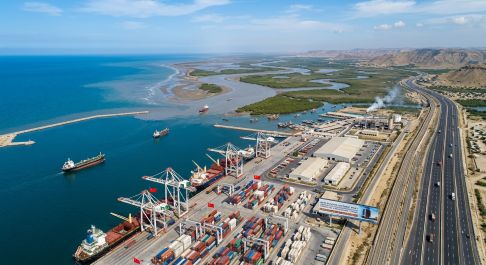
Keti Bunder once prospered because of the Indus and the Arabian Sea. History turned it into a small fishing settlement, but its strategic location has never lost its importance.
By: Ramesh Raja
Good news is emerging for Sindh and Pakistan’s maritime future. China has shown fresh and serious interest in the development of Keti Bunder Port, opening the possibility that a historic but long-neglected port at the mouth of the Indus Delta could once again become an important maritime gateway. On 24 August 2026, China Harbour Engineering Company (CHEC) presented a Conceptual Master Plan for Keti Bunder Port to President Asif Ali Zardari. The proposal envisages a new deep-water maritime gateway with multiple terminals, logistics facilities and supporting infrastructure. Its proposed Phase-I includes a 500-metre multipurpose quay, with a preliminary engineering cost estimate of approximately US$522.34 million. The President called for continued technical coordination to refine the plan and determine an appropriate implementation and financing framework. It is important, however, to distinguish between a conceptual proposal and a finalized project. Keti Bunder has not yet become a modern deep-sea port, and the US$522.34 million is a preliminary Phase-I engineering estimate, not an announced Chinese financing commitment. The project remains at the conceptual and planning stage, but Chinese technical interest has nevertheless given fresh momentum to the idea of reviving Keti Bunder as a major maritime gateway.
Pakistan’s Coastline and Sindh’s Maritime Potential
Pakistan possesses a strategically important coastline along the Arabian Sea. Commonly cited figures put the country’s coastline at approximately 990 kilometers, extending across Sindh and Balochistan, with about 270 km along Sindh and 720 km along the Makran Coast of Balochistan. This coastline provides Pakistan direct access to the Arabian Sea and the wider Indian Ocean, placing the country close to major international maritime trade routes. Pakistan’s three principal commercial seaports are Karachi Port, Port Qasim and Gwadar Port, of which Karachi Port and Port Qasim are located in Sindh and Gwadar in Balochistan. Sindh also has several smaller fishing harbours, jetties and coastal landing facilities, particularly around the Indus Delta, including Keti Bunder and Shah Bunder. If the proposed development succeeds, Keti Bunder could eventually give Sindh a third major commercial maritime gateway, alongside Karachi Port and Port Qasim. Its strategic importance becomes even greater when viewed in relation to Pakistan’s neighbouring landlocked countries. Afghanistan has no coastline, while Tajikistan, Uzbekistan and Turkmenistan are also landlocked. Pakistan’s ports therefore have the potential to provide these countries with access to the Arabian Sea and international maritime trade.
Keti Bunder’s History and Its Present Condition
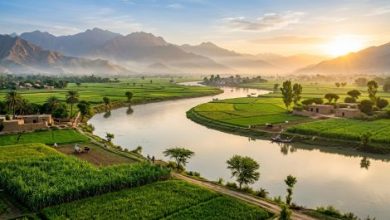
Keti Bunder is located in Thatta District, Sindh, at the southern end of the Indus Delta where the river meets the Arabian Sea. It is not a newly conceived port. It is a historic maritime center whose rise and decline were closely connected with the changing channels of the Indus. The Indus Delta has historically produced and destroyed ports as river channels shifted, sediment accumulated and the coastline changed. Earlier ports such as Shah Bunder and Vikkur Bunder declined as navigation conditions changed, while Keti Bunder emerged as an important commercial center. During its prosperous period, Keti Bunder connected the Indus Delta with maritime trade across the Arabian Sea, while agriculture and fishing supported the local economy. But the same geography that created its prosperity eventually contributed to its decline. Changes in the Indus river system, sedimentation, reduced freshwater flows into the lower delta and the rise of Karachi as the dominant commercial port of Sindh all contributed to Keti Bunder’s loss of importance. Today, Keti Bunder is not comparable with Karachi Port or Port Qasim in international commercial operations. It primarily serves the local fishing economy and small-scale maritime activities. Its present significance is therefore largely related to fishing, local coastal activity and maritime security. Yet the location remains strategically valuable because of its direct relationship with the Indus Delta and the Arabian Sea.
From Fishing Harbour to Deep-Sea Maritime Economic Corridor
The proposed revival of Keti Bunder is much broader than simply constructing a new quay. The Sindh Government has been considering a wider maritime and economic development corridor, potentially involving fisheries, seafood processing, logistics, industrial development, energy infrastructure and a future commercial deep-sea port. The proposed development could include modern fishing harbours, fish auction and landing facilities, cold storage, seafood processing, deep-sea commercial berths, container and multipurpose terminals, warehouses, logistics facilities, industrial zones and energy-related infrastructure. Such development would need strong road and potentially rail connectivity. The principal road corridor is Karachi → N-5 → Gharo → N-110 → Keti Bunder. The Karachi–Gharo section follows the National Highway N-5, while N-110 is the Gharo–Keti Bunder Highway, approximately 90 km long. This provides a definable connection between Keti Bunder and Pakistan’s national road network. The concept should therefore be viewed as port + road + rail + logistics + industry + energy + fisheries, rather than simply a harbour project. A successful port is an economic ecosystem in which cargo, industry, transport, storage, energy and maritime services reinforce one another. Keti Bunder’s location could eventually support a trade corridor extending from Central Asia and Afghanistan through Pakistan to the Arabian Sea, providing landlocked countries with an alternative maritime gateway to global markets.
The Engineering and Environmental Challenge
The greatest challenge facing Keti Bunder is also the most important engineering question: water depth and sedimentation. Gwadar benefits from a naturally favourable open-coast deep-water setting, while Karachi has a naturally sheltered harbour that has subsequently been extensively engineered and dredged. Keti Bunder, in contrast, lies within the sediment-rich Indus Delta. Modern dredging can create a deep navigation channel, but the real question is whether the required depth can be maintained economically and reliably year after year. The project therefore requires detailed hydrographic surveys, bathymetric mapping, sediment-transport modelling, navigation-channel design and maintenance-dredging studies. Capital dredging is only one part of the cost; annual maintenance dredging could become a decisive factor in the port’s long-term economics. Coastal protection will also be critical. Depending on detailed studies, the project may require breakwaters, revetments, riprap protection, jetties or other shoreline-protection structures. However, such structures must be designed carefully because altering natural sediment movement in the Indus Delta could transfer erosion or deposition problems to neighbouring areas. Equally important is environmental protection. The delta’s mangroves, tidal creeks, mudflats and fisheries are valuable natural assets that protect the coastline, support biodiversity, store carbon and sustain local communities. Any future Keti Bunder port must therefore be based on integrated coastal-zone management, environmental impact assessment, climate-resilience studies and meaningful consultation with fishing communities. The ultimate test will not simply be whether a deep-water port can be constructed, but whether it can be operated and maintained economically without damaging the ecological and social systems on which the Indus Delta depends.
A Historic Port with a New Strategic Future
Keti Bunder once prospered because of the Indus and the Arabian Sea. History turned it into a small fishing settlement, but its strategic location has never lost its importance. The new Chinese interest could now give this historic port another opportunity. CHEC’s presentation of a conceptual master plan marks an important step in bringing Keti Bunder back into Pakistan’s maritime development discussion. However, ambition must be matched by engineering realism, transparent feasibility studies and careful environmental planning. Before construction begins, Pakistan should establish the exact port location, natural bathymetry, offshore depth contours, approach-channel alignment, required navigation depth, capital and annual maintenance-dredging requirements, sediment behaviour, breakwater requirements, navigation safety, climate resilience, environmental impacts, road and rail requirements, cargo forecasts and the most appropriate financing and PPP structure. Pakistan should also ensure that the development complements rather than unnecessarily duplicates Karachi Port, Port Qasim and Gwadar. If properly planned, Keti Bunder could become more than a revived historic port. It could become an integrated maritime economic corridor connecting Sindh, Pakistan, Afghanistan and potentially Central Asia with the Arabian Sea and the wider global ocean economy. Pakistan’s approximately 990-kilometre coastline, including about 270 km in Sindh, gives the country a significant maritime advantage, while Sindh’s existing two major commercial ports, Karachi Port and Port Qasim, provide the foundation for further maritime expansion. Keti Bunder could eventually become a third major commercial gateway for Sindh. The Indus created Keti Bunder, the sea sustained it, and history changed it. Now engineering, investment and responsible planning may give it a new future.
Read: Sindh: Maritime Heritage and Economic Potential
__________________
 The author of this article, Engr. Ramesh Raja, is a Civil Engineer, visionary planner, PMP certified and literary enthusiast with a passion for art and recreation. He can be reached at engineer.raja@gmail.com