Lessons from the Bikers and Campers of Northern Scandinavia
Travelling in this manner across less-developed regions of the world may present greater challenges. Long distances between repair facilities, limited roadside assistance, language barriers, and rougher road conditions require additional preparation and resilience.
By Abdullah Usman Morai | Sweden
Every journey teaches us something new. Sometimes it is a mountain that leaves us speechless, sometimes a quiet lake that reflects the sky so perfectly that reality seems like a painting. Yet, occasionally, the most memorable lesson comes not from nature itself but from the people who choose to experience it differently.
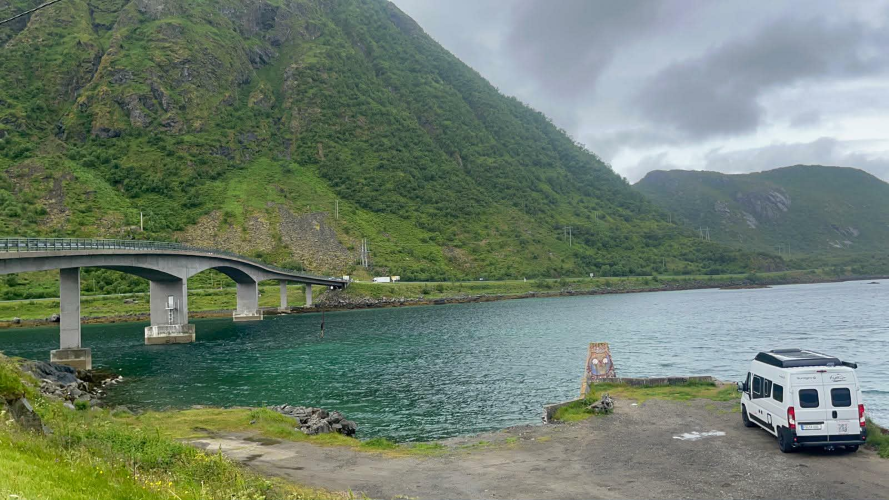 During our recent road trip through northern Sweden and Norway, my travel companion Imran and I discovered something that fascinated us as much as the magnificent Arctic landscapes. We found ourselves surrounded by an extraordinary community of bikers and camper travelers. Although I have seen motorcycles and camper vans in many countries before, nowhere had I witnessed them in such overwhelming numbers as in the Scandinavian north. It felt as if the roads themselves belonged equally to these modern-day nomads.
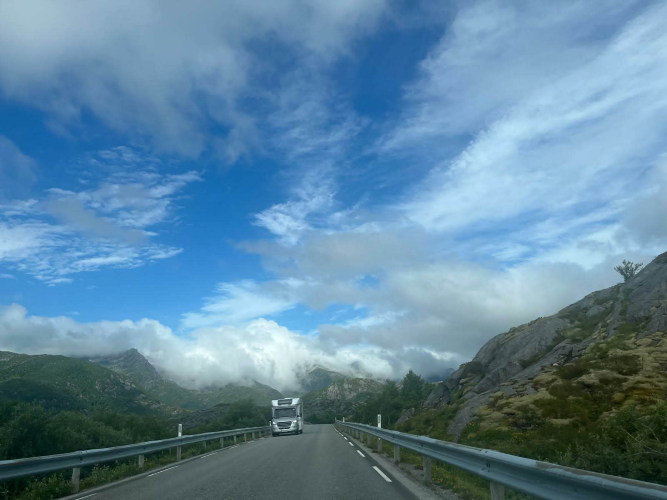
The farther north we drove, the more frequently we encountered long lines of touring motorcycles winding gracefully through mountain roads, alongside camper vans parked beside lakes, rivers, fjords, forests, and open valleys. It soon became clear that this was much more than tourism. It was an adventurous lifestyle.
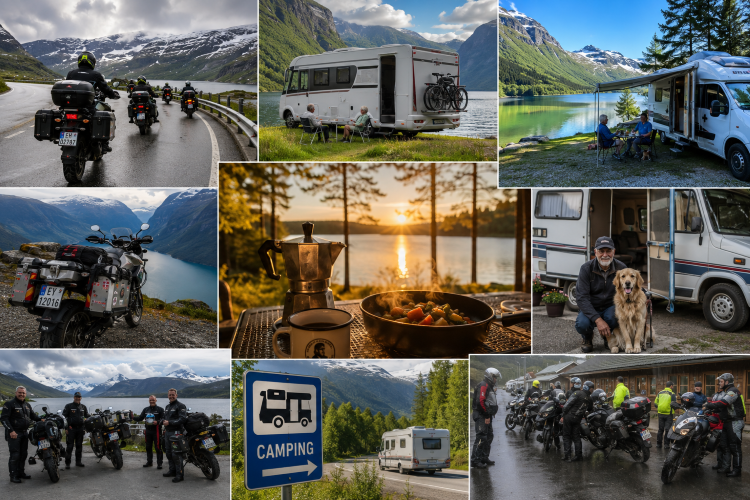
A camper is far more than a vehicle. It is a moving home. Within its compact space are the essentials of daily life: a small kitchen, comfortable beds, storage, a dining area, and often even a bathroom. Everything necessary for independent living travels with the owner. Home is no longer tied to an address; it moves wherever the road leads.
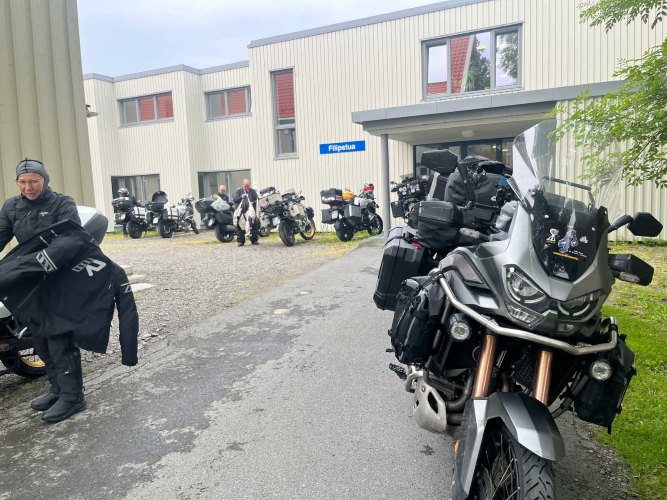
 Motorcyclists, on the other hand, travel much lighter, yet they are equally committed to life on the road. Their motorcycles carry carefully packed luggage, camping equipment, waterproof clothing, tools, and other necessities. Unlike camper owners, they usually depend on campsites, hostels, cabins, or hotels at the end of each day’s ride. Watching them unpack and repack their motorcycles each morning is almost like observing a well-rehearsed ritual.
One interesting observation was the age of many travelers. A large proportion appeared to be in their sixties or even older. Many looked like retired couples who had finally exchanged fixed schedules for open roads. Others were probably still working professionals making the most of their annual holidays. After decades spent building careers and raising families, they now seemed determined to invest their time in experiences rather than possessions.

Perhaps this is one of the greatest luxuries of modern life- not owning more things, but having the freedom to decide where to wake up tomorrow.
The diversity of travelers was equally striking. We frequently noticed motorcycles carrying Italian registration plates, while campers often came from Sweden, Norway, Germany, and Poland. Europe, with its interconnected highways, open borders, reliable infrastructure, and excellent camping facilities, provides an ideal environment for this style of travel. One can drive across several countries without feeling that the journey has become complicated.
Unlike traditional tourists who follow fixed itineraries, camper travelers enjoy remarkable flexibility. If they discover a beautiful lake shimmering beneath the midnight sun or a peaceful forest clearing beside a river, they simply stop. Some spend a single night, while others remain for several days. Those who prefer more facilities can choose one of Scandinavia’s well-maintained camping sites, complete with electricity, showers, kitchens, laundry rooms, and waste disposal stations.
Their timetable is dictated not by hotel reservations but by weather, scenery, and personal preference.
 Motorcyclists, meanwhile, often travelled in groups. Watching a convoy of heavily loaded touring bikes smoothly navigate winding mountain roads was a spectacle in itself. Every rider seemed conscious of the others, maintaining careful distances and communicating through subtle gestures. Years of shared journeys had clearly built friendships strengthened by thousands of kilometers together.
One aspect that amazed us repeatedly was their determination in difficult weather. Northern Scandinavia is known for rapidly changing conditions. Sunshine can disappear within minutes, replaced by heavy rain, cold winds, or dense fog. Yet the bikers continued almost undisturbed. Their heavy riding suits, waterproof boots, gloves, and helmets are designed to protect them from rain and low temperatures. Nevertheless, riding hour after hour through cold rain requires not only good equipment but genuine passion.
Ironically, while those heavy protective clothes offer comfort in chilly weather, they can become rather uncomfortable when temperatures rise. Every style of travel has its own compromises.
Some of our favourite moments came during short stops at scenic viewpoints or parking areas. Occasionally, we parked beside camper vans just as their occupants were preparing meals. Delicious aromas drifted through the fresh mountain air: freshly brewed coffee, grilled vegetables, warm bread, soups, or sizzling dinners. Somehow, these simple smells made the surrounding landscape feel even more welcoming. There is something deeply comforting about the scent of coffee in the middle of a remote valley, where silence is interrupted only by birdsong and the gentle breeze.
Those moments reminded me of an unforgettable experience several years ago when I travelled through Andalucía in southern Spain with my friend Zeeshan Khan in a rented camper van. It was my first experience living on the road, and I quickly understood why so many people become devoted to this way of travelling. Waking up in a different landscape every morning while carrying your home with you creates a unique feeling of freedom that conventional travel rarely offers.
 For newcomers, renting a camper is probably the most sensible option. It allows travellers to experience the lifestyle without making a substantial financial commitment. Purchasing a camper, however, represents a much larger investment. Beyond the initial cost come maintenance, insurance, servicing, storage, repairs, and fuel. Yet for those who use them frequently, many believe the investment is worthwhile because it opens the door to countless adventures.
While observing these travellers, I recalled a middle-aged man I used to see regularly in Stockholm. He often parked his camper in the same area and was usually accompanied by his faithful dog. One day I struck up a conversation with him. He told me that the camper was not simply a holiday vehicle; it was his home. He travelled across different regions taking photographs, selling his work to support himself. Occasionally, he returned to Stockholm to visit his daughter, who lived nearby, before setting off once again.
His story remained in my mind.
For many people, comfort means staying in one place. For others, comfort is found in constant movement. Perhaps their true comfort zone lies not in a house but on an endless highway stretching towards the horizon.
 During our journey, Imran and I often discussed this idea. Every individual chooses to spend their time and money differently. Some collect expensive watches; others buy luxury cars that rarely leave the city. Some invest in holiday homes visited only a few weeks each year. Others spend their savings exploring the world on two wheels or four. None of these choices are inherently better than the others, but there is something deeply admirable about investing in experiences that create lifelong memories rather than simply accumulating possessions.
Of course, this adventurous lifestyle also depends heavily on infrastructure. Throughout Europe, road assistance is generally reliable. If a camper breaks down or a motorcycle develops mechanical problems, professional help is often available within a reasonable time. Fuel stations, repair workshops, campsites, and emergency services are never too far away.
Travelling in this manner across less-developed regions of the world may present greater challenges. Long distances between repair facilities, limited roadside assistance, language barriers, and rougher road conditions require additional preparation and resilience. Yet many adventurous travellers willingly accept these uncertainties because they believe the rewards outweigh the risks.
Interestingly, we frequently met motorcyclists staying at the same hotels where we spent the night. After removing their helmets and heavy riding gear, they looked surprisingly relaxed, exchanging stories over dinner about mountain passes, weather conditions, road construction, and the next day’s destination. The motorcycles parked neatly outside became silent witnesses to countless adventures already completed and many more still to come.
Watching these travellers made me realize that travel itself has many forms. Some people seek luxury, others comfort, while some seek complete freedom. There is no single correct way to explore the world.
Perhaps that is the greatest lesson northern Scandinavia offered us. The road is not merely a route connecting destinations. For some, it becomes a permanent address. Their homes have wheels, their neighbours constantly change, and their calendar is written not by dates but by seasons.
As we continued our own journey through the dramatic landscapes of northern Sweden and Norway, we realized that the magnificent mountains, endless forests, sparkling lakes, and majestic fjords were only part of the story. Equally inspiring were the people who had chosen to make those roads their way of life.
Some people travel to escape routine.
Others travel because movement itself has become their home.
Read: Where the Sun Forgets to Sleep
_______________________
Abdullah Soomro, penname Abdullah Usman Morai, hailing from Moro town of Sindh, province of Pakistan, is based in Stockholm Sweden. Currently he is working as Groundwater Engineer in Stockholm Sweden. He did BE (Agriculture) from Sindh Agriculture University Tando Jam and MSc water systems technology from KTH Stockholm Sweden as well as MSc Management from Stockholm University. Beside this he also did masters in journalism and economics from Shah Abdul Latif University Khairpur Mirs, Sindh. He is author of a travelogue book named ‘Musafatoon’. His second book is in process. He writes articles from time to time. A frequent traveler, he also does podcast on YouTube with channel name: VASJE Podcast.