The Arctic Circle, located at approximately 66°33′ north latitude, marks the southernmost point where the sun remains above the horizon for twenty-four continuous hours during summer and disappears completely during parts of winter.
By Abdullah Usman Morai | Sweden
Some roads are simply routes connecting one place to another. Others become unforgettable chapters of life, where every bend reveals a new wonder, every stop tells a story, and every kilometer feels like a page from a beautifully illustrated book. Our journey from Luleå towards Norway’s spectacular Lofoten Islands was one such experience.
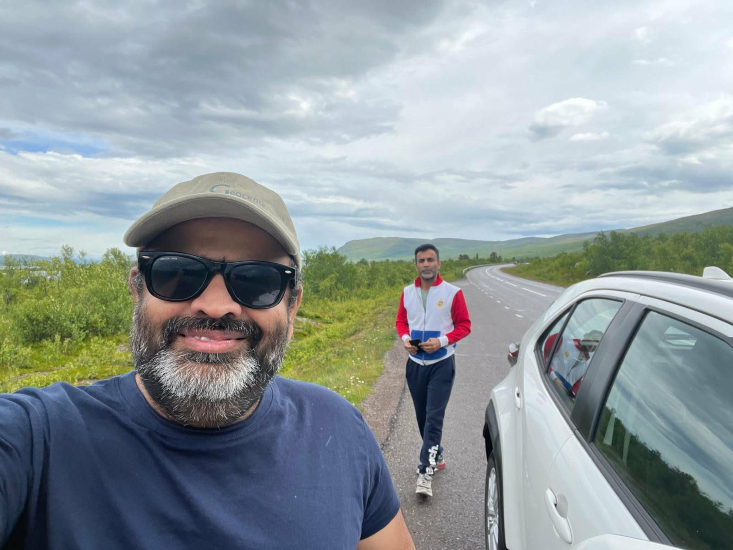
On the morning of 4th July 2026, my friend Dr. Imran Jamali and I packed our bags into the car once again and prepared to continue our northern adventure. Our destination for the day was Svolvær, the gateway to the enchanting Lofoten Islands, where we hoped to arrive late in the evening. Before reaching Norway, however, we had planned two important stops: Kiruna and Abisko National Park, two of Swedish Lapland’s most fascinating places.
After a restful night’s sleep and a delicious Scandinavian breakfast, we felt refreshed and full of enthusiasm. Every new morning on a road trip carries special excitement. You never know what surprises the road has prepared, and that uncertainty itself becomes part of the adventure.
The weather, however, had its own plans. Rain once again became our travelling companion. Sometimes it appeared like a gentle drizzle that polished the forests into shades of emerald green; at other times it poured heavily, reducing visibility and forcing us to slow down. Yet rain has its own magic in the Arctic. It deepens the colours of nature, freshens the air, and leaves countless tiny pearls of water hanging from leaves and wildflowers.
Leaving Luleå behind, we joined the E4 before continuing on the famous E10, one of Scandinavia’s most scenic highways. The excitement grew with every passing kilometre because within roughly one and a half hours we would cross one of Earth’s most famous invisible geographical lines, the Arctic Circle.
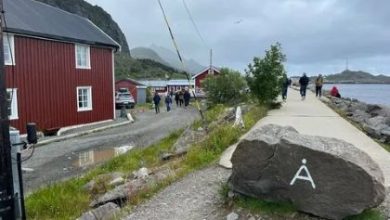
 The Arctic Circle, located at approximately 66°33′ north latitude, marks the southernmost point where the sun remains above the horizon for twenty-four continuous hours during summer and disappears completely during parts of winter. Crossing this line has always carried a symbolic meaning for travellers. It feels as though one is entering another world, where nature writes its own rules, where summers enjoy endless daylight, and winters embrace the magical Polar Night. Although there is no physical barrier separating the Arctic from the rest of the world, there is certainly a psychological one. Crossing it gives travellers a quiet feeling of achievement.
At Töre, the E4 continued eastward towards Haparanda near the Finnish border, while we remained on the E10, heading northwest into Swedish Lapland. Gradually, the scenery began changing. Dense forests stretched endlessly on both sides of the road, rivers sparkled beneath small bridges, and distant hills slowly transformed into real mountains.
Driving through places such as Överkalix and Gällivare, we finally crossed the Arctic Circle. There was no dramatic announcement from nature, only a roadside marker reminding travellers of the remarkable geographical milestone. Still, both of us felt delighted. We stopped briefly to admire the surroundings and capture a few photographs from time to time.
 Roadwork along several stretches of the E10 slowed our progress. Diversions appeared frequently, and temporary traffic signals patiently directed vehicles through construction zones. Yet no one seemed to mind. Northern Sweden teaches travellers an important lesson: reaching the destination is wonderful, but enjoying the journey is even more rewarding.
The farther north we travelled, the quieter the landscape became. Human settlements appeared less frequently, while wilderness grew increasingly dominant. It was a reminder that northern Scandinavia remains one of Europe’s last great wilderness regions.
Soon we approached Jukkasjärvi, a tiny village that has earned worldwide fame far beyond its modest size. Jukkasjärvi is home to the legendary Icehotel, rebuilt every winter entirely from blocks of ice harvested from the nearby Torne River. Every year, artists from around the world transform snow and crystal-clear river ice into magnificent hotel rooms, sculptures, chapels, and art galleries that melt away with spring, making each year’s creation unique. Even during summer, visitors can experience permanent ice art preserved inside a specially cooled building.
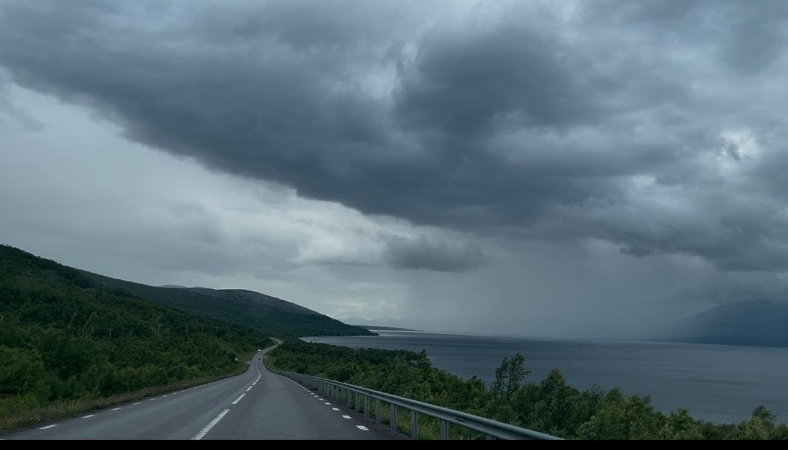 The surroundings near Jukkasjärvi were exceptionally beautiful. Crystal-clear rivers reflected the cloudy skies, birch forests covered the hillsides, and distant mountains quietly watched over the landscape. We stopped once again, stretched our legs, breathed the cool Arctic air, and spent several peaceful minutes simply appreciating the silence. In places like these, one begins to understand why Scandinavians treasure nature so deeply.
Eventually, we reached Kiruna, Sweden’s northernmost city and one of the country’s most extraordinary urban stories.
Kiruna owes its existence almost entirely to iron ore. Beneath the city lies one of the world’s richest iron ore deposits, mined for well over a century by the state-owned mining company LKAB. The mine has played a vital role in Sweden’s industrial development and continues to supply high-quality iron ore to steel industries around the world.
Yet Kiruna is famous not only because of mining but also because the mining has literally reshaped the city itself.
As underground mining expanded, engineers realized that sections of the original town would eventually become unstable. Instead of abandoning the community, Sweden undertook one of the world’s most remarkable urban relocation projects. Entire neighbourhoods, public buildings, roads, schools, and even the historic wooden church have gradually been moved or reconstructed several kilometers away to allow mining operations to continue safely. It is a rare example of a modern town slowly migrating across the landscape while everyday life continues almost uninterrupted.
Visitors can even join guided underground mine tours to witness this engineering marvel firsthand, descending deep below the Earth’s surface to understand how one of Europe’s largest mines operates.
 Our stop in Kiruna was brief. We refuelled the car, purchased snacks and drinks for the remaining journey, drove through parts of the town, and admired how modern architecture now blends with the city’s industrial heritage. It was enough to appreciate Kiruna’s unique character before continuing westward.
At this point, Dr. Imran and I exchanged driving responsibilities. Long road trips become far more enjoyable when both travellers share the driving, allowing each person time to relax and fully absorb the surrounding scenery.
Fortunately, Swedish roads are exceptionally traveller-friendly. Numerous parking areas and scenic viewpoints appear regularly along the highways. Whenever an especially beautiful landscape appeared, we simply pulled over without worry.
Towering mountains now surrounded us from every direction. Streams rushed energetically through valleys. Snow still decorated distant peaks despite it being July. Sometimes waterfalls descended from mountain slopes, while patches of wildflowers brightened the roadside with purple, yellow, and white blossoms. Every few kilometers seemed worthy of another photograph.
 Further ahead, we entered the region of Rautas Fjällurskog, one of Swedish Lapland’s protected mountain forest areas. This remarkable landscape represents one of the country’s finest examples of ancient alpine woodland. Old pine and birch forests survive here largely untouched, providing habitat for countless birds, mammals, and rare plant species. The wilderness feels wonderfully primeval, almost as though nature has remained unchanged for centuries. Looking across these forests towards the surrounding mountains, one cannot help but admire Scandinavia’s commitment to preserving its natural treasures.
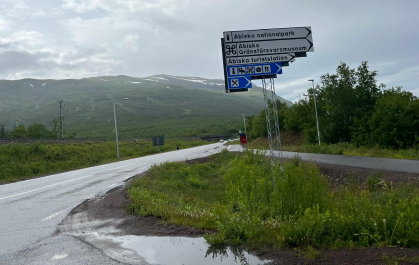
Our next major destination was the magnificent Abisko National Park, one of Sweden’s oldest and most celebrated national parks.
Located beside the vast Lake Torneträsk, Abisko is internationally renowned among hikers, photographers, nature lovers, and winter travellers. During summer, it offers endless hiking opportunities beneath the Midnight Sun, while winter transforms it into one of the world’s finest locations for observing the Northern Lights.
The park forms part of the famous Kungsleden (King’s Trail), Sweden’s most iconic long-distance hiking route stretching hundreds of kilometers through Lapland. Every year, thousands of trekkers begin or end their adventures in Abisko, carrying backpacks filled with supplies for journeys lasting several days or even weeks.
Wildlife also flourishes here. Moose, reindeer, Arctic foxes, mountain hares, wolverines, and numerous bird species inhabit the surrounding wilderness, although many remain elusive visitors who reveal themselves only to patient observers.
We parked the car near the visitor area and collected a map from the tourist information Centre before setting off towards the famous Abisko Canyon.
The walk itself was a pleasure. Wooden pathways guided visitors through forests alive with birdsong, while the crisp mountain air carried the refreshing scent of pine and birch. Along the route, we met hikers carrying heavy backpacks, preparing for ambitious expeditions deep into the national park.
The canyon itself was spectacular.
Powerful glacial water thundered beneath us, carving its way through ancient rock with astonishing force. Standing above the rushing river, listening to the continuous roar echoing through the gorge, one gains renewed respect for nature’s patient ability to shape landscapes over thousands of years.
We wandered slowly around the area, taking photographs and simply allowing ourselves to enjoy the remarkable surroundings. There was no rush. Places like Abisko deserve time.
Nearby stood another pleasant surprise: the Abisko Gränsförsvarsmuseum, or the Abisko Border Defence Museum.
Although relatively small, the museum tells an important chapter of Sweden’s military history. During the Second World War, Sweden maintained its neutrality while carefully protecting its northern borders. The museum preserves bunkers, defensive structures, military equipment, historical photographs, uniforms, and personal stories illustrating how border defence functioned during uncertain times. It reminds visitors that even these peaceful mountain valleys once held strategic importance.
Entry was free, making the visit even more welcoming.
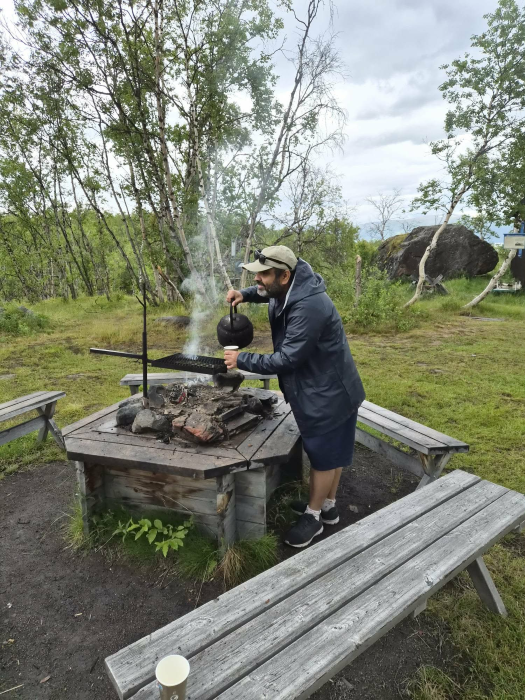
Two friendly middle-aged women were looking after the museum that day. Rather than using an electric coffee machine, they were preparing traditional Swedish coffee over a wood-burning fire. The gentle aroma of freshly brewed coffee drifted through the air, blending beautifully with the scent of burning wood.
They warmly invited us to join them for coffee.
Such unexpected moments often become the most treasured memories of any journey.
We happily accepted their invitation and soon found ourselves enjoying warm cups of coffee while chatting with them. They explained that they were from Kiruna and planned to return home later that evening. Naturally, they became curious about us- where we had travelled from, our plans for Norway, how long we had lived in Stockholm, and what had inspired us to explore Sweden’s far north.
The conversation flowed effortlessly despite meeting for the very first time. This is one of the quiet beauties of travelling through Scandinavia. People may initially appear reserved, but genuine friendliness often emerges naturally once a conversation begins.
After exploring the museum and expressing our sincere gratitude for both the coffee and the warm hospitality, we returned to our car.
 Soon we passed through the beautiful mountain village of Björkliden, another popular destination for skiing, hiking, and mountain adventures. Beyond it lay Riksgränsen, literally meaning “the National Border,” Sweden’s northernmost ski resort and the final Swedish settlement before Norway.
Crossing the border proved almost symbolic rather than procedural.
There were no passport checkpoints, no immigration officers, and no long queues of vehicles. We simply reduced our speed to the required 30 kilometers per hour, crossed quietly into Norway, and continued driving. There was something profoundly civilized about the experience. Two sovereign nations, connected through mutual trust, modern technology, and close cooperation, allowed travellers to move almost effortlessly between them.
No barriers interrupted the magnificent landscape. Mountains continued uninterrupted across national boundaries, rivers flowed freely from one country to another, and clouds drifted across the skies without passports.
Nature, after all, has never recognized the borders created by humans.
As we entered Norway, we realized that another unforgettable chapter of our Arctic adventure was just beginning. Ahead awaited dramatic fjords, towering peaks rising directly from the sea, picturesque fishing villages, and the timeless beauty of the Lofoten Islands, one of the world’s most spectacular archipelagos.
Sometimes a day’s drive becomes much more than travelling from one point to another. It becomes a lesson in geography, history, engineering, environmental conservation, friendship, and human kindness. Our journey from Luleå to the Norwegian border offered all of these and much more.
Long after the photographs fade and road maps are folded away, it is these moments- the crossing of the Arctic Circle, the roar of Abisko Canyon, the aroma of coffee brewed over a wood fire, conversations with strangers who briefly become friends, and the silent crossing into another country- that remain alive in memory.
Some journeys end at their destination.
Others continue forever in the traveller’s heart.
Read: Where the Road Becomes Home
______________________
Abdullah Soomro, penname Abdullah Usman Morai, hailing from Moro town of Sindh, province of Pakistan, is based in Stockholm Sweden. Currently he is working as Groundwater Engineer in Stockholm Sweden. He did BE (Agriculture) from Sindh Agriculture University Tando Jam and MSc water systems technology from KTH Stockholm Sweden as well as MSc Management from Stockholm University. Beside this he also did masters in journalism and economics from Shah Abdul Latif University Khairpur Mirs, Sindh. He is author of a travelogue book named ‘Musafatoon’. His second book is in process. He writes articles from time to time. A frequent traveler, he also does podcast on YouTube with channel name: VASJE Podcast.