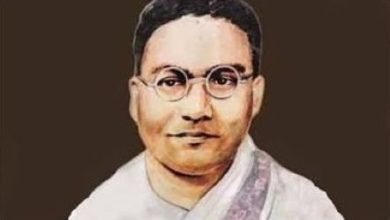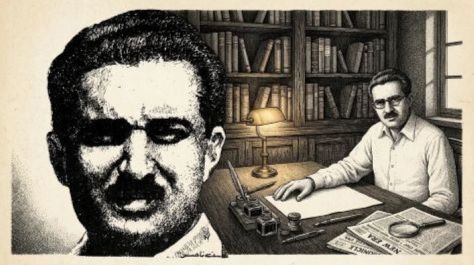
On November 13, 1960, news emerged of his death while in custody.
The official account described his death as suicide. However, his comrades and progressive political circles strongly questioned that explanation. His death has widely been regarded as the result of torture and state oppression during detention.
By Dr. Jaipal Chhabria
History remembers certain individuals not because of the power they held or the wealth they possessed, but because of the sacrifices they made for humanity. Hassan Nasir was one such extraordinary individual. He devoted his life to the struggle for the rights of workers, peasants, laborers and oppressed sections of society.
Hassan Nasir was a prominent revolutionary and proletarian leader of Pakistan and Secretary General of the Communist Party of Pakistan. He became a symbol of resistance against exploitation, economic inequality and political oppression.
Born into a wealthy and influential family in Hyderabad Deccan, Hassan Nasir had every opportunity to enjoy a comfortable and privileged life. However, he chose a completely different path. Instead of pursuing personal wealth and luxury, he dedicated himself to the cause of ordinary people.
His political beliefs were rooted in the principles of social justice, equality and the dignity of labor. He believed that the real strength of a nation lay in its working people. The hands that build factories, cultivate fields, construct cities and sustain the economy deserve respect, fair wages and equal opportunities.
Hassan Nasir actively worked among students, industrial workers and peasants. He understood that political freedom without economic justice could never bring genuine liberation to ordinary citizens. He wanted a society in which no worker would be exploited, no peasant would be deprived of the fruits of his labor and no human being would be treated as inferior because of poverty or social status.
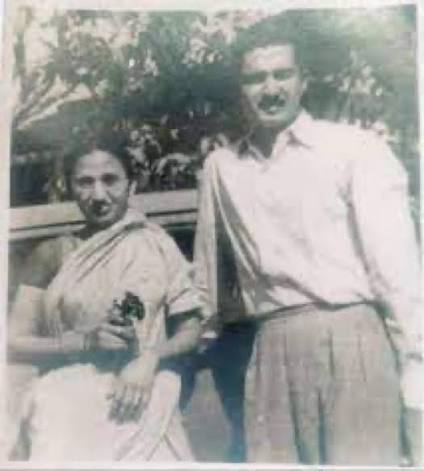 Pakistan’s early political history was marked by restrictions on democratic freedoms and the suppression of progressive movements. The Communist Party was banned, and many left-wing political activists faced imprisonment and persecution. Hassan Nasir himself endured arrests and exile, but neither hardship nor intimidation could weaken his commitment.
Following General Ayub Khan’s military takeover in 1958, repression against political activists, students and trade union leaders intensified. Hassan Nasir was arrested in 1960 and detained at Lahore Fort, which was being used as a center for interrogation and detention.
On November 13, 1960, news emerged of his death while in custody. The official account described his death as suicide. However, his comrades and progressive political circles strongly questioned that explanation. His death has widely been regarded as the result of torture and state oppression during detention.
His death became one of the darkest chapters in Pakistan’s political history. It raised a fundamental question that remains relevant even today: Should a state have the power to silence citizens merely because they hold different political beliefs and demand justice?
Hassan Nasir’s life and sacrifice remind us that democracy is much more than holding elections. True democracy means freedom of expression, respect for political differences, and protection of human rights, economic justice and dignity for every citizen.
More than six decades later, the problems against which he struggled remain visible in our society. Workers continue to face low wages, unemployment, unsafe working conditions and economic exploitation. Farmers struggle for fair prices for their crops. Poor families often remain deprived of quality education, healthcare and access to justice.
In such circumstances, remembering Hassan Nasir is not simply an exercise in historical remembrance. It is a reminder of our responsibility towards the people who continue to struggle for their basic rights.
His real tribute would be to build a Pakistan where labor is respected, workers receive fair compensation, farmers are protected, political dissent is tolerated and every citizen enjoys equal rights without discrimination.
We may differ in our political ideologies, economic philosophies and approaches to social change. However, the struggle against exploitation, injustice and oppression should unite all people who believe in human dignity.
Hassan Nasir was only 32 years old when he died. His life was short, but his commitment to the oppressed gave it extraordinary historical significance.
A society that forgets those who sacrificed their lives for justice risks losing its moral direction. We must teach our younger generations about people like Hassan Nasir, who chose the difficult road of public service instead of the comfort of privilege.
On November 13, we pay our heartfelt tribute to this great proletarian leader, whose life became a symbol of courage, ideological commitment and solidarity with the oppressed.
Hassan Nasir lives in the history of Pakistan’s progressive movement and in the continuing struggle for workers’ rights, social equality and human dignity.
Read: Child Marriage Laws: Flawed System
____________
 Dr. Jaipal Chhabria, Karachi, Sindh