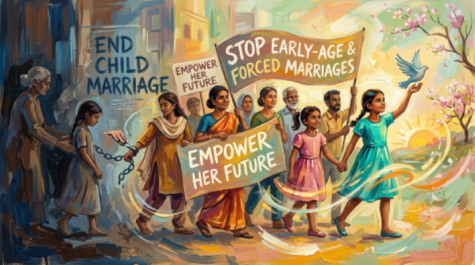
Protecting Children, Preventing Forced Marriages and Safeguarding Religious Freedom in Pakistan
- A law is meaningful only when the State implements it equally for every child, regardless of religion, gender or social status.
- Marriage is a serious social and legal contract between mature individuals who understand its responsibilities and freely choose to enter it. It affects a person’s education, health, family life, personal freedom and future. Therefore, childhood must be a period of learning, development and protection—not a time for marriage, adult responsibilities or decisions that a child may not fully understand.
Dr. Jaipal Chhabria
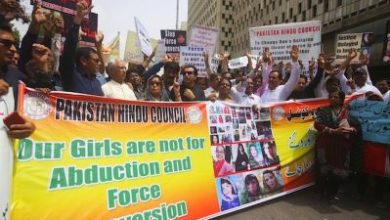
In Pakistan, child marriage remains a serious concern. For religious minorities, particularly Hindu and Christian girls in Sindh and Punjab, the problem can become even more complicated when an underage marriage is accompanied by an alleged abduction, religious conversion or pressure to leave the family home. These cases raise fundamental questions about child protection, religious freedom, consent and the rule of law.
Sindh Has a Law, but no Implementation
Sindh took an important legislative step by enacting the Sindh Child Marriages Restraint Act, 2013. The law sets 18 years as the minimum marriage age for both girls and boys and provides penalties for people involved in child marriages, including those who solemnize or facilitate them.
The purpose of the legislation is clear: children must be protected from early marriage and the social, educational and health consequences associated with it. The Sindh Child Marriage Restraint Rules, 2016, further require marriage solemnizes to verify the ages of both parties and provide relevant documentation.
However, legislation alone cannot protect children. Effective implementation requires the police, local administration, marriage registrars, prosecutors, child protection authorities and courts to work together. When complaints are ignored, age documents are not properly verified, or influential individuals appear to operate beyond accountability, public confidence in the law is weakened.
The central question is not whether Sindh has passed a law. It is whether every child can rely on that law in practice.
Rinkle Kumari: A Case That Raised National Questions
The case of Rinkle Kumari in 2012 attracted national attention and highlighted the concerns of Hindu families regarding the alleged abduction, conversion and marriage of young women. The case became a symbol of a broader debate about whether a vulnerable girl can express her genuine wishes freely when she is separated from her family and surrounded by people who may have an interest in the outcome.
The Supreme Court proceedings did not resolve the wider concerns of minority communities about the investigation and handling of alleged forced conversions. For many families, the case remains a reminder that a judicial process must do more than record a statement: it must ensure that the person concerned can speak privately, safely and without intimidation.
Sindh enacted its Child Marriages Restraint Act in 2013, the year after the Rinkle Kumari case came to public prominence. The continuing concerns surrounding underage marriages demonstrate why the law must be enforced consistently, with independent investigations and effective protection for children.
Consent Must Be Free, Informed and Legally Valid
A distinction must be made between an adult’s voluntary decision to marry or change religion and a child’s situation. Religious conversion is a matter of personal conscience, and the rights of adults to choose their faith and spouse must be respected. Equally, an allegation of forced conversion should never be dismissed merely because a marriage or conversion document exists.
When a girl is below the legally permitted marriage age, authorities must investigate the circumstances carefully. A declaration of consent cannot be treated as an automatic answer to questions about age, coercion, abduction, intimidation or exploitation.
The law should not presume that every interfaith relationship is forced. Nor should it presume that every declaration made by an underage girl in the presence of interested parties is necessarily free and informed. Both assumptions can harm vulnerable people. The proper response is an impartial investigation that places the child’s safety, dignity and legal rights first.
The Principle of Eighteen Years
Pakistan already recognizes 18 as an important threshold for several legal and civic responsibilities, including eligibility for a national identity card and driving licence under the relevant rules. The right to vote also generally begins at 18.
Quaid-e-Azam Muhammad Ali Jinnah’s own marriage provides a historical example of waiting for legal adulthood. According to the official Quaid-i-Azam Academy account, Rattanbai “Ruttie” Petit married Jinnah on 19 April 1918, after reaching the age of 18. Their marriage also involved a change of religion, demonstrating why the issues of age, consent and religious freedom deserve careful, individual consideration.
This historical example should not be used to judge every modern case, but it reinforces an important principle: a young person’s maturity and legal capacity matter when decisions carry lifelong consequences.
Historical claims about a 1927 political resolution concerning conversion below 18 should be verified against the original record before being attributed to the Muslim League or Quaid-e-Azam. Public debate on children’s rights must itself be based on accurate history.
The Scale of the Problem and the Need for Reliable Data
Human rights organizations have repeatedly raised concerns about the abduction, forced conversion and marriage of minority girls. HRCP’s 2019 report on the state of human rights referred to estimates of around 1,000 cases involving Hindu and Christian girls in Sindh during 2018. Such figures should be understood as reported estimates, not as a verified national count of every case. Pakistan needs a transparent, independently maintained database that records complaints, investigations, age verification, prosecutions and outcomes.
Other widely discussed cases, including those involving Reena and Raveena, who were reported to have converted and married in 2019, have also intensified public debate about consent, minority protection and the role of state institutions. Each case deserves a fair investigation based on evidence rather than assumptions about religion or community.
The Reported Beena Case Requires Urgent, Impartial Action
Reports concerning Beena, described as a ninth-grade student from Sibi, and Yasir Domki, described as a tenth-grade student from Buxapur, have raised fresh concerns among members of the Hindu community. Reports allege that Beena converted and married at Daharki, with Mian Mithu being named in connection with the matter.
These allegations must be independently verified. The authorities should immediately establish the girl’s age, whereabouts, safety and circumstances; examine the relevant marriage and conversion records; and investigate any allegation of abduction, coercion or unlawful facilitation. If she is under 18, the Sindh child marriage law must be applied and all legally responsible persons investigated in accordance with due process.
Beena must be interviewed privately by trained, independent officials, away from anyone who may intimidate or influence her. Her safety and welfare must be the priority. Any decision about her care should comply with child-protection law and her best interests. The objective must be protection and justice, not a public spectacle or a decision made solely to satisfy either family or community.
The Responsibility of Government and Parliamentarians
The Sindh Government cannot claim success merely because it passed legislation. It must ensure that police register genuine complaints, investigate promptly, verify ages through reliable records, protect witnesses and prosecute offences where evidence supports charges.
Religious-minority parliamentarians also have a responsibility to raise these matters regularly in provincial and national assemblies. They should seek transparent case statistics, question failures of enforcement, propose stronger safeguards and monitor whether prosecutions lead to meaningful outcomes. Silence from elected representatives can leave vulnerable families feeling abandoned.
The Council of Islamic Ideology, the National Commission for Minorities, human rights institutions and civil society should work together on practical safeguards that protect children while respecting the religious freedom of adults.
Recommendations for Reform
- Enforce the minimum marriage age of 18 in Sindh and strengthen age verification before any marriage is registered or solemnized.
- Investigate allegations against every person who unlawfully arranges, solemnizes or facilitates a child marriage, regardless of religious or political influence.
- Provide safe shelters, independent legal assistance, counselling and confidential interviews for children at risk.
- Ensure that allegations of forced conversion are investigated independently, without assuming either guilt or consent in advance.
- Establish a public, database of reported cases, investigations, prosecutions and judicial outcomes.
- Require regular reporting by the Sindh Government and parliamentary committees on implementation of the 2013 Act.
- Improve school retention, family support and economic opportunities so that vulnerable children are less exposed to exploitation.
- Extend effective safeguards to all children and address gaps in legal protection across Pakistan.
Protect Childhood Before It Is Too Late
Child marriage is not simply a private family matter. It is a question of children’s rights, public health, education, equality and the credibility of the justice system.
Pakistan cannot tell young people that they are not yet old enough to exercise certain civic rights and then ignore the need to protect them from decisions carrying lifelong consequences. Nor can a State committed to equal citizenship allow the protection of a child to depend on the child’s religion, family influence or the identity of the accused.
The Sindh Child Marriages Restraint Act, 2013, must become a living reality rather than a law that exists only on paper. The Government must investigate the reported Beena case fairly, examine all other complaints with urgency and ensure that no person is above the law.
Protect every child. Enforce the law without discrimination. Respect freedom of religion. Make justice a reality for every family.
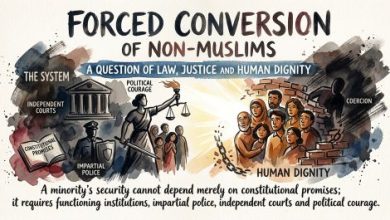
Read: Forced Conversion of Non-Muslims
_____________
 Dr. Jaipal Chhabria, Member, National Commission for Minorities