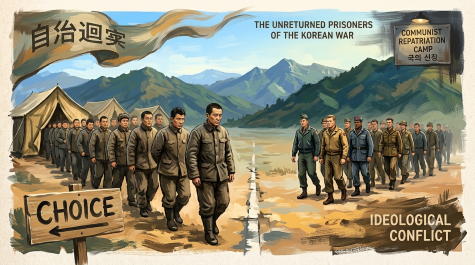
When hostilities ceased in Korea in 1953, a prolonged diplomatic deadlock arose over thousands of prisoners who refused to return to their home nations. The resulting policy of voluntary repatriation reshaped human rights norms and the legal precedents of international conflict.
By Noor Muhammad Marri, Advocate | Islamabad
When the guns fell silent along the 38th parallel on July 27, 1953, with the signing of the armistice at Panmunjom, the quiet that settled over the devastated Korean Peninsula was accompanied by one of the most poignant human dilemmas of the Cold War. The Korean conflict was not merely a territorial war fought with conventional weaponry; it was an ideological battleground, and nowhere was this tension more starkly revealed than in the plight of the prisoners of war. Unlike prior global conflicts where the repatriation of captured combatants was treating as an automatic administrative obligation, the conclusion of hostilities in Korea birthed a fundamental diplomatic and moral crisis: what ought to be done with combatants who flatly refuse to return to their home states?
The legal and diplomatic stalemate over prisoner exchange stalled peace talks for nearly a year and a half. Under traditional interpretations of the 1949 Geneva Convention, detaining powers were expected to return all prisoners immediately upon the cessation of active hostilities. Yet, United States President Harry S. Truman, mindful of the tragic fate suffered by Soviet prisoners forcibly repatriated after the Second World War—many of whom met immediate execution or exile in the Gulag—insisted on the principle of voluntary repatriation. To force men back to totalitarian regimes at bayonet point was, in the view of the Western coalition, a violation of basic human dignity. Conversely, North Korean and Chinese negotiators viewed voluntary repatriation as a betrayal of international custom and a calculated strategy to inflict a public relations defeat upon the communist bloc.
To navigate this moral and legal impasse, the Neutral Nations Repatriation Commission, chaired by India, was entrusted with overseeing a neutral interview process. In the demilitarized camps, prisoners were subjected to explanations by representatives from their home nations, who sought to persuade them to return. When the ninety-day period concluded, the sheer scale of the refusals exposed the ideological fissures of the era. Over fourteen thousand Chinese prisoners—nearly two-thirds of all Chinese combatants held by the United Nations Command—rejected Mao Zedong’s People’s Republic, opting instead to seek asylum in Nationalist Taiwan. Similarly, over seven thousand North Korean soldiers refused return to Kim Il-sung’s regime. On the opposing side, twenty-one American servicemen and one British soldier made the shocking choice to reject their home nations and settle in Maoist China.
The motives underlying these decisions were as intricate as human nature itself. For many Chinese prisoners, former service in the Nationalist Kuomintang armies prior to their forced incorporation into the People’s Volunteer Army meant their allegiance to the communist cause was tenuous at best. For North Koreans, years of ideological exhaustion, combined with the harsh realities of wartime life, bred deep disillusionment. Conversely, the Western soldiers who elected to stay in China were driven by a complex matrix of political conviction, fear of court-martial for camp conduct under duress, and a desire to escape deeply troubled personal or social circumstances in their home countries.
The long-term significance of this historical episode extends far beyond the immediate statistics of the Korean War. The resolution established a vital legal and humanitarian precedent, firmly cementing voluntary repatriation into the jurisprudence of international conflict and refugee protection. It asserted that the conscience and agency of the individual soldier take precedence over the unyielding claims of the state. Ultimately, the story of the unreturned prisoners stands as a testament to the fact that even amid the totalizing machinery of international war, individual choice remains a potent force capable of reshaping legal norms and diplomatic history.
Read: Unmasking the Fault Lines
__________
 Noor Muhammad, Advocate and Mediator, Islamabad