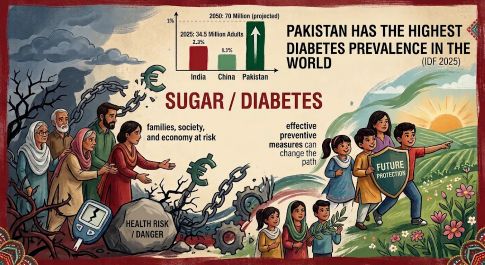
Approximately 34.5 million adults in Pakistan are living with diabetes. Pakistan has the highest age-standardized diabetes prevalence in the world.
By Dr. Jaipal Chhabria
Pakistan is facing a serious public health crisis. Diabetes has become one of the greatest threats to the health and future of our population. According to the International Diabetes Federation (IDF) Diabetes Atlas 2025, approximately 34.5 million adults in Pakistan are living with diabetes. Pakistan has the highest age-standardized diabetes prevalence in the world.
This is not just a medical problem; it is a national challenge that affects families, society and the country’s economy. Even more concerning is the projection that the number of people with diabetes in Pakistan could reach approximately 70 million by 2050 if effective preventive measures are not taken.
Why is diabetes so dangerous?
Diabetes is a chronic disease in which blood glucose levels remain higher than normal. If it is not properly controlled, it gradually damages blood vessels, nerves and vital organs.
Its major complications include:
- Heart attacks and cardiovascular diseases.
- Kidney damage and kidney failure.
- Diabetic retinopathy, which can cause serious visual impairment and blindness.
- Nerve damage, numbness and burning sensations in hands and feet.
- Diabetic foot ulcers, infections and gangrene, which may ultimately lead to amputation.
- Stroke and other vascular complications.
Diabetes, high blood pressure and abnormal cholesterol together significantly increase the risk of heart attacks and premature death.
Prevention is better than treatment
The good news is that type 2 diabetes can often be prevented or delayed through healthy lifestyle changes.
My advice to every Pakistani is:
- Control your weight: Maintain a healthy body weight and reduce abdominal fat.
- Avoid overeating: Eat moderate portions and avoid unnecessary extra meals.
- Eat more vegetables and salads: Include fibre-rich foods in your daily diet.
- Exercise regularly: Walk briskly or exercise for at least 150 minutes per week, according to your ability.
- Control blood pressure and cholesterol: Both are important for protecting your heart and blood vessels.
- Eat dinner early: Try to finish dinner at least two hours before going to bed.
- Avoid excessive sweets and fried foods: Reduce sugary drinks, bakery products and foods rich in unhealthy fats.
- Avoid smoking and tobacco: They increase cardiovascular risks.
Remember: If you protect your own health, you also protect the future of your children. Healthy parents can help build a healthier generation.
When should you check your blood sugar?
Do not wait for symptoms. Diabetes can remain undiagnosed for years.
Adults aged 30 and above, particularly those with excess weight, a family history of diabetes or other risk factors, should discuss regular screening with their doctors. Annual testing is a useful preventive measure.
Fasting Blood Sugar
After at least eight hours of fasting:
– Normal: Below 100 mg/dL.
– Prediabetes: 100–125 mg/dL.
– Diabetes: 126 mg/dL or above.
HbA1c Test
This test reflects average blood glucose over approximately three months.
– Normal: Below 5.7%.
– Preڏdiabetes: 5.7–6.4%.
– Diabetes: 6.5% or above.
An abnormal diabetes result generally needs confirmation by repeat testing unless there is unequivocal hyperglycaemia.
If you already have diabetes, HbA1c should generally be checked every three months when treatment has changed or sugar is not controlled. For stable patients, doctors may recommend testing every six months. For many adults, the treatment target is HbA1c below 7%, although individual targets may differ.
Message on World Diabetes Day
Let us make a commitment to protect ourselves and our families.
Check your blood sugar. Control your diabetes if you already have it. Protect your kidneys, eyesight, nerves, feet and heart through regular medical examinations and proper treatment.
Do not ignore diabetes. Do not ignore high blood pressure or cholesterol.
If you save yourself, you can save your children too.
Prevention, awareness and timely treatment are the keys to a healthier Pakistan.
Read: Redefining Renal Care for Sindh’s Future
____________
 Dr. Jaipal Chhabria, Karachi Sindh