As kidney disease increasingly intersects with diabetes, hypertension, and cardiovascular issues, the future of renal medicine must move beyond dialysis alone.
Nuzair Ahmed Jamro
It is true that for thousands of poor and middle-class families in Sindh, the Sindh Institute of Urology and Transplantation (SIUT) is much more than a hospital. It is a place where people who cannot afford expensive private treatment find care, dignity and hope. Yet the nature of that demand is changing. Kidney disease increasingly overlaps with diabetes, hypertension, cardiovascular disease, anemia, infections, nutritional deficiencies and respiratory complications. This means that the future of renal care cannot be defined by dialysis alone.
The next stage should be a more integrated, technology-enabled and patient-centered healthcare system in which specialized services work together around the needs of the patient.
A Kidney Patient Is More Than a Kidney Patient
Disease rarely respects the boundaries between medical specialties. Diabetes, for example, can progressively affect the kidneys, heart, eyes and nervous system, while hypertension can damage the kidneys and increase cardiovascular risk. A patient receiving dialysis may therefore also need management of diabetes, blood pressure, anemia, nutrition or cardiovascular complications.
This makes multidisciplinary care increasingly important. Nephrology and urology should be supported by cardiology, endocrinology, pulmonology, emergency medicine, intensive care, nutrition, physiotherapy and other relevant specialties. The principle is straightforward: treat the whole patient rather than treating each illness as a separate problem.
SIUT Sukkur: A Regional Opportunity
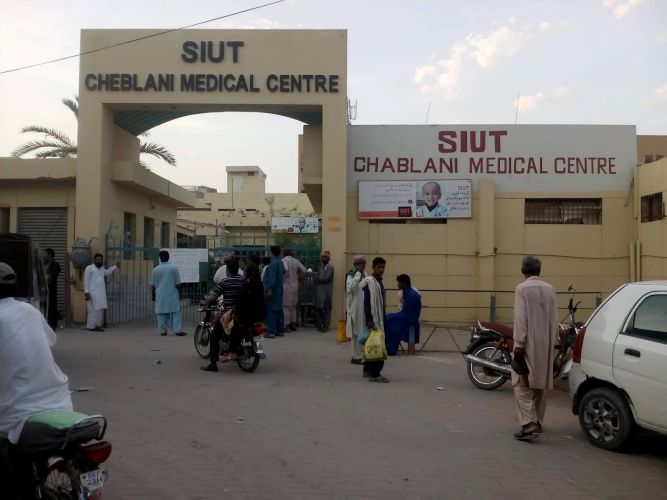
SIUT’s presence in Sukkur gives this vision a strong geographical foundation. Its facilities in Sukkur provide important urological and renal services, including dialysis, emergency care, lithotripsy, surgery, radiology and laboratory support. The larger Medical Complex at the Sukkur Bypass adds further capacity and creates an opportunity to develop a stronger regional referral system. Its location is particularly significant for northern Sindh. Patients from Sukkur and surrounding districts, including Shikarpur, Larkana, Jacobabad, Kashmore-Kandhkot, Ghotki and Khairpur, can potentially access specialized services without routinely travelling to Karachi.
The priority, therefore, should be to consolidate Sukkur as a regional hub for renal and related specialist care, while ensuring that patients requiring highly complex treatment remain connected to SIUT Karachi. This approach can improve access without attempting to reproduce every tertiary-care service at every location.
Connecting Kidney Care with Cardiac Care
Cardiovascular disease deserves special attention because many patients with chronic kidney disease, diabetes and hypertension also face cardiovascular complications. Here, SIUT and the Sindh Institute of Cardiovascular Diseases (SICVD) have complementary roles. SIUT’s expertise lies principally in renal, urological and transplant care, while SICVD provides specialized cardiovascular services through its network across Sindh. The opportunity is therefore coordination rather than duplication.
A patient receiving dialysis who develops chest pain, severe breathlessness or another suspected cardiac emergency should have a clear pathway for rapid cardiac assessment and referral. Conversely, cardiac patients with significant kidney disease may require timely nephrology input. Formal referral protocols, shared clinical communication and appropriate access to patient information could make this relationship more effective. The objective is simple: specialized institutions should work as parts of one patient-centered system rather than as isolated services.
Pulmonology and Critical Care
Renal patients can also develop respiratory complications because of fluid overload, infection and other serious conditions. In such situations, timely oxygen therapy, respiratory support, monitoring and intensive care may be essential.
Strengthening pulmonology, emergency medicine and critical-care capacity should therefore accompany the development of major SIUT facilities. However, advanced equipment is only one part of critical care. Ventilators and ICU monitors require trained intensivists, pulmonologists, nurses, respiratory therapists and biomedical engineers. The effectiveness of technology ultimately depends on the people who operate and maintain it.
Urology: From Treatment to Early Intervention
Urology remains a central part of SIUT’s mission. Kidney stones, urinary obstruction and urological infections can cause severe pain and, when treatment is delayed, may contribute to infection or deterioration in kidney function. Early diagnosis and appropriate treatment therefore require access to imaging, laboratory investigations, lithotripsy, endoscopic procedures and surgery.
SIUT’s existing urological capacity in Sukkur provides an important base. Further strengthening the connection between urology, nephrology, radiology, laboratory medicine and emergency services can help patients move more efficiently from diagnosis to treatment. The emphasis should be on early intervention and continuity of care, particularly for conditions that can contribute to preventable kidney damage.
One Patient, One Connected Medical Record
Digitalization could significantly strengthen this model. A secure electronic health record could bring together a patient’s dialysis history, laboratory results, blood pressure, glucose levels, hemoglobin, medications, imaging, urological procedures, cardiac investigations, admissions and specialist consultations.
This would allow authorized clinicians to understand the patient’s broader medical history rather than relying on fragmented records. A cardiologist, for example, could review relevant renal information, while a respiratory team could see important details about kidney function and previous admissions. Such connectivity could reduce unnecessary repetition of investigations and improve continuity of care. Privacy, cyber security and role-based access would be essential components of such a system. Digital technology should not replace clinical judgment. It should give clinicians better information at the point of care.
Telemedicine: Extending Expertise beyond the Hospital
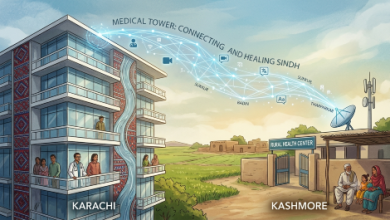
Digital connectivity can also address one of Sindh’s most persistent healthcare challenges: distance. For patients from Jacobabad, Kashmore, Shikarpur and other remote areas, repeated journeys to Karachi can impose significant financial and physical burdens. Telemedicine can bring specialist consultation closer to these communities while retaining access to tertiary expertise.
A practical model could connect: Local facility → Regional SIUT hub → SIUT Karachi
Routine follow-up and selected consultations could be handled closer to the patient’s home, while complex cases could be referred to Sukkur or Karachi. This would make regional healthcare more efficient without requiring every facility to become a tertiary hospital.
Taking Renal Care Closer to Underserved Communities
Once a strong regional hub is established, the next question is how to reach communities that remain distant from specialized care. Areas such as Shikarpur, Jacobabad, Kashmore-Kandhkot and Kandiaro could be considered for SIUT-linked renal and diagnostic services, subject to population needs, feasibility and available resources.
These facilities need not replicate the full SIUT model. Depending on local demand, they could provide dialysis, nephrology consultation, diabetes and hypertension screening, basic laboratory services, essential imaging, nutrition counseling and telemedicine, with complex patients referred to Sukkur or Karachi. Such a hub-and-spoke structure would allow SIUT to expand its reach while maintaining specialist oversight.
Prevention Must Accompany Treatment
No expansion of hospital services can fully address kidney disease without prevention. Diabetes and hypertension are major contributors to chronic kidney disease, and early detection can provide an opportunity for intervention before complications become advanced. Community programs should therefore promote regular blood-pressure checks, diabetes screening, kidney-function assessment, healthy dietary practices, physical activity and medication adherence.
Schools, workplaces, colleges, community organizations and primary healthcare facilities can all contribute to this effort. The public-health message need not be complicated: Detect diabetes early. Control blood pressure. Protect the kidneys. Protect the heart.
Rehabilitation and Quality of Life
Successful healthcare should not be measured only by survival. Chronic kidney disease and prolonged hospitalization can affect mobility, strength, nutrition, employment and emotional wellbeing. Rehabilitation, physiotherapy, dietary counseling and appropriate psychosocial support can help patients maintain independence and improve their quality of life. For chronic-care patients, these services should be viewed as part of treatment rather than as optional additions.
Investing in SIUT’s Next Chapter
Such a healthcare network will require sustained investment, but investment should extend beyond buildings and machines.
The Government of Sindh can play an enabling role through long-term infrastructure support, land and utilities where appropriate, ambulance and referral systems, digital connectivity and coordination with other public-sector health institutions. Donors and philanthropists can support targeted areas such as ICU development, ventilators, advanced diagnostics, laboratories, telemedicine, electronic medical records, ambulances, rehabilitation and specialist training.
Equally important is investment in human resources. Doctors and nurses must be supported alongside technicians, pharmacists, physiotherapists, respiratory therapists, laboratory professionals, IT specialists and biomedical engineers. There is also an opportunity to establish dedicated support for research and innovation so that future expansion is guided by patient data, clinical evidence and regional healthcare needs.
Keeping the Human Spirit at the Centre
Amid all this discussion of technology and expansion, the central principle of SIUT should remain unchanged: the ability to pay should not determine access to treatment. Technology should strengthen that principle.
A dialysis center closer to a patient’s home reduces the burden of travel. A reliable cardiac referral pathway can shorten delays during emergencies. A properly staffed ICU can provide timely critical care. A connected medical record can prevent important clinical information from being lost between departments. These are not simply technological improvements. They are ways of making healthcare more accessible and humane.
A Connected Healthcare Future for Sindh
The next chapter of SIUT should not be defined simply by more dialysis machines, additional beds or new buildings. Its greater opportunity lies in building a connected healthcare network.
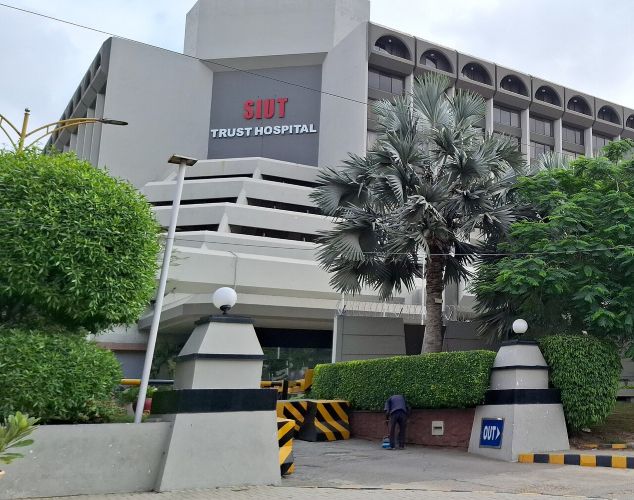
SIUT Karachi can continue to serve as a center of excellence, while SIUT Sukkur and the Babarlo Bypass facility can develop as an important regional hub for northern Sindh. Carefully planned satellite and linked services can bring essential renal care closer to communities in other underserved districts. At the same time, structured coordination with SICVD can strengthen care for patients whose kidney, diabetic and cardiovascular conditions overlap.
In such a system, a patient could begin treatment near home, receive specialist advice through telemedicine, access advanced regional services when necessary and be referred to Karachi for highly complex care. Most importantly, patients should not have to understand the boundaries between institutions. The healthcare system should manage those boundaries for them.
For a poor family in a remote part of Sindh, quality healthcare should not be a choice between travelling hundreds of kilometers and going without treatment. SIUT’s next chapter can therefore be about much more than dialysis. It can combine free healthcare with advanced technology, multidisciplinary medicine, digital connectivity and regional access, while preserving the compassion that made the institution distinctive in the first place.
Free healthcare. Advanced technology. Connected services. Multidisciplinary care. And, above all, dignity for every patient. That is how SIUT can continue helping turn healthcare from a privilege into a right for the people of Sindh.
Read: Strengthening Rural Primary Healthcare
_________________
 Based in Shikarpur, Sindh, the writer is a civil servant and MS research fellow in Public Administration. He writes on governance, public policy, and digital transformation. Email: najamro@gmail.com.