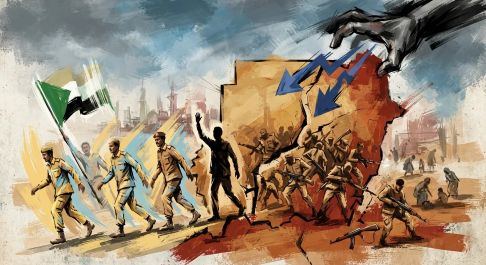
Millions of Sudanese have paid a devastating price through displacement, hunger, the loss of loved ones, and the destruction of their communities.
Ultimately, the nation needs far more than military victories or shifting allegiances. It requires lasting peace, justice, accountability, and strong national institutions that allow all citizens to live together in dignity.
By Yousif Ibrahim Abubaker Abdalla
A wave of high-profile defections from the Rapid Support Forces (RSF) points to deepening internal fractures within the paramilitary group. These sudden departures raise urgent questions about foreign interference and the future of Sudan’s ongoing conflict.
In a video statement circulating on social media, Al-Tayeb Jabara—reportedly a former RSF Director of Counterintelligence and an officer linked to Mohamed Hamdan Dagalo’s (Hemedti’s) personal protection unit—publicly apologized to the Sudanese people. Acknowledging his role within the group, Jabara urged fellow members to reconsider their positions, accept the amnesty offered by General Abdel Fattah al-Burhan, and return to the Sudanese Armed Forces (SAF). He further accused Hemedti of threatening Sudan’s unity by advancing foreign agendas and serving his own family’s interests at the nation’s expense.
In a separate development, Lieutenant General Ammar Mohammed Zein Rabah, reportedly a senior RSF logistics official and commander of Support Group 143, announced his defection alongside eight other commanders. Speaking at a press conference at Khartoum International Airport, the officers expressed regret over their past involvement with the RSF and pledged their allegiance to the SAF.
Zein Rabah also alleged that foreign experts are operating in Nyala, South Darfur, to train RSF officers in cybersecurity, and claimed that wounded RSF fighters are receiving medical treatment abroad. Given his reported role in the group’s logistics network, these claims carry considerable weight, though they still require independent verification.
Beyond the Defections: What Is Really Happening in Sudan?
These developments demand closer scrutiny than simply tallying the number of officers leaving the RSF. When individuals who reportedly held sensitive positions turn publicly against their leadership, it signals serious turbulence behind the scenes.
More importantly, allegations of foreign involvement highlight a critical concern: to what extent has Sudan’s conflict become driven by external agendas, and what does this mean for the country’s sovereignty? While statements from defectors must be examined critically and backed by independent evidence rather than taken at face value, one reality remains undeniable: Sudan cannot afford to be a proxy battleground for competing interests at the expense of its citizens.
Millions of Sudanese have already paid a devastating price through displacement, hunger, the loss of loved ones, and the destruction of their communities. Ultimately, the nation needs far more than military victories or shifting allegiances. It requires lasting peace, justice, accountability, and strong national institutions that allow all citizens to live together in dignity.
Sudan belongs to its people, and its future must be decided by them—not by armed factions or external powers.
May Allah protect Sudan, preserve its unity, and bring lasting peace to its people.
Read: Before the Bell Rings Again
____________
 Yousif Ibrahim Abubaker is a TEFL Teacher, Poet, Journalist, Activist, and Freelance Interpreter/ Translator from Umbda Omdurman – Sudan. He also has been working as a debate leader discussing various topics in many English Institutes, Centers, Academies and Schools. He can be reached at: americanslang64@gmail.com