“Child! Your presence in this cremation ground at midnight is highly suspicious. I suspect you have come here to kill this newborn!”
The man looked toward the sadhu and replied: “My daughter was born with a physical disability. The royal physician has examined her and declared that she will remain crippled for life. I wish to free her from the terrible pain of lifelong paralysis. Moreover, when the people of the kingdom learn that the princess is disabled, they will mock their king and queen. That disgrace will tarnish our Iron Royal Line.”
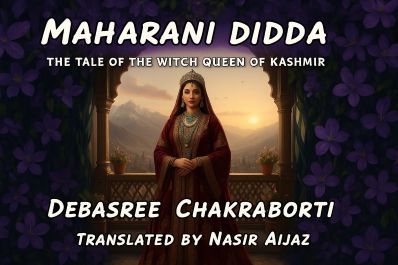
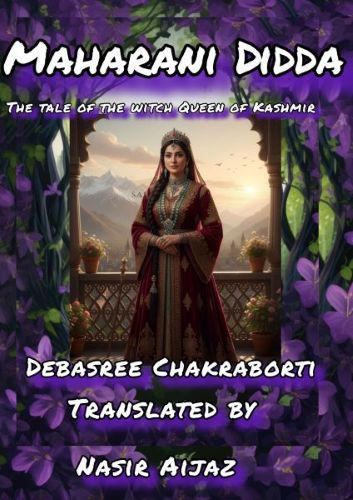
Maharani Didda: Witch Queen of Kashmir
By Debasree Chakraborti
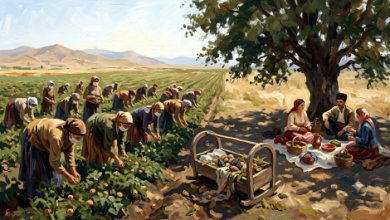
 Fields of saffron stretched as far as the eye could see, with a mountain river flowing through the middle. At one edge of the fields stood the village of the Bhalagas. A short while ago, the Sun God had gone to rest along the western slopes of the mountains. Now, a white blanket of mist was slowly creeping in from the mountains, drifting over the fields toward the village. Soon, it would envelop the entire place.
Right in the center of the village was Bhalaga’s home. In the courtyard stood a large chinar tree, beneath which lay the chicken coop. Three days ago, the hen had laid an egg, and she had been brooding over it tirelessly all day long. In Bhalaga’s house, there was only that one hen and a rooster. Whenever the hen laid an egg, the rooster would crow again and again at any hour of the day—its call sounding like a protective alarm for its small family. To protect its offspring, the rooster kept constant watch.
On top of the chicken coop made of stones and wood lay heaps of red chinar leaves. Some dry leaves had been blown around by the wind and lay scattered disorderly across the courtyard. In just a few days, snowfall would begin in the valley.
From evening onward, a piercingly cold wind would blow. That is why during this time the villagers…People remain inside their homes. A short while ago, the evening worship of the village deity, Kapileshwar Dev, had concluded. At that time, a few villagers were present at the temple. After the ritual, when the priest put the deity to rest and closed the temple doors, the devotees took the offered prasad and returned to their homes. They had already reached home a little while earlier. Now, no one was out on the roads. The streets lay silent and still. Only the tall chinar trees on either side of the road shed their dried leaves, and those leaves, carried by the gusty wind, flew far away with a melancholic rustle.
Tonight, Bhalaga’s mind was restless. She lay on her side, trying to become one with the atmosphere around her, listening carefully to the world outside.
 From beyond the walls came the chirping of crickets, the roar of the wind, the rustling of dry leaves—each sound seemed to connect with different chapters of her life, with memories of events that had shaped her existence. In truth, Bhalaga had no ancestral ties to this land. Long ago, her father had travelled from distant Africa with her mother, wandering across many countries before arriving in India. They were natives of Africa. Her father had been a warrior, mastering various techniques of warfare during his travels.
Eventually, he reached Kashmir and joined the army of the Lion King. Bhalaga was born in Kashmir. Gradually, she learned many secret battle techniques from her father. Over time, this tall, dark-skinned, powerful woman became the chief bodyguard of Maharani Shreelekha.
Human life is indeed strange. Sometimes incidents occur that remain etched in a person’s heart forever—events that reshape one’s entire future and even alter one’s very identity. It had been on a night just like this—one she could never forget.
As Bhalaga drifted through these thoughts, someone knocked on the door. She focused her sharp senses, trying to understand the sound. The knock came again. Now she rose with her towering, muscular form. Age had only made her stronger and more resolute. She moved aside the cloth near her bed, pulled out her spear, and gripped it tightly in her right hand. Then, in a loud and commanding voice, she asked,
“Who? Who comes to Bhalaga’s door at such an hour?”
A voice replied from outside, “I am a messenger. I bring a message from the Princess.”Bhalaga let out a breath of relief and, still holding the spear, stepped forward to open the door. As soon as the door opened, a cold gust of wind swept inside, bringing with it a handful of red chinar leaves. She took the letter from the messenger’s hand and shut the door once again. Now dry chinar leaves lay scattered across the floor and the bed — as if they were torn fragments of a canvas from her past.
She placed the spear against a wall and walked toward a corner of the room where a lamp was burning. Bending slightly, she began to read the letter. There were only a few words written on it:
“Bhalaga, return quickly. I do not feel well.”
The moment she read it, tears welled up in her eyes. Bhalaga had taken a few days of leave to rest her body. She had thought she would remain at home for a short while — repair the roof before the snowfall began, complete a few small chores, and most importantly, rest. After passing forty springs of her life, even her strong body had begun to demand care. Tears streamed down her face. She lay down on the bed with the letter still in her hand. Turning to her side, she picked up a red chinar leaf and gazed at it. Within that leaf, a scene from the past surfaced before her eyes.
“From what you have told me, I understand you are Singharaj of the Lohar Dynasty. Listen carefully to what I say. Upon the forehead of this girl, I see the mark of sovereignty. She will live a long life, and one day she will rule this kingdom. More than that — through her deeds, she will become one of the most significant figures in the history of Kashyap Bhoomi. Who are you to end the life of one whom the Divine itself has chosen to protect?”
Bhalaga stepped forward and said, “Baba, give this child to me. I will raise and protect her.”
A cremation ground…
A place so terrifying that even the Dom cremation workers feared to come here at night. The locals believed that after sunset, witches roamed the cremation ground. No living being was safe there at that hour. Only a few Aghori mystics would remain — performing their mysterious and secret rituals in solitude.
That night too, a group of Aghori sadhus were deep in their occult worship. Suddenly, a royal figure appeared in the scene, walking forward with a red cloth bundle held in both hands. Bhalaga could see herself there as well, addressing the man as Maharaj and pleading with him. But he paid no heed. He walked straight toward a burning funeral pyre and stood before it.
At that moment, a newborn’s cry emerged from inside the bundle.
The infant—perhaps sensing its own danger—began to cry louder… The baby’s cry grew louder. Neither the king nor Bhalaga seemed to pay attention to the Aghori ascetics, but the ascetics, startled by the infant’s wailing, watched them alertly. Then the leader of the sadhus thundered:
“Child! Your presence in this cremation ground at midnight is highly suspicious. I suspect you have come here to kill this newborn!”
The man looked toward the sadhu and replied:
“My daughter was born with a physical disability. The royal physician has examined her and declared that she will remain crippled for life. I wish to free her from the terrible pain of lifelong paralysis. Moreover, when the people of the kingdom learn that the princess is disabled, they will mock their king and queen. That disgrace will tarnish our Iron Royal Line.”
The sadhu stepped forward and said:
“Let me examine your daughter once.”
 The king placed the baby in the sadhu’s arms and turned his face away, unable to look. Bhalaga had been observing everything from a distance. In that eerie cremation ground, her tall, dark, powerful figure appeared almost like that of a witch. The flames of the pyre reflected across her body, casting a crimson glow upon her.
Now she too stepped closer to the sadhu.
The ascetic, fully focused, examined the infant’s forehead — the “tilak” of fate. After a moment, he spoke:
“From what you have told me, I understand you are Singharaj of the Lohar Dynasty. Listen carefully to what I say. Upon the forehead of this girl, I see the mark of sovereignty. She will live a long life, and one day she will rule this kingdom. More than that — through her deeds, she will become one of the most significant figures in the history of Kashyap Bhoomi. Who are you to end the life of one whom the Divine itself has chosen to protect?”
Bhalaga stepped forward and said, “Baba, give this child to me. I will raise and protect her.”
At that time, people from Africa and many other countries would travel to India and join the armies. So the Aghori ascetic did not feel intimidated by Bhalaga’s imposing appearance.
She pleaded again:
“Maharaj, please… let her live.”
The sadhu asked, “Mother, introduce yourself.”
Bhalaga replied, “Baba, I am Queen Shreelekha’s bodyguard. I was present during the childbirth. To cast a child into the flames for being born with a disability is a sin beyond forgiveness. Please give this child to me. I will raise her myself. Maharaj, you need not worry — no one will ever know her true identity.”
Maharaj Singharaj’s expression slowly began to change as he pondered her words. After hearing the sage’s prophecy about the girl’s future, he suddenly became strangely calm. Singharaj was a devotee of Lord Mahadeva, and therefore he held the Aghoris in great reverence. In his childhood, he had suffered from an illness that was certain to take his life. At that time, medicine given by an Aghori sage had saved him — granting him a second chance at life. Perhaps this memory caused his heart to soften.
Now, with great respect, he took the baby back from the sadhu and said, “I believe in your prophecy. For ages you and your lineage have worshipped Maheshwar, the deity of our royal family. I will obey your command. Please bless the princess, that she may triumph over every hardship life brings.”
The sadhu raised both hands and blessed the child:
“Tathastu — so be it.”
Everything that happened after that night remained crystal clear in Bhalaga’s memory. Even the queen did not wish to accept her own child. The king and queen remained absorbed in their pleasures and luxuries, while the princess grew under the care of the palace maids.
One of the princess’s legs was significantly thinner than the other, and the maids never missed an opportunity to mock her for it.
One day, while feeding the newborn milk, disaster struck.
On the night of her birth, after bringing the princess to the palace, the maids had taken her into their care. The king, and the maids as well, were busy attending to the queen. The newborn child was left lying alone on a bed in a separate room.
 Thirsty and helpless, the infant cried out — again and again — but not a single maid… came to feed her even once. The responsibility of tending to the princess had been assigned to other palace maids. Bhalaga, being the queen’s bodyguard, had no such duty. That night, after returning from the cremation ground, the king instructed Bhalaga to remain in the queen’s palace quarters.
A room next to the queen’s chambers had been arranged for the princess. From there, her cries could be clearly heard throughout the queen’s palace. Everyone expressed irritation at the noise, yet not one of them showed the slightest intention of comforting the child. Instead, they continued to criticize and ridicule her.
Though unmarried, Bhalaga’s maternal instincts pulled her toward the crying infant. She took a bowl of warm milk and a conch from the queen’s kitchen and went straight to the princess.
The moment Bhalaga sat beside her and lifted her into her arms, the baby clutched tightly at her scarf — as if pleading for protection. Her tiny mouth formed desperate, trembling sounds, seeking help. Bhalaga gently rested the baby against her chest and used the conch to feed her the warm milk. With the very first sip, the child felt comforted and eagerly drank more, swallowing quickly. Once her little belly was full, she drifted into a peaceful sleep.
As Bhalaga kissed the princess’s forehead, tears filled her eyes. She thought, “Born into royalty, yet fighting battles from the very beginning… What more hardships await her in the years ahead?”
That night, Bhalaga forgot every duty except one — to hold and protect the child against her heart.
The next morning, a maid arrived and informed Bhalaga that she would now take over the baby’s care. Bhalaga, exhausted from staying awake all night, needed rest herself. So she entrusted the princess to the maid and left for her own home.
Bhalaga’s home was very close to the royal palace, separated only by a vast saffron field through which a narrow mud path twisted its way. Weary and drained, she walked along the winding trail.
Suddenly, she heard the cry of a baby. She froze in her tracks. In that instant, it felt as though a thousand damrus of Lord Mahadev thundered inside her chest — a terrifying dance of destruction erupting in her heart.
She looked around intently…
She looked and saw a large chinar tree in the middle of the field. Under it, a tiny child sat crying, while the mother worked some distance away. Bhalaga felt a strange twisting pain inside her heart. She lowered her head and continued walking slowly.
 After a while, she heard the temple bells of the village deity — Lord Kapileshwar. Yet even over the sound of the bells, she could still hear the crying of the child in the field. Bhalaga could go no further. She stopped abruptly, then turned back toward the royal palace. She felt an overwhelming dread — as if she had made a terrible mistake by leaving the princess under the maid’s care.
Breathless, she hurried back to the queen’s palace. As she approached, she heard the princess crying — a painful, choking cry, like a child struggling with something lodged in its throat. Racing inside, Bhalaga saw a horrifying sight:
A maid was forcing hot milk into the baby’s mouth from a cup, pressing her down by the chest with one hand. The maid’s eyes and face showed terrifying cruelty. The infant choked as the liquid entered her windpipe.
Bhalaga rushed forward, lifted the princess into her arms, and held her tightly against her chest. She gently tapped the baby’s back with her palm. The milk that had entered her airway spilled out, and slowly the princess calmed down.
Cradling the child protectively, Bhalaga marched straight into the queen’s chamber.
The queen had just finished her bath and was reclining in bed while a maid gently perfumed and dried her long black hair with incense smoke. Bhalaga approached, bowed with the princess in her arms, and said:
“My Queen, I have something urgent to discuss.”
Bhalaga had always been the queen’s closest guard — almost constantly by her side. She had even been present during childbirth. The king himself regarded Bhalaga differently from the other female guards.
The queen signaled the maid to leave, then sat up slightly, leaning against a pillow.
“What is it, Bhalaga? What is so urgent? Speak.”
Bhalaga noticed the queen had shown not the slightest concern for her newborn child.
Sitting before the queen, holding the princess close to her heart, Bhalaga began— Gently caressing her soft little body, she said, “My Queen, yesterday I went to the cremation ground with the King. There, the Aghori baba, upon seeing the princess, said that one day she will rule this Kashyap-land.”
But the Queen’s face still held that same indifference. She cast a brief glance at the princess and then, letting out a long sigh, said, “Yes, I heard the King say the same.”
As the infant princess began crying again, Bhalaga lightly patted her body and said, “Please entrust all the responsibilities of the princess to me. I will raise her with the utmost care.” His voice overflowed with emotion. “She will be extraordinary in every way, superior to any ordinary princess.” Then, pleading, he added, “Just give me a chance, the rest—time will decide.”
The baby princess seemed sleepy; she gripped Bhalaga’s scarf tightly and rubbed her eyes, crying softly. The Queen, visibly irritated by her own child’s crying, said coldly, “Very well, if you think so, good. Some maid would have had to care for her anyway—better you than them. It is indeed an excellent suggestion. Now you may leave, you can see that I need rest.”
From that day on, Bhalaga devoted himself to raising the princess—day and night, without pause. The princess, abandoned by her own mother, father, and kin, became the purpose of his life.
When one month passed after her birth, Bhalaga took her to the temple of Lord Kapileshwar in their village. During the ritual blessings for the infant princess, the priest asked Bhalaga her name. Without a moment’s thought, he replied, “Diddā, Princess Diddā.”
Thus was completed the naming of one of the most significant figures in the history of Kashmir—by a temple priest from an obscure village and the Queen’s loyal bodyguard, without either of them realizing the importance of what they had done.
Lost in these thoughts, Bhalaga returned to the present. Outside, the rooster was crowing. At dawn tomorrow he must return to the royal palace. He had been training the princess in staff-fighting. Continuous training over several days had exhausted him, so he had taken a short break. But Bhalaga had forgotten that his heart’s daughter—his dearest companion, Princess Diddā—could not bear to be without him at all. Sixteen-year-old Diddā had grown so accustomed to Bhalaga’s presence that he had become essential to her every living moment.
Valaga’s eyelids slowly drooped, and he slipped into a deep sleep. (Continues)
Click here for Part-1, Part-2, Part-3,
____________________
 Debasree Chakraborti is a renowned novel writer of Bengali language. Based in Kolkata, West Bengal, India, she has done Master’s in Modern History from the Kolkata University, and authored some thirty books, mostly the novels, with historical perspective and themes. Her novel is ‘Maharaja Dahir’ that covers the history of Sindh from 662, the year of first attack on Sindh by the Arab armies till date, was published last year and translated by Nasir Aijaz into Sindhi language.