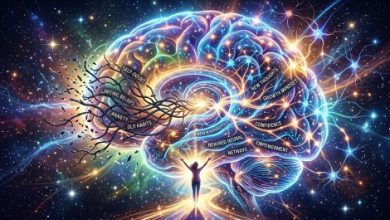
Understanding Body Language, Tone, and the Foundations of True Communication
- We do not simply communicate through language; we communicate through presence. And it is this presence that transforms conversations into connections, relationships into bonds, and everyday interactions into meaningful human experiences.
By Abdullah Usman Morai | Sweden
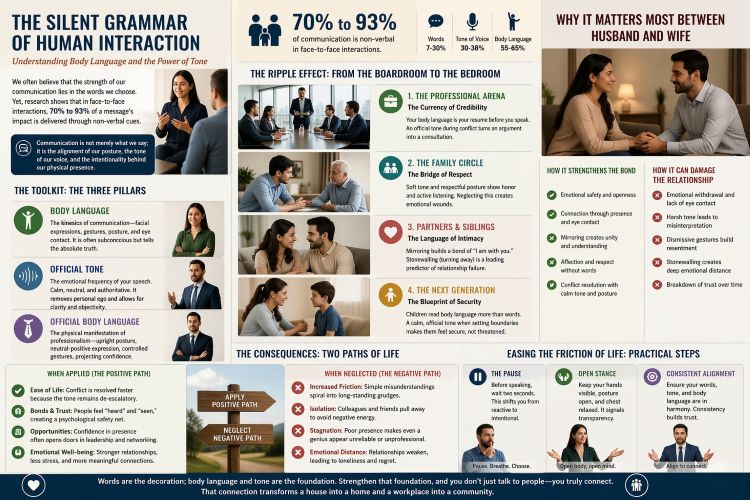
We often believe that the strength of our communication lies in the words we choose. We carefully draft messages, rehearse important conversations, and polish our arguments. Yet, a powerful and often overlooked reality challenges this belief: in face-to-face interactions, nearly 70% to 93% of communication is conveyed through non-verbal cues.
This means communication is not merely what we say, it is how we sit, how we look, how we pause, and how we carry our presence. It is the alignment of our words with our tone and body language. Whether in a formal office meeting or a quiet moment at home, these silent elements determine whether we build bridges of trust or walls of misunderstanding.
What Is Body Language?
Body language is the unspoken system of communication, often referred to as kinesics. It includes facial expressions, posture, gestures, eye contact, and even subtle physical shifts. It operates mostly on a subconscious level, yet it often communicates more honestly than words.
A person may say, “I’m listening,” but if their body is turned away, their eyes are distracted, and their posture is closed, the listener instinctively trusts the body over the words. In many ways, the body never lies; it reveals intention, emotion, and attention with remarkable clarity.
Official Tone and Official Body Language
In structured environments, especially professional settings, communication requires discipline and awareness.
Official tone is the emotional frequency of speech. It is calm, measured, respectful, and neutral. It removes unnecessary ego and emotional volatility, allowing communication to remain clear and objective, even in disagreement.
Official body language is the physical expression of professionalism. It includes:
- Upright posture and composed stance
- Controlled and purposeful gestures
- Neutral yet attentive facial expressions
- Consistent and respectful eye contact
- Open body positioning that signals confidence and transparency
Together, official tone and body language project reliability, authority, and trust. They often serve as a “first impression” long before words are processed.
 The Role of Official Language in Communication
Alongside tone and body language, official language forms the third pillar of structured communication. It refers to the deliberate use of clear, formal, and respectful wording that minimizes ambiguity and emotional bias. In professional and institutional settings, official language avoids slang, exaggeration, and personal judgments, focusing instead on precision and clarity. It ensures that messages are understood uniformly, regardless of personal backgrounds or interpretations. When combined with an official tone and composed body language, it creates a complete framework of communication that is not only effective but also credible. In many situations, the right choice of words, delivered with the right tone and supported by the right posture, can prevent misunderstandings before they arise and reinforce a sense of professionalism and mutual respect.
The Role of Body Language in Everyday Life
While professionalism demands control, everyday life demands awareness. Body language and tone influence every relationship we have.
At Home: Parents, Partners, and Siblings
At home, communication becomes more emotional and more sensitive. A parent who leans in, listens attentively, and softens their tone creates a sense of safety. In contrast, impatience, distraction, or harsh tone can create emotional distance.
With parents and elders, body language reflects respect. A calm posture and gentle tone, even in disagreement, communicate that the relationship matters more than the argument. Disrespectful gestures such as eye-rolling or dismissive movements can leave lasting emotional marks.
Among siblings, tone often determines whether interaction turns into bonding or conflict. A small change in tone can transform a disagreement into either laughter or resentment.
With Friends
Friendships thrive on comfort and mutual understanding. Open posture, genuine smiles, and active listening make people feel valued. When friends feel “seen” and “heard,” the bond strengthens naturally.
With Children
Children are masters of reading non-verbal communication. They rely more on tone and body language than on words. Getting down to a child’s eye level, speaking calmly, and using reassuring gestures builds trust and emotional security. A harsh tone or intimidating posture, however, can create fear and confusion.
The Importance of Body Language between Husband and Wife
Among all human relationships, the connection between husband and wife is perhaps the most deeply influenced by tone and body language. This relationship is continuous, intimate, and emotionally layered, where even the smallest signals carry significant meaning.
In married life, communication is not limited to conversations; it exists in daily gestures, expressions, and silent interactions.
How It Can Damage the Relationship
- Emotional Withdrawal: Turning away, avoiding eye contact, or a disengaged posture signals disinterest and creates distance.
- Misinterpretation: A simple sentence delivered in a sharp tone may feel like criticism or rejection.
- Accumulated Frustration: Repeated negative signals, such as sighing, interrupting, or dismissive gestures, quietly build resentment over time.
- Stonewalling: Refusing to engage, avoiding conversation, or physically closing off is one of the strongest indicators of emotional disconnection.
Often, relationships weaken not because of major conflicts, but because of these small, repeated moments where tone and body language fail to convey care.
How It Strengthens the Bond
- Emotional Safety: A calm tone and open posture create a space where both partners feel safe to express themselves.
- Connection Through Presence: Facing each other, maintaining eye contact, and showing attentiveness reinforces emotional closeness.
- Mirroring: Subtly matching a partner’s posture or tone creates a subconscious sense of unity, “I am with you.”
- Affection Without Words: A smile, a gentle touch, or simply sitting together attentively can communicate love more deeply than words.
Strong marriages are built not only on grand gestures, but on consistent, mindful communication in everyday moments.
The Ripple Effect: From Workplace to Personal Life
The influence of tone and body language extends across all areas of life:
In the Workplace
Your presence speaks before you do. Upright posture, composed gestures, and a steady tone signal confidence and competence. Poor body language, slouching, avoiding eye contact, or using sarcasm can damage credibility and limit opportunities.
An “official tone” during disagreement can transform conflict into constructive discussion, shifting the dynamic from confrontation to collaboration.
In Family and Social Life
At home and in social circles, tone and body language act as emotional bridges. They determine whether people feel respected, ignored, valued, or misunderstood.
The Consequences: Two Paths of Life
The way we use or ignore body language and tone creates a long-term impact on our lives.
When Applied (The Positive Path)
- Life feels smoother, with fewer unnecessary conflicts
- People feel heard, valued, and respected
- Relationships grow stronger and more stable
- Confidence and presence open doors in professional and social life
When Neglected (The Negative Path)
- Small misunderstandings turn into major conflicts
- Relationships weaken due to emotional distance
- Others may perceive arrogance, disinterest, or negativity
- Opportunities may be lost due to poor presence or communication
Over time, these effects compound, shaping not only relationships but overall life satisfaction.
Easing Life Through Better Communication
Mastering body language and tone introduces intentionality into communication. It acts as a social lubricant, reducing friction and allowing interactions to flow more naturally.
Simple practice can make a significant difference:
- The Pause: Taking a brief moment before responding shifts communication from reactive to thoughtful
- Open Posture: Keeping the body open and relaxed signals honesty and receptiveness
- Consistent Alignment: Ensuring that words, tone, and body language match builds clarity and trust
These small adjustments can transform daily interactions and prevent unnecessary emotional strain.
Building Stronger Bonds
At its core, communication is about connection. When people feel understood, not just through words, but through presence, they develop trust and emotional security.
- A partner feels loved through attentiveness
- A child feels safe through a calm tone
- A parent feels respected through posture and patience
- A colleague feels valued through professionalism
These moments accumulate, shaping relationships into something meaningful and lasting.
Final Reflection
Words are often seen as the centerpiece of communication, but in reality, they are only the surface. Body language and tone form the foundation. They carry intention, emotion, and truth in ways that words alone cannot.
When these elements are aligned, communication becomes powerful, relationships deepen, and life becomes smoother and more harmonious. When ignored, misunderstandings grow, connections weaken, and unnecessary complexity enters our lives.
In the end, we do not simply communicate through language; we communicate through presence. And it is this presence that transforms conversations into connections, relationships into bonds, and everyday interactions into meaningful human experiences.
Read: The Silent Sentinel of Moro
__________________
 Abdullah Soomro, penname Abdullah Usman Morai, hailing from Moro town of Sindh, province of Pakistan, is based in Stockholm Sweden. Currently he is working as Groundwater Engineer in Stockholm Sweden. He did BE (Agriculture) from Sindh Agriculture University Tando Jam and MSc water systems technology from KTH Stockholm Sweden as well as MSc Management from Stockholm University. Beside this he also did masters in journalism and economics from Shah Abdul Latif University Khairpur Mirs, Sindh. He is author of a travelogue book named ‘Musafatoon’. His second book is in process. He writes articles from time to time. A frequent traveler, he also does podcast on YouTube with channel name: VASJE Podcast.