Half-asleep, I felt as though I were no longer in Portugal but somewhere in Moro, Dadu, Tando Allahyar, or Sehwan. A rooster crowed persistently outside, its voice echoing like a messenger from Sindh
By Abdullah Usman Morai
Day One: Stockholm to Cascais – A Journey Begins
January 9, 2026
Farewell to a Frozen North
Stockholm lay wrapped in silence under a thick white blanket as temperatures dipped below zero. Snow covered rooftops, roads, and memories alike when, in the evening, I boarded TAP Air Portugal, Portugal’s national airline, bound for Lisbon. The aircraft was not fully booked, a quiet comfort for a winter journey. This flight carried a special feeling; it was my first flight of the newly begun year 2026, a symbolic departure from one climate, one rhythm, into another.
The journey lasted four hours and twenty-five minutes, surprisingly long for a European route, yet time passed gently between reflections, anticipation, and the subtle excitement that only travel can bring.
 Lisbon: Where Winter Feels Like Summer
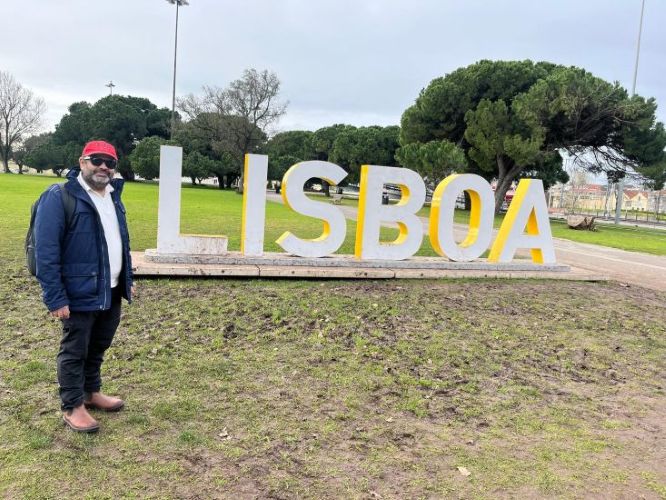
Upon landing at Humberto Delgado Airport, Lisbon, I was greeted not by snow, but by air that felt almost festive. The temperature hovered around 15°C, a pleasant warmth that, for someone coming from Sweden, felt no less than summer.
A pre-booked taxi awaited me, ready to take me westward toward Cascais, a coastal town where old friendships and familiar laughter were waiting. The drive itself was calm, smooth, and quietly scenic.
A Conversation on Wheels
My taxi driver was a young man from Brazil who had moved to Portugal two years earlier. Portugal, one quickly realizes, has become home to many from Latin America, connected by language, history, and opportunity. His English was fluent, and his curiosity about the world was contagious. Like many travelers at heart, he spoke of dreams, Turkey, and Morocco sat high on his wish list. Our brief conversation reminded me how journeys often begin even before reaching one’s destination.
 Within half an hour, we arrived at the address in Cascais.
Cascais: A Home Away from Home
At Peers’ Guest House, I received a welcome that dissolved distance and geography. Ali Palh, Sikander Baloch, Shakeel Palh, Khalid Rind, and Iqbal Chandio, the guest house manager, welcomed me with warmth so genuine that for a moment, it felt as if I had landed not in Portugal, but somewhere in Sindh.
There was laughter, stories, shared meals, endless cups of tea, and that unmistakable comfort of speaking one’s own language among one’s own people. After a hearty dose of desi food, we stepped out for a short walk—both to aid digestion and to refresh our senses under the Atlantic night sky.
 Rest before the Road Ahead
Knowing that the next day promised an early start and a planned trip, we chose to retire early. As I lay down to rest, the day replayed itself, from Nordic snow to Iberian warmth, from solitary travel to collective belonging.
Day one ended gently, but it carried the promise of stories yet to unfold.
From a Sindhi Rooster to Sacred Shrines and Atlantic Giants
Day Two: Faith, Ocean, and a Medieval Dream
January 10, 2026
A Morning Call from Home
The day began in a most unexpected way. Half-asleep, I felt as though I were no longer in Portugal but somewhere in Moro, Dadu, Tando Allahyar, or Sehwan. A rooster crowed persistently outside, its voice echoing like a messenger from Sindh. I smiled instinctively. Nostalgia has a way of arriving unannounced. A few seconds later, reality returned, and I found myself once again in my room at Peers’ Guest House in Cascais.
Travel often blurs geography, and that morning, Portugal gently borrowed a sound from Sindh.
Av. da Liberdade: Where the Journey Took Shape
After breakfast, we wasted no time. We headed straight toward Avenida da Liberdade in Lisbon, the designated meeting and pickup point for our one-day guided tour by Modern Tours Portugal. We arrived well ahead of schedule. Two young women sat nearby; we initially thought they were fellow travelers, but they turned out to be tour staff who soon confirmed our tickets.
Our group consisted of four Sindhi travelers, Ada Ali, Bha Sikander, Ada Shakeel, and myself. Besides us, a quiet couple was traveling with their baby, likely from Italy, and another solo traveler, possibly from the Philippines. A small group, diverse in origins, united by curiosity.
 Mat from Chile and the Art of Organized Travel
Our guide and driver, Mathias, fondly called Mat, was a young yet remarkably experienced man from Chile. Calm, confident, and articulate, Mat outlined the ambitious schedule: three major destinations in a single day. It sounded challenging, but such tours are meticulously designed, something that would be far more exhausting to attempt independently, especially with parking, navigation, and time constraints.
As Lisbon slowly slipped behind us, the road opened into lush green meadows, grazing horses, pivot irrigation systems, scattered trees, and smooth tar roads shining under a fully sunny winter sky. Traffic was light, the air fresh, and another tourist van followed the same route, silent proof that we were part of a larger moving curiosity.
 Fátima: Where Faith Walks on Its Knees
Our first destination was Fátima, one of the most significant Catholic pilgrimage sites in the world. Mat narrated its history with reverence. In 1917, three shepherd children, Lúcia dos Santos and her cousins Jacinta and Francisco Marto, reported apparitions of the Virgin Mary, who appeared to them under a holm oak tree. According to belief, Mary delivered messages of peace, repentance, and faith, forever changing this quiet town.
The Sanctuary of Our Lady of Fátima is vast, a spiritual complex rather than a single building. It includes the Basilica of Our Lady of the Rosary, a massive open prayer square, chapels, and long corridors of devotion. We witnessed scenes that words struggle to carry: men and women crawling on their knees across marble paths as an act of faith, rosary counters in trembling hands, candles burning silently, prayers whispered and cried.
Near the shrine of Sister Lúcia, I saw tears in the eyes of a young woman, beautiful not in appearance alone, but in the intensity of her spiritual connection. Faith, in that moment, felt universal.
We explored the sanctuary within the given time, bought souvenirs, took photographs, and slowly returned to the meeting point, quiet, reflective, humbled.
 Nazaré: Where the Ocean Refuses to Be Small
Back on the road, Mat introduced our next stop: Nazaré, the legendary Atlantic town famous for producing the highest surfable waves on Earth. These waves are born from the Nazaré Canyon, an underwater geological phenomenon that amplifies the ocean’s power, especially during winter.
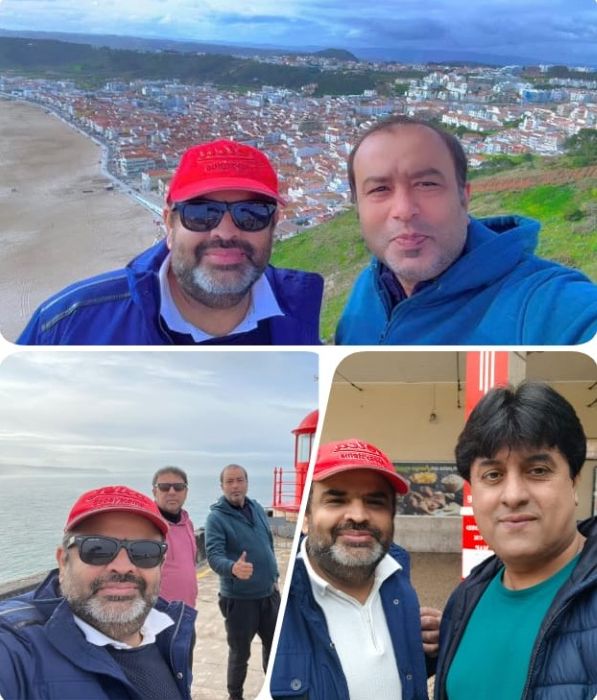
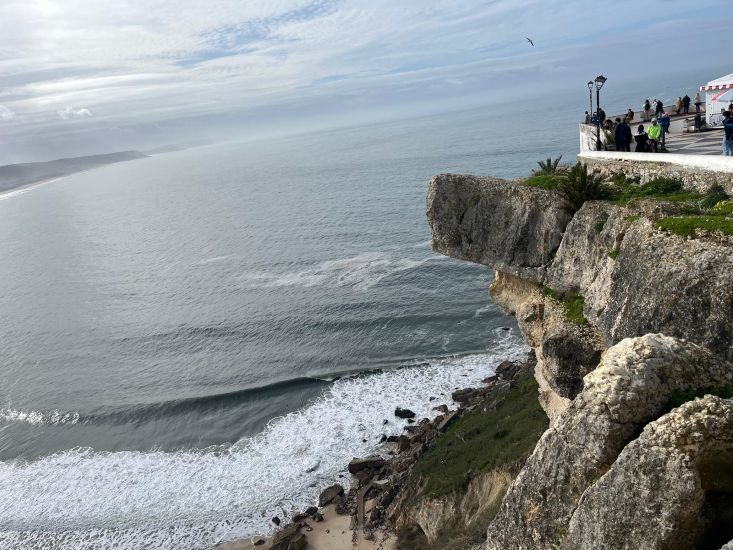
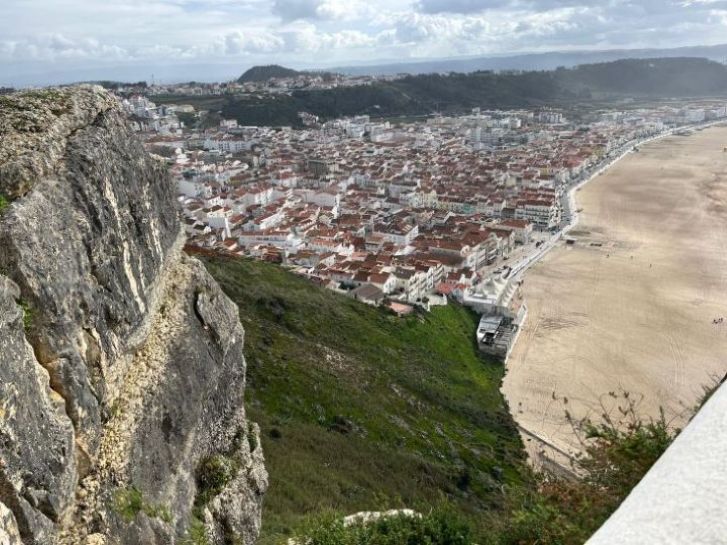
Upon arrival, we headed toward the cliffside viewpoint near the São Miguel Arcanjo Lighthouse. We climbed up to observe the Atlantic from above. The waves were massive, though not at their record-breaking peak, rolling with a force that commands respect. Winter, we were told, is the prime season for these giants.
Inside the small lighthouse building was a surfing exhibition, showcasing legendary surfers who dared to challenge Nazaré’s waters.
 Down to the Grotto: The Hidden Jewel of Nazaré
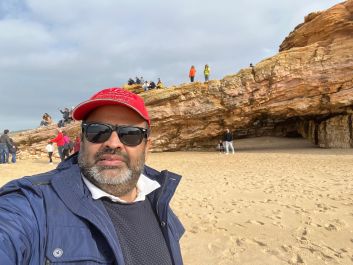
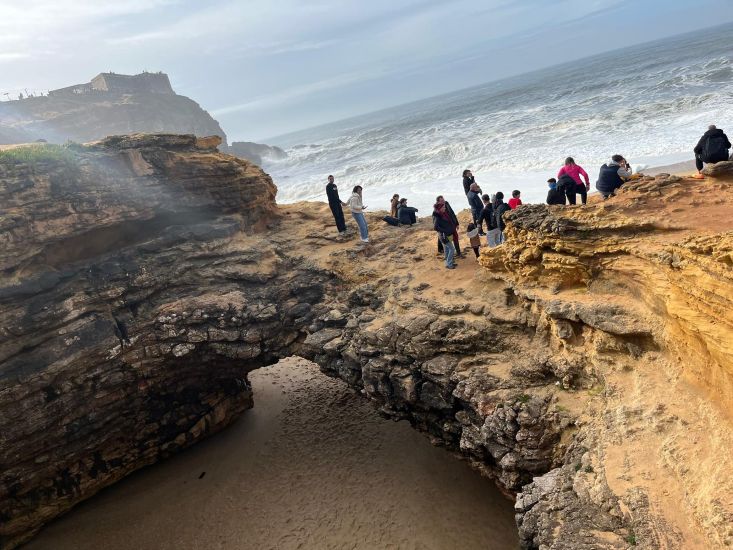
Ada Sikander and I decided to go further downward, toward the beach. We descended to explore Gruta do Forno de Orca, a natural sea cave carved by centuries of waves. This grotto, once used by fishermen as shelter, now stands as a dramatic symbol of nature’s patience and strength.
Down there, tourists sat quietly, cameras resting, faces uplifted. The sound of waves echoed like a living heartbeat. We smiled, not for photos, but for the simple joy of being there. That descent, for us, became the punch line of the trip.
A Town Painted in Blue and Red
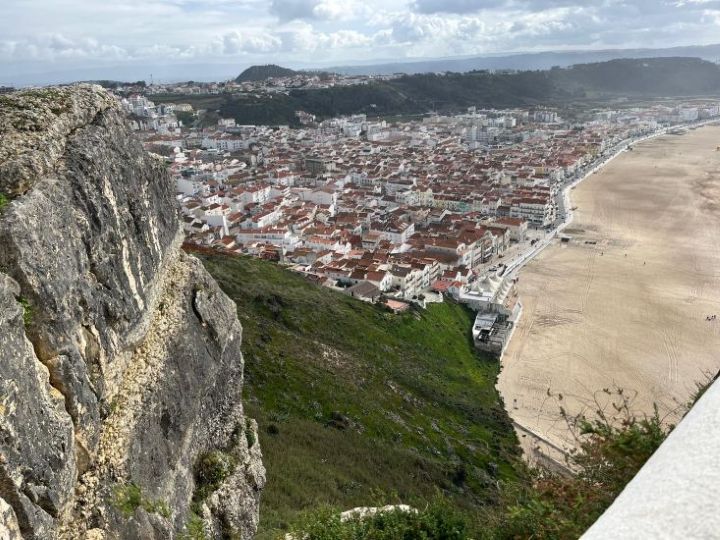
Back up, we wandered through Nazaré town, perched between mountain and ocean. From the square, the view unfolded like a painting: red-roofed houses, the endless Atlantic, surfers as dots on waves, birds cutting across a blue sky streaked with clouds.
For lunch, we chose a small, humble place, Pastelaria das Escadinhas. Run by a middle-aged woman, assisted by a 66-year-old man who proudly shared stories of having worked and traveled across many countries, the place had soul. Their fish soup was unforgettable, warm, rich, and deeply comforting.
 Óbidos: A Medieval Story Still Being Lived
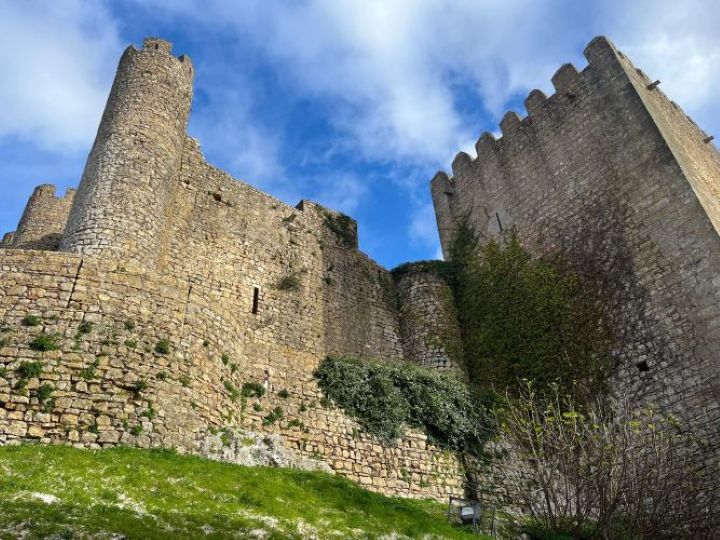
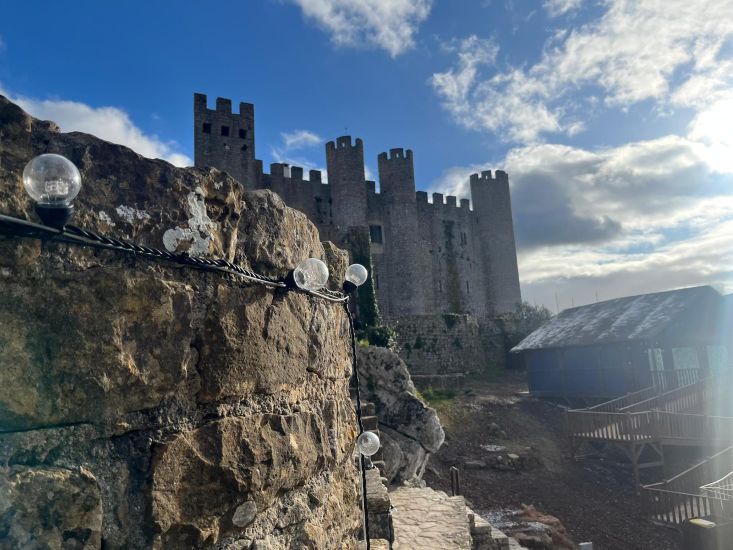
Leaving Nazaré on time allowed us to visit our final destination: Óbidos, a beautifully preserved medieval walled town. As we approached, Mat pointed out the castle rising gently ahead.
Inside the walls, time slows. Only around 50 residents live within the castle today. Three narrow streets wind inward, each leading to nearly the same heart of the town. Óbidos is famous for Ginjinha, a locally produced cherry liqueur, often served in small chocolate cups.
Souvenir shops, cafés, bars, churches, and chapels line the cobbled streets. We enjoyed ice cream while wandering, climbed the thick stone walls, and from above saw farmlands, modern highways, and the quiet coexistence of past and present.
We rested in a small café inside the castle, savoring the final moments of a long day.
Back to Cascais: Conversations That Matter
After nearly nine hours, we returned to Lisbon around 5:30 p.m. and headed back to Cascais. At Peers’ Guest House, Ada Iqbal and Khalid Rind welcomed us back. We also met Imran Rana and Waheed Butt from Lahore—kind, thoughtful souls who added new colors to the evening.
As night settled, the lounge transformed into a familiar ritual: Sindhi Kacheri. Conversations flowed, stories, ideas, experiences, and wisdom were exchanged freely. Desi food, endless tea, evening walks, laughter, it was the perfect ending to a long, full, and deeply enriching day.
Lisbon Walks, South Asian Streets, and a Gentle Goodbye
Day Three: Sounds of Home, Streets of the World
January 11, 2026
Morning Echoes from Sindh
Once again, the morning announced itself not with an alarm clock, but with familiar sounds. Roosters crowed persistently, and a dog responded with rhythmic barking, as if the two were engaged in a dialogue only they understood. For us, these sounds required no explanation; they belong to the villages, towns, and mornings of Sindh.
Travel may take the body far, but certain sounds refuse to stay behind.
 Departures and Duas
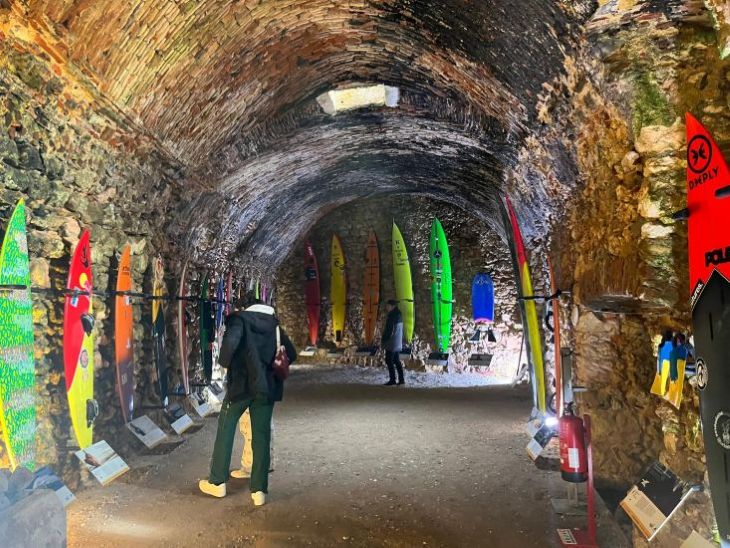
After Fajr prayers, Ada Ali left early for Lisbon. The day also carried farewells. Ada Sikander and Ada Shakeel were scheduled to fly back home via Dubai. After breakfast, Mr. Waheed Butt, with his usual kindness, dropped them at the airport. Handshakes, prayers, and quiet goodbyes, travel friendships often form quickly, yet part gently.
Tea before the Train
I rested for a few hours, letting the body recover from two long days of movement. Later, Ada Iqbal and I headed toward the Cascais railway station, from where I planned to take a train to Lisbon to rejoin Ada Ali Palh for one last exploration of the city.
The train still had time to depart, so we sat at the station’s cafeteria. Around us, people read newspapers, sipped coffee, enjoyed pastries, and passed time in their own quiet worlds. Travel stations have a unique rhythm, half waiting, half moving.
Rails to the Capital
The train journey took roughly 45 minutes, smooth and relaxing. Upon reaching Lisbon, Ada Ali and I met and took a tram toward Belém, a historic riverside district I had visited earlier but happily welcomed again.
Belém: Where History Meets the River
Belém is a place where Portugal’s maritime soul still breathes. The Tagus River flows wide and calm, once carrying explorers toward unknown worlds. Grand monuments, open promenades, museums, and historic bakeries define the area. The weather was kind, perfect for walking.
We moved at an unhurried pace, walking, stopping for tea, sharing ice cream, resting, and then walking again. Travel, after all, is not always about discovering new places; sometimes it is about seeing familiar places more deeply.
Along the Waterfront and Into the City
From Belém, we took the tram back toward the city and continued walking along the coastline, where cruise ships stood docked like floating cities. Gradually, we entered Lisbon’s main pedestrian streets.
The city felt alive. Yellow trams rattled past like moving postcards. Street singers filled corners with music. Wanderers, tourists, locals, and dreamers crossed paths without introductions. Lisbon, in that moment, felt global and intimate at the same time.
Martim Moniz and a Taste of South Asia
As evening approached, we reached Martim Moniz, one of Lisbon’s most multicultural neighborhoods. From there, we walked toward what is informally known as Bengali, Indian, or Pakistani Street, a place where South Asian life has carved out its own corner.
The air changed. Smells of spices, tea, and grilled food replaced the Atlantic breeze. Shops displayed familiar goods. Languages shifted.
We chose a restaurant named Banigala, owned by a Pakistani. Inside, large portraits of Imran Khan adorned the walls, Bollywood songs played on the television, and the waitress was a Sikh girl. The customers were mostly Pakistanis and Sikhs, with a few Portuguese locals and Africans; Lisbon, once again, showed its diversity.
The mutton curry and chicken biryani did more than satisfy hunger; they erased the fatigue of hours of walking. Food, when tied to memory, becomes therapy.
 Until We Meet Again
After dinner, Ada Ali and I said our goodbyes and see you soon again, InshaAllah. He accompanied me to the station, from where I took the train back to Cascais, arriving safely at Peers’ Guest House.
Later that night, Ada Iqbal, Bha Khalid, and I sat together over cups of tea. Conversations flowed naturally, stories, reflections, laughter. For a moment, the guest house felt less like accommodation and more like a Sindhi Otaq in Lisbon.
From Atlantic Warmth Back to Nordic Cold
The next day awaited a return flight to Stockholm. The contrast was dramatic, from +15°C in Portugal to -11°C in Sweden, from sunshine to snow, from Atlantic winds back to Nordic silence.
Yet the warmth of these three days, friendship, faith, landscapes, and shared moments, traveled back with me.
 Journeys end, but what they give us quietly stays.
When the Journey Becomes More Than Distance
This three-day journey from the frozen silence of Stockholm to the Atlantic warmth of Portugal was not merely about changing locations; it was about crossing climates of the heart. Snow gave way to sunlight, unfamiliar streets opened into familiar conversations, and foreign lands echoed with the sounds of home.
In Cascais, Lisbon, Fátima, Nazaré, Óbidos, and Belém, geography constantly shifted, yet something remained steady: human connection. Whether it was the quiet devotion of pilgrims crawling on their knees in Fátima, the roaring confidence of Atlantic waves in Nazaré, the medieval stillness of Óbidos, or the multicultural hum of Lisbon’s streets, every place carried a story, and each story found meaning through people.
The journey was enriched by friendships that erased borders. Shared meals, late-night Sindhi Kacheris, cups of tea, laughter, and thoughtful conversations turned guest houses into homes and strangers into companions. In those moments, Lisbon transformed into a Sindhi Otaq, proving that culture does not travel in suitcases; it travels in hearts.
Perhaps the most powerful realization came from contrast. To move from minus eleven to plus fifteen, from Nordic restraint to Iberian warmth, from solitude to togetherness, was to experience how travel sharpens awareness. It reminds us how sound, smell, faith, food, and memory anchor us to who we are, no matter where we stand.
As the plane lifted back toward Sweden, leaving behind the Atlantic coast and sunlit streets, it carried more than a traveler returning home. It carried renewed gratitude, softened perspectives, and memories stitched with meaning.
Because in the end, journeys are not measured in kilometers or days but in how deeply they touch us, change us, and quietly stay with us long after we return.
Read: Between Mailboxes and Memories
_____________________
Abdullah Soomro, penname Abdullah Usman Morai, hailing from Moro town of Sindh, province of Pakistan, is based in Stockholm Sweden. Currently he is working as Groundwater Engineer in Stockholm Sweden. He did BE (Agriculture) from Sindh Agriculture University Tando Jam and MSc water systems technology from KTH Stockholm Sweden as well as MSc Management from Stockholm University. Beside this he also did masters in journalism and economics from Shah Abdul Latif University Khairpur Mirs, Sindh. He is author of a travelogue book named ‘Musafatoon’. His second book is in process. He writes articles from time to time. A frequent traveler, he also does podcast on YouTube with channel name: VASJE Podcast.