The Festival of Lights, Commitment, Sacrifice, Love and Victory of Good over Evil
By Dr Jaipal Chhabria
Diwali, also known as Deepawali, is one of the most beautiful and meaningful festivals of humanity. Although it is primarily celebrated by the Hindu community, its message of light, peace, love, brotherhood and the victory of good over evil belongs to all human beings, irrespective of religion, caste or nationality.
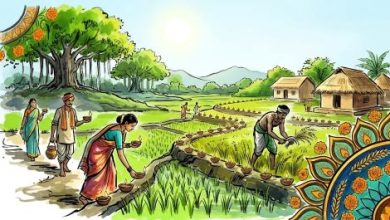
Diwali is traditionally celebrated during the autumn season, when the weather begins to turn cooler. In many parts of the Indian subcontinent, this period also follows the monsoon season, when mosquitoes and mosquito-borne diseases, including malaria, can remain a public-health concern.
For generations, Hindu families have followed the tradition of thoroughly cleaning and decorating their homes before Diwali. This practice has cultural, spiritual and practical significance. Clean surroundings, removal of stagnant water and proper sanitation help reduce mosquito breeding and contribute to protection against malaria and other mosquito-borne diseases. Thus, the traditional practice of cleaning homes also carries an important message of public health.
Families prepare traditional sweets and delicious food and share them with relatives, neighbors and friends. These are symbols of happiness, hospitality and togetherness. Sharing food and sweets during the changing season is also a beautiful expression of warmth and affection.
The Story of Raja Dasharatha and His Promise
The spiritual and moral foundation of Diwali is closely connected with the life of Lord Ramchandra, his wife Seeta and his brother Lachhman.
According to the Ramayana, Raja Dasharatha, the king of Ayodhya, had three principal queens: Kausalya, Kaikeyi and Sumitra. He had made a promise to Kaikeyi, who eventually demanded that her son Bharata should become king and that Ramchandra should spend fourteen years in exile (Banwas) in the forest.
Raja Dasharatha faced an extremely painful situation. He loved Ramchandra deeply, but he was also committed to fulfilling his promise.
This episode gives us one of the greatest lessons of integrity and commitment in human history.
The famous saying describes the tradition of the Raghu dynasty:
“Raghu Kul Reet Sada Chali Aayi,
Praan Jaye Par Vachan Na Jayi.”
It means that the tradition of the Raghu dynasty is to honor one’s promise, even if one has to sacrifice one’s life.
Raja Dasharatha remained committed to his word, even at the cost of losing his beloved son from his presence. His suffering teaches us that a promise is not merely a statement; it is a moral responsibility.
The Sacrifices of Ramchandra, Seeta and Lachhman
Ramchandra demonstrated extraordinary obedience and respect for his father. Although he was entitled to the throne, he accepted fourteen years of exile without rebellion or resentment. He sacrificed his royal comforts to protect his father’s honor and commitment.
Seeta, his wife, also demonstrated remarkable love and devotion. She decided to accompany her husband into the forest, leaving behind the comforts of the palace. Her decision represents companionship, courage and standing beside one’s life partner during difficult circumstances.
Lachhman, Ramchandra’s younger brother, also chose to accompany them. He sacrificed fourteen years of his comfortable life to serve, protect and support his elder brother and Seeta.
These three sacrifices teach us powerful lessons:
– Respect and obedience towards parents.
– Commitment to promises and principles.
– Love, loyalty and companionship between husband and wife.
– Brotherhood, service and responsibility towards family.
Victory over Rawan: The Victory of Good over Evil
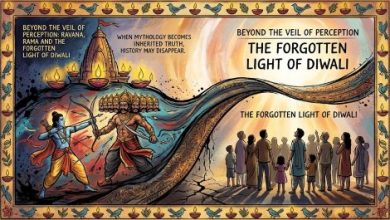
During their exile, Seeta was abducted by Rawan, the powerful king of Lanka. Ramchandra, with the assistance of Lachhman, Hanuman and the Vanar Sena, fought a great battle against Rawan and ultimately defeated him.
This victory symbolizes the triumph of righteousness over arrogance, justice over injustice and truth over falsehood.
Rawan was powerful, wealthy and influential, but power alone cannot make anyone righteous. His defeat teaches us that no individual, however powerful, is above moral principles and justice.
We must always stand against injustice, exploitation and wrongdoing, regardless of how powerful the person responsible may be.
Janani and Janam Bhoomi Are Greater Than Heaven
After defeating Rawan, Ramchandra was offered the opportunity to remain in Lanka, which was prosperous and beautiful. According to the well-known Ramayana tradition, Lachhman suggested that they could consider staying there because of its comforts and favourable conditions.
Ramchandra replied with the immortal words:
“Janani Janmabhoomishcha Swargadapi Gariyasi.”
It means:
“Mother and motherland are greater than heaven.”
Janani is the mother who gives us birth, while Janam Bhoomi is the land where we are born and where our roots belong.
Ramchandra chose to return to Ayodhya rather than remain in a prosperous foreign land. This teaches us that love for one’s mother, homeland and roots is above material comfort and luxury.
It is a timeless message of patriotism, gratitude and belonging.
Why We Celebrate Diwali
After completing fourteen years of exile and defeating Rawan, Ramchandra, Seeta and Lachhman returned to Ayodhya. The people of Ayodhya welcomed them by lighting lamps and celebrating their return.
This tradition became the foundation of Diwali celebrations.
The lighting of lamps represents the removal of darkness, ignorance, hatred and injustice through knowledge, wisdom, love and righteousness.
Diwali is not merely a festival of decorations, shopping and sweets. It is a reminder of the values that make human society peaceful and prosperous.
Diwali: A Festival for All Humanity
Today, we should celebrate Diwali beyond religious boundaries. Its message belongs to every community.
Let us light lamps not only in our homes but also in our hearts. Let us remove hatred, discrimination, intolerance and prejudice from our society.
Let Hindus, Muslims, Christians, Sikhs and people of all faiths celebrate together. Let us visit each other, embrace one another, share sweets and spread happiness.
Let us respect parents, love our families, honor our commitments, protect our motherland and always stand for truth and justice.
The real victory of Diwali will come when every human being enjoys dignity, freedom, equality and respect.
I would like to conclude with a few lines from my Sindhi poetry:
Aaj Hindu Muslim Gadji Sadji,
Mazhaban ja Farik Mitaye,
Hik Bie Khe Gale Lagayun,
Acho Ta Aaj Deep Jalayun,
Diwali Jo Deehn Malhayun.
Let us come together, remove religious divisions, embrace one another and light the lamps of peace, friendship and humanity.
Happy Diwali to the entire Hindu community and to everyone celebrating this beautiful festival across the world.
Read: Forced Conversion of Non-Muslims
________________
 Dr Jaipal Chhabria, Member, National Commission for Minorities