Where Golden Mud Houses Hold Paradise
- Beyond the bustling, distant avenues of city life lies a world born from the touch of earth and the breath of love—a village where humble mud walls hold more peace than marble palaces. Yet, beneath this quiet beauty lies a tragic reality of washed-away roads, neglected lands, and broken political promises following the devastating 2022 floods. This piece is both an intimate tribute to the enduring spirit of rural Sindh and an urgent, passionate call for unity, justice, and self-reliance to save our ancestral heartland from being reduced to mere memory.
Nisar Banbhan
My beloved, I have walked until my feet are sore, searching for you, but where are you? From morning till evening, I cannot find even a glimpse of you in the eyes that long for you. This is how I have been remembering my village today. So I thought, why not show you my village? My village’s mud houses may appear simple, dilapidated, or insignificant to an urban eye, but within those walls lives a fragrance that can only be born from the touch of earth and the breath of love. These homes were not built from an architect’s drawings; they were built from the feelings of the heart. Their roofs may be made of wood and mud, yet the peace that dwells beneath their shade is something one may never find even inside palaces of marble. Where the green fields seem to have spread the floor of paradise, my village lies peacefully. In the morning, when the sun slowly peeps through the trees, its first rays fall upon the mud walls as though someone has poured liquid gold over them. The air carries the fragrance of vegetables, peas, and maize, while somewhere in the distance, a shepherd’s flute plays a melody that quietly touches the heart.
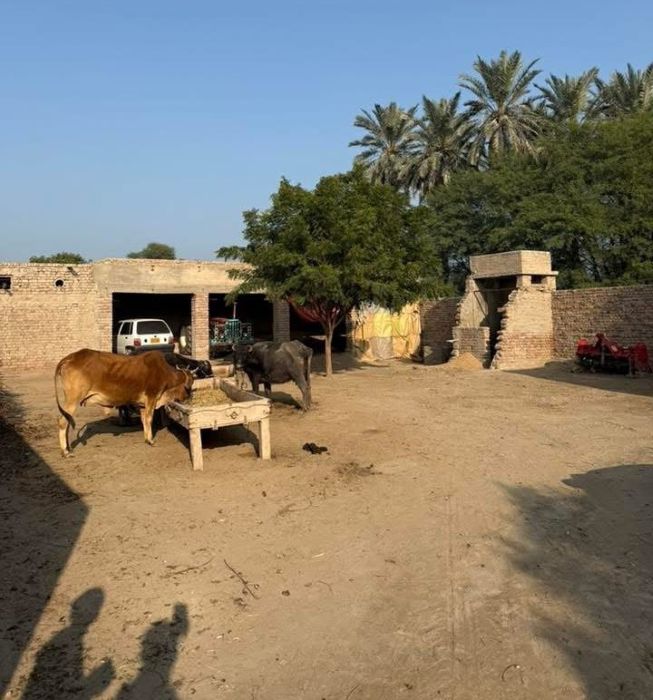 The grand and towering mansions of cities may be immersed in lights, yet darkness often reigns within them. There, people may live close to one another and still remain distant. Here, in our humble mud houses, the doors of hearts are always open. No door is truly closed, and no face is ever completely unfamiliar. This hospitality and openness are the defining marks of our village culture. When evening slowly descends upon the village, the stars begin to twinkle across the sky as though the lamps of the village are joining them in the same melody. There is no noise, no smoke—only the earthy fragrance of soil, the whispers of the water in the canal, and that deep peace of the heart which has somehow been lost in the palaces of cities.
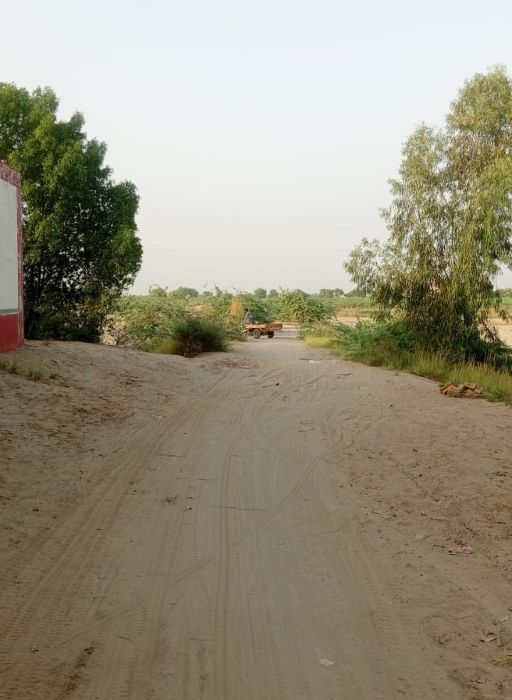 My village may be no more than a tiny dot on the map of the world, but on the map of my heart, it contains the vastness of an entire universe. Its mud houses, broken and weathered charpoys, earthen courtyards, and pure relationships filled with affection—these are the things that constitute real life. For those who live in cities, this simplicity may seem like something from a folktale or an old story. But for me, this is reality. This is my world. And this is my paradise. Looking at my village, you may be reminded of the great poet Rabindranath Tagore and his immortal lines: “Here I have come to sing you my song; in your company I have found a little corner for myself. I have no work to do in this world of yours; from my idle life, only purposeless melodies can rise and flow.” And after Tagore’s poetry, let me now place before you a picture of my village. My village is situated in Deparja Union Council, Taluka Thari Mirwah, District Khairpur. In the official record, it bears the name of my late grandfather, Haji Mir Muhammad Banbhan. Since 1970, however, no government or government representative has undertaken any development work in the village from the funds allocated to them.
 In 2021, the then MPA Sajid Ali Banbhan sanctioned a two-kilometer paved road scheme for half of the old, historic unpaved route leading to our village. After passing through numerous difficulties and delays, the road was eventually completed, though barely. But the road was washed away in the floods of 2022. Since then, the reconstruction of that road has become a dream for us. There is an old saying that whoever travels along that road either dies or returns half-dead and utterly exhausted. Our village now falls within the constituency of Barrister Shiraz Rajpar, who has never had the privilege—or perhaps the misfortune—of travelling along our village road. Even today, the village remains deprived of all basic facilities. The MPA and MNA of the constituency appear to have put on glasses that prevent them from seeing and stuffed cotton into their ears so that they cannot hear the voices of the villagers. Their indifference is deeply painful. At present, the most pressing issue is water for irrigating our agricultural lands. The water supplied through the irrigation system from Ali Bahar Wah is meant to cultivate and sustain these lands, but now even this water reaches us as though it were charity being distributed among beggars. Our constituency voted overwhelmingly for the Pakistan People’s Party. The people of our village did not break with their traditions; they placed nearly ten thousand votes in their fold, without hesitation and with complete trust. In return, we did not even ask them to perform miracles. We merely hoped that they would pray that a breeze of development might one day pass through our village. But now that several years have passed since the government came into power, we will speak openly and ask them directly: Are the people of this village truly not deserving of even a single basic facility?
 This is the message that every individual in my village has conveyed to me, one by one. The people of my village now repeat a painful sentence: “Perhaps our respected government representatives cannot bring happiness to us, but surely they should not impose so many hardships upon us that we are eventually forced to drag the last remnants of their honour through the dust.”
Our elders used to say that time and fortune are two different signs of life. Sometimes time comes and settles its tents in one’s life, while fortune swings its cradle in someone else’s courtyard. Those who are blessed with time remain deprived of fortune, and those who receive fortune spend their lives longing for time. As for people like us, we seem to be deprived of both. And this is not merely the story of my village. It is the story of countless villages across Sindh. I have travelled extensively across Sindh, and almost everywhere I have found the same landscape of deprivation: despondency, scarcity of basic facilities, neglected roads, inadequate irrigation, poor infrastructure, and a growing sense that rural people have been forgotten. There are villages across Sindh where the sight of deprivation brings tears to the eyes—not because the people have lost their dignity, but because they continue to preserve their dignity despite being denied the most basic necessities of life.
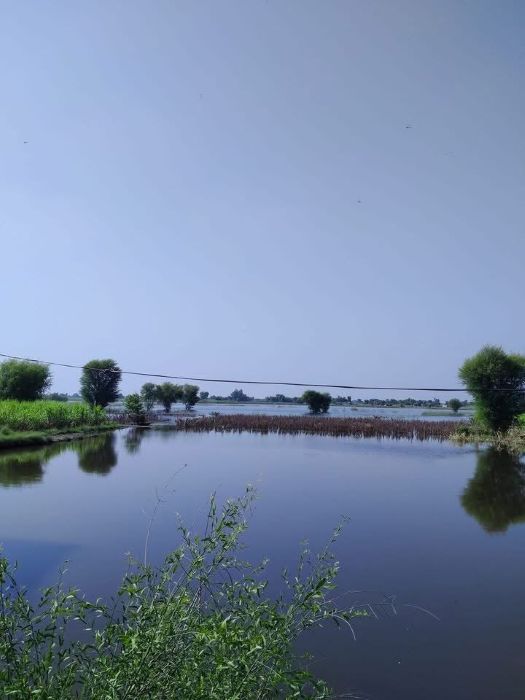 The land around my village is not merely the land of a village. It represents an important chapter in the economic, agricultural, and social history of the Union Council, the taluka, the district, and the province as a whole. The vast and expansive fields that today appear barren, deserted, and neglected were, barely fifty years ago, lush and fertile, covered with wheat, cotton, sugarcane, sorghum, vegetables, orchards, and thriving settlements. These lands were cultivated by local farmers and were regarded as symbols of their hard work, prosperity, and self-sufficiency.
When spring arrived, people from Deh Ahmed Ali, Deh Deparja, Setharja, Halani, Mehrabpur, and other areas would come to this region in search of employment. They would cultivate the land, harvest the crops, stockpile grain, vegetables, and other food items, and then return to their ancestral areas. In those days, our entire region was not merely a collection of villages; it was a strong pillar of the economy of the wider area. Even today, the elders repeat an old saying: “If Taluka Mirwah prospers, the entire District Khairpur prospers; and if hunger and economic hardship descend upon Mirwah, their effects are felt throughout the entire district.” This is not merely a proverb. It is an acknowledgement of the historical reality that a significant part of the economies of Khairpur and Naushahro Feroze has long been connected with the agricultural lands of Deparja Union Council. And my village has played an important role in this history.
Travellers from different areas—many of whom journeyed on foot—would arrive at my village exhausted from their journeys. They would stay at our Otaq, spend the night there, and continue their journey the following day. My grandfather, Haji Mir Muhammad Banbhan, together with my uncles Haji Ghulam Rasool, who was an engineer in the Irrigation Department, Dr. Ilahi Bakhsh Banbhan, Ghulam Hussain Banbhan, Muhammad Bakhsh Banbhan, Ziauddin Banbhan, and my father, Dr. Nazir Ahmed Banbhan, would provide them with a place to stay and uphold that great tradition of hospitality which has always been an integral part of our social and cultural identity.
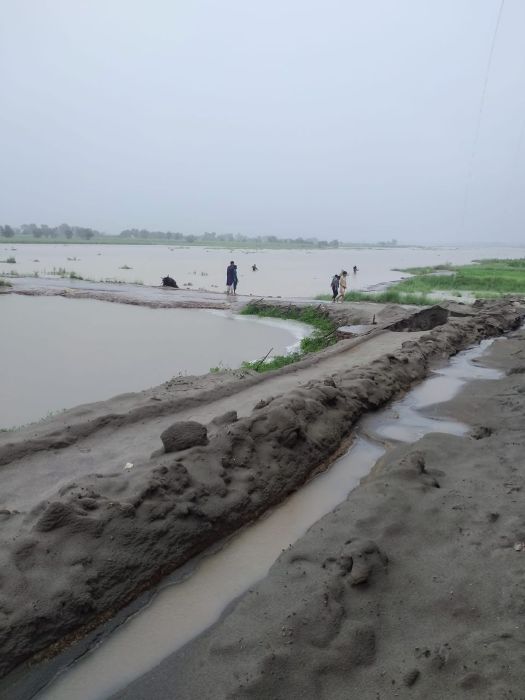 These were the traditions that gave my village its identity of honour, respect, and affection. Even today, whenever I meet elders from other regions, the moment they hear the name of my village, I can see respect in their eyes and affection in their hearts. But sadly—deeply, painfully sadly—I do not know whose evil eye has fallen upon this historic village.
The relentless rains and merciless waves of the 2022 floods continued to swallow our lands, orchards, forests, and settlements. Hundreds of acres of agricultural land, trees worth millions of rupees, and houses valued at tens of millions were swept away in their devastating currents. Today, the situation has reached such a point that almost the entire population of this area has been caught in the grip of this destructive flooding, and the very identity of Deparja Union Council has been placed at risk. The most heartbreaking aspect of this tragedy is that, despite living in an age of modern technology, advanced machinery, available resources, and functioning government institutions, no permanent and effective strategy has yet emerged to control the flow of floodwater descending from upstream and protect this historic village from destruction. My question is addressed to the rulers, relevant authorities, elected representatives, and compassionate officers: Are the people of our villages merely entitled to a few relief items after every flood? Are we not equal citizens of this state, entitled to roads and access routes, health centers, schools, and other basic facilities? Do we not have the right to live a dignified life in our own homes, on our own lands, with our children and with hope for their future? If the Constitution guarantees every citizen the rights of protection and equality, then when will the people of these areas receive permanent protection? There is, however, another side to the reality. We cannot simply hold the government responsible and absolve ourselves of our own responsibilities.
 We must also ask ourselves: How long will we continue to suffer losses worth millions of rupees every year? Has the time not come for us to put aside our personal differences, political affiliations, and individual interests and unite around a common cause? Across different parts of the world, countless projects have succeeded through public participation and collective struggle. Why, then, can the conscious, educated, and courageous young people of every village in Sindh not set such an example? The demand of the present moment is that we should not remain confined to sorrow, complaint, and mourning. We must take practical steps. Every person should contribute according to their capacity—financially, intellectually, or physically. Our people living abroad and those residing in other cities of the country should also play their part in this national and collective cause. This should not remain merely a slogan. It can become a people’s movement. We can come together on a common platform, pool our resources, demand our rights from the rulers and relevant institutions, and, through self-help, take every possible measure to protect these historic villages. Because this is not merely a question of saving land.
 It is a question of saving our history.
It is a question of preserving our identity.
It is a question of protecting the traces and memories of our ancestors.
And it is a question of safeguarding the future of generations yet to come.
If we fail to make a timely decision today, if we remain silent even now, future generations may never forgive us. Let us save our villages from becoming nothing more than memories. Let us stand together—for our land, our history, and the generations that will come after us. Whenever I have gone back to my village, I have felt, beneath the shadows of night, that the birds of my heart are searching for their nests. I live in Karachi, yet I have been unable to put an end to the painful problems of my village. Perhaps that is why the village continues to call me back.
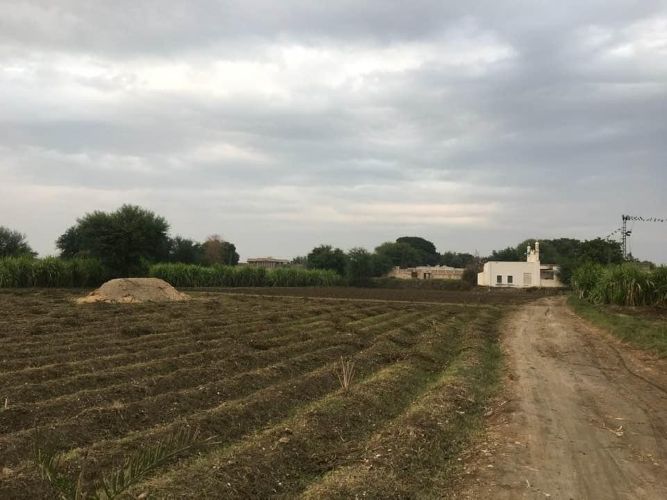 I appeal to all friends who understand Sindh and its realities: please write a note of support for the protest expressed in my words above. Create the courage and resolve to improve our villages. I request everyone to write openly and passionately about the condition of your own villages—their paved roads, Basic Health Units, libraries, gas connections, and other fundamental necessities. Begin writing your cries, your screams, your calls, and your petitions—in every language. What is the condition of all the villages of Sindh? What stories are hidden behind their outward appearance and within their inner lives? Are these villages alive like the melodies of Shah Abdul Latif Bhittai’s surs, or are they like an unheard cry lost somewhere in a desert? Do the villages still carry the musical strains of Khamiso Khan’s algoza, or do the mournful cries and lamentations of Karbala echo through their silence? Is life swaying gently in the cradle of melodies, or has life in these villages become like a cold, lifeless body, waiting for years to be taken from a morgue and finally laid in a grave? Those who claim the right to speak for Sindh and assert their ownership of this land—how have they cared for these villages? What have they done to preserve and improve them? What more can we say about that? When one sees the condition of these villages, desolation settles into the eyes, and the heart becomes heavy with the weight of earth and grief. Looking at the condition of my own village in the twenty-first century, the following lines by Haleem Baghai seem to descend into my broken heart like moisture gathering in the eyes:
Seeing these roads, these villages laid waste, my very heart has been torn apart.
I am, at heart, a man of the countryside. More than the principles and formal structures of literature and art, I have learned from the open fields, village paths, canals, embankments, and floodplains. I have walked barefoot through them and watched the millet ripen, the reeds rise, the mustard bloom, and countless other flowers emerge alongside the dark stain of saline soil. I have listened to the melodies of folk songs and the calls of the cuckoo. I have placed stones in a sling and driven away sparrows, herons, and other birds. Sitting on the raised platform of the fields, I spent part of my life alongside my elders, searching for the meaning of life through hardship and struggle. During the dry seasons, I wandered through the wild vines and vegetation of the countryside, absorbing their fragrance and becoming intertwined with the landscape itself. Now, I have become like an old lamp placed on the shelf of an urban life—still carrying a little light, but far removed from the place where it once belonged. And now—
My village remembers me.
My village calls me.
My village keeps calling my name.
Read: Summer Vacations: A Wasted Future?
_____________
 Hailing from Village Mir Muhammad Banbhan, Taluka Mirwah, District Khaipurpur and based in Karachi, the capital of Sindh, Nisar Banbhan is a seasoned professional with nearly 25 years of multifaceted experience, encompassing 3 years in journalism and over two decades of service in a public sector organization. His extensive expertise spans content creation, scriptwriting, screenwriting, lyrics, poetry, and storytelling across multiple languages, including Sindhi, Urdu, and English. Nisar has honed his skills in writing articles, columns, and short stories, contributing to various national and regional media outlets.