During his lifetime, Ibrahim Munshi wrote voluminously, he recited in poems in literary events frequently, but no other poem of Munshi has melted so many hearts as his nazm, “Hik Mund Chari Aahe”.
By: Raphic Burdo
Art is like an elusive beloved. Some people spend life chasing her, yet come nowhere near impressing her. In other cases every move of the suitor gets highly positive responsive. In some cases, the magic of art plays at its fullest. Out of hundreds of moves of the artist, one gets such a positive response that all other pieces fade away in front of it. Ibrahim Munshi’s case is akin to the last of the instances. During his lifetime, he wrote voluminously, he recited in poems in literary events frequently, but no other poem of Munshi has melted so many hearts as his nazm, “Hik Mund Chari Aahe”.
 Let me reproduce the poem for you in Sindhi, in not so perfect Roman Sindhi, before making an effort to render it into English and try to extrapolate its nuances.
First, here is the poem in Sindhi script:
هڪ مند چري آهي، ٻي جا رات ٺري آهي،
اَهڙي ۾ اچڻ تنھننجو، ڀاڳن جي ڀري آهي۔
ڏس ڪهڙو ڏکڻ گھليو، ٿيا ماڪ ڦڙا موتي،
ءِ ويس وڻن ڍڪيو، پن پنھنجا ڪري پوتي،
وري آءُ تون ورائڻ لاءِ، واھوندي وري آهي۔
ڏس سنگ هو سارين جا، ڪيئن ڪنڌ نمائين ٿا،
ءِ ھير هنڱورن جا، ڪيئي ساز سڻائن ٿا،
ڄڻ سھڻي سنڌوءَمان، آئي تار تَري آهي۔
مايا نه مڏي مون وٽ، ماڙيون نه ڪي محلاتون،
سائو ويس ڍڪيو ڌرتيءَ، وٺيون ٿر بر برساتيون،
اڏي تو لاءِ اسان پيارا، پکڙي جي ڏري آهي۔
ڇا اڀ ڇمر ڇايو ، رُت آئي بسنتي آ،
جُٽ جوڙ ٿيا جوڀن، هر من ۾ مستي آ،
هر ڪنھن سان هِتِي منشي، پنھنجي حور پري آهي-
Now, let us it in my imperfect Roman Sindhi script:
“Hik mund chari aahe, bee ja raat ttari aahe,
Ahre mein achanr tuhinjo, bhaaggan ji bhari aahe.
Ddis kehro ddakhanr ghuliyo, thia maak furra moti,
Aen weis wanran dhakiyo, pun panhinja karey poti,
Wari aa to waraain laaye, waahoondi wari aahe.
Ddis sung hu saariyun ja, keian kandhu namain tha,
Aen heer hingnoran ja, kayi saaz sunrain tha,
Jjanr suhnri Sindhu maan, aayi taar tari aahe.
Maya na maddi mun wat, marhiyun na ki mahlatun,
Saao wees dikhyo dharti, wuthiyoon Thar bur barsatiyun,
Addi to lae asaan piyara, pakhiri ji ddari aahe.
Chha ubh chhamar chhayo, rutt aayi basnti aa,
Jut joor thiya jobhab, har munn mein masti aa,
Har kahin saan hitte “Munshi”, pahinji hoor peri aahe.”
I hope, by now, you already have had the taste of Ibrahim Munshi’s rhyme, rhythm and musicality. If Sindhi language is not known to you, we will attempt a translation. If I keep this translation faithful to the original, it will lose plenty of pleasure. Therefore, I am keeping it faithful to the spirit and content of the poem and allowing it to chest on form.
“On one side is the crazy season, and on the other is the cool night,
Your arrival at such a moment is filled with good fortune.
See how the southern breeze blows, turning dew drops into pearls,
The trees have dressed up, making each leaf their veil,
Return to me, for the spring breeze has blown to bring you back.
Look at the stalks of rice, how they bow their heads,
And the gentle breeze through them plays many melodies,
It feels as though beautiful maiden, Sohnri, has swum across the river Indus.
I possess no wealth or riches, no mansions or palaces,
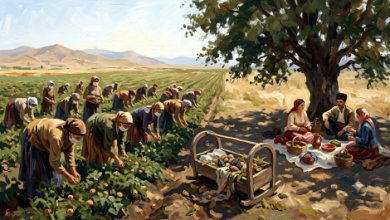
The earth has worn a green dress, and rains have showered at the desert and everywhere,
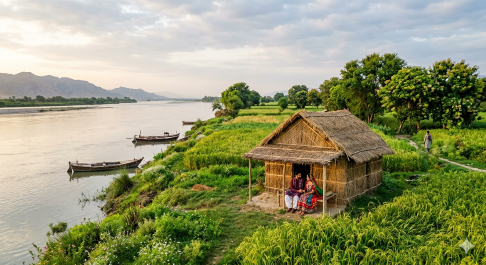
My love, for you, I have set up a humble straw hut.
The sky is covered in clouds, the spring season has arrived,
Youthful couples have united, and every heart is filled with intoxication,
With everyone here, Munshi, is their own heavenly fairy.”
I feel I have not done justice to the theme of the poem. Form still heavy for subject. Using Alexander Pope’s form for a poetry that as romantic as William Wordsworth’s is by no means fair. I will, therefore, allow the translation to ditch the form of the original. Faithfulness is beautiful in its own way but the unfaithful are more beguiling. Let us attempt a translation unfaithful to form of the original but truly aligned with the spirit of the letter. This is going to be highly poetic version in the rhythmic style of Wordsworth and maintaining a flowing meter. I will therefore abandon the formal architecture of the original while preserving its emotional climate.
The following translation emphasizes natural imagery, emotional intensity and a structured, rhythmic meter. I hope you enjoy:
“The season raves with wild delight,
Beside a cool and tranquil night;
To have you here at such an hour,
Is fortune blooming like a flower.
The southern breeze begins to blow,
And turns the morning dew to pearls;
The trees put on a vibrant show,
As every leaf a veil unfurls.
Return to me, my heart’s desire,
The spring breeze calls you back!
Behold the stalks of bending rice,
That bow their heads in paradise;
The gentle breeze that sweeps the plain,
Now plays a sweet and changing strain.
It feels as though from Indus deep,
Fair Sohnri swam across the tide,
To wake the drowsy world from sleep,
And wander by the river’s side.
No worldly wealth belongs to me,
No stately towers or luxury;
The earth has worn a dress of green,
Where desert rains have washed the scene.
The showers fell both far and wide,
To bless the sands and everywhere;
For you, my love, I build with pride,
A humble straw hut, standing fair.
The skies are cloaked in cloudy grace,
As spring returns to earth’s embrace;
Young hearts in raptured bonds unite,
And every soul is drunk with light.
With everyone who wanders here,
His own true fairy doth appear,
And every heart, Munshi says,
Finds its own beloved tonight.”
Key Themes: Now that you have enjoyed the rhythm and cadence of the romantic poetry of Wordsworth, in above translation, let us explore the underlying themes of the poem:
The dominant theme is Nature’s Beauty. The poet describes a vibrant Sindh landscape filled with rain, dew drops like pearls, bowing paddy stalks, and a green desert. In Sindhi poetry nature is not scenery; it is emotional atmosphere. Rain, wind, rice fields, clouds, and desert are extensions of longing and union. Like classical Sindhi poets before him, Munshi transforms climate into emotion. The arrival of rain is not meteorological; it is erotic, spiritual, and existential.
Secondly, the speaker contrasts their lack of material wealth (no palaces, no riches) with the rich, genuine love offered inside a simple straw hut (pakhri). Humble Love or humility of love, is, thus another theme.
The Cultural Anchors are another key aspect of the poem. References to the Indus River (Sindhu) and local flora ground the romance deeply in Sindh’s geography and tradition.
This poem has survived because it is singable. Munshi wrote for ears before pages. Moreover, the poem is profoundly local. Through images of paddy stalks, southern breeze, desert rain, straw hut and Indus imagery, Munshi elevates ordinary Sindh into mythic terrain.
Perhaps the poem’s most beautiful moral dimension is humble living without self-pity. The speaker in poem is poor but emotionally abundant. The hut becomes morally superior to palaces because it contains sincerity.
What makes ‘Hik Mund Chari Aahe’ endure is not merely its romance, but its synthesis of love, landscape, humility, and musicality. Ibrahim Munshi turns rural Sindh into an emotional cosmos where clouds, wind, rain, rivers, and lovers participate in the same great rhythm of longing and fulfillment. The poem survives because it feels sung even when silently read.
Read: Love in the Days of Tribal Wars
___________________
Raphic Burdo is a student of Literature, Psychology, Public Policy and Entrepreneurship. He writes on the subjects where all four intersect.