Postcolonial Oppression and National Question
Understanding Pakistan through Marx and Fanon


Today, the Sindhi, Baloch, and Pashtun even Saraiki peoples are not just asking for their identity but they are fighting for dignity, for land, for justice.
Suffyan Malkani
The way Sindhi, Baloch, and Pashtun nations in Pakistan feel politically, economically, and culturally sidelined is not just about “ethnic issues.” It’s a much deeper problem tied to how power and class are structured in this country.
To understand this, we can use two revolutionary thinkers like Karl Marx and Frantz Fanon. Marx helps us understand class exploitation and the role of the state in protecting elite interests. Fanon, writing from the context of colonial Africa, explains how colonial rule not only grabs land and labor, but also takes away people’s dignity, language, and history. Even though they came from different times, both Marx and Fanon give us a revolutionary framework to understand how Pakistan is a Postcolonial, Semi-Feudal, Semi-Capitalist, and Semi-Imperial state which continues to suppress its own regional nationalities in ways that are both economic and colonial in nature.
As we know that Marx believed that the real division in society was not between different nations, but between those who own the means of production and those who don’t. He once wrote, “The working men have no country. We cannot take from them what they have not got” (The Communist Manifesto, 1848). But later on, especially when he studied the case of Ireland, he began to realize that national oppression can actually be used to maintain class power. In other words, when one nation rules over another, it often benefits the ruling class of the dominant nation. He admit that “A nation that oppresses another cannot itself be free” (Marx, Letter to Engels, 1869).
In Pakistan, we see this playing out quite clearly. The dominant military and capitalist elite have historically held the most power in the army, in the bureaucracy, and in the economy. This ruling class treats nations like Baloch, Sindhi, and Pashtun as colonies and they are taking their resources, building mega-projects without their consent, and using military force to silence them. Marx’s idea of the “ruling class ruling through its ideas” fits well here. In the name of “national unity” we are told that demanding provincial autonomy is anti-state or even Treater. But in reality it’s about defending the profits and power of those sitting at the top.
So, the National question in Pakistan is not just about languages, flags, or cultures but it’s about land, resources, and class power. When Balochistan’s gas lights up homes in Lahore but Baloch villages stay in darkness, we see how class and nation are tightly connected.
Fanon’s work, especially The Wretched of the Earth (1961), is deeply relevant for us. He explains how colonialism does not just steal wealth but it basically dehumanizes people. It makes them feel like they have no history, no future, and no worth. He writes that, “Colonialism is not satisfied merely with holding a people in its grip. It turns to the past of the oppressed people, and distorts it, disfigures it, and destroys it.” This is what oppressed nations inside Pakistan feel today that they are seen as dangerous or backward by the center.
But Fanon also warns that even after independence, the struggle is not over. Often, the local ruling class that he calls the “national bourgeoisie” ends up becoming the new face of the same old oppression. He writes, “The national middle class has practically no economic power. It is the transmission line between the nation and a capitalism, rampant though camouflaged, which today puts on the mask of neo-colonialism” (Wretched of the Earth, 1961).
In Pakistan, this is exactly what has happened. Many so-called leaders and representatives from Balochistan, Sindh, and KP speak of freedom, but in practice, they too cut deals with the federal government, the military, or even foreign powers. Some have become part of mainstream liberal politics or NGOs that do not challenge the system itself. Their “nationalism” becomes more about symbolism than actual material change.
The National question in Pakistan is not just about languages, flags, or cultures but it’s about land, resources, and class power
At the same time, grassroots movements like BYC, JSQM, PTM or various Baloch, Sindhi, and Pashtun student organizations are speaking in a way that reflects Fanon’s ideas, they are not just asking for cultural respect, but demanding control over land, lives, and decision-making. Fanon would call this the beginning of real “national consciousness,” where people start seeing that their fight is not just with the center, but also with their own local elites who collaborate in their exploitation.
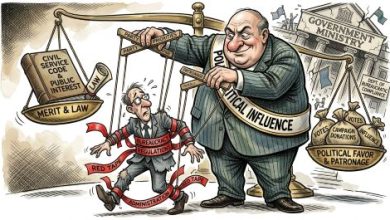
Both Marx and Fanon help us to understand that the national question in Pakistan is a class issue. The real problem is that there is a specific alliance between Military Elites, Capitalists, and local Sardars, Waderas, Khans, and Bureaucrats that has captured the state. They use slogans of unity, religion, or security to hide the fact that they are exploiting both people and regions.
When Sindhi, Baloch, or Pashtun even now Saraiki people demand rights, they are often labelled separatists or Indian agents. But in reality, they are pointing out the core contradictions of the Pakistani state that how it was built on Colonial foundations and continues to work for the few at the expense of the many. Marx gives us the tools to see how this system works economically, and Fanon helps us feel how it damages people culturally and psychologically.
Both thinkers also reject the idea that liberal democracy or Elite-led Nationalism can solve these issues. Marx saw how Nationalist Movements can become tools of the bourgeoisie, and Fanon showed how Postcolonial States often become local Colonizers themselves. So, the solution does not lie in more elections or better representation but it lies in mass mobilization, in connecting the struggle of oppressed Nations with the struggle of Workers, Peasants, Students, and Women.
If we truly want to solve the National question in Pakistan, we need to stop treating it as a side issue. It is central to any real change in this country. As Marx saw with Ireland, and Fanon saw with Algeria, there can be no social revolution without addressing National oppression.
Today, the Sindhi, Baloch, and Pashtun even Saraiki peoples are not just asking for their identity but they are fighting for dignity, for land, for justice. Their struggle is not separate from the struggle of the working class but it is part of the same struggle which are called Class Struggle. And unless the working class of all nations in Pakistan unite, not just in slogans but in real, material solidarity, we will keep living under a system that exploits some and pacifies others.
As Fanon puts it, “Each generation must, out of relative obscurity, discover its mission, fulfil it, or betray it.” Our generation’s mission is to connect class and nation, and build a revolutionary struggle that belongs to the people, not the elite.
—
References
Karl Marx – The Communist Manifesto, 1848.
Karl Marx – Letter to Engels on Ireland, December 10, 1869.
Frantz Fanon – The Wretched of the Earth, 1961.
Read: How Honest Are We?
_______________
 Suffyan is a researcher and activist pursuing MPhil at NIPS (National Institute of Pakistan Studies), Quaid-I-Azam University Islamabad. Holding a Bachelor’s in Anthropology from the University of Sindh, his research focuses on left-wing student politics, social movements, marginalized communities in Sindh and National Question of Sindh. Previously, he served as Central General Secretary of the (NSF) National Students Federation Pakistan and worked as a Research Associate at LUMS University Lahore.