Does Sindh truly understand the oppression it faces? If it does, on what foundations are its remedies built? If not, what is to be done?
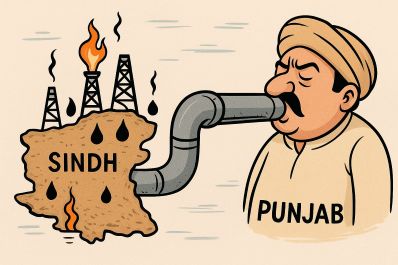
- The Sindhi working class is plundered of its own resources like any other colonized nation. It’s resources; cultivated and barren lands, tourist sites, the Indus, oil, gas, coal, the sea, the coastline, mountains and hills. These are all seized by different means but with the same goal; exploitation of the lower class.
Shahanshah Hussain
Under capitalism, every project sold to us as public welfare is in reality an instrument for the expansion of capital. States present these schemes as guardians of our prosperity, yet history shows what they truly are: “stone development” – growth not of people, but of profit.
Powerful imperial states, through brokers like the World Bank and IMF, strike deals with rulers of weaker nations. These deals enrich local elites while crushing the masses with austerity. Debt repayments are extracted by cutting education, healthcare, and basic services, driving inflation and poverty. What have these loans ever brought us? Not better schools. Not reliable health services. Not security of life. Even today, parts of Sindh have no emergency care, thousands of schools lie deserted, and youth sink into addiction, while those who took the loans have risen from paupers to millionaires. Yet the burden remains on our backs.
Read: Sindh`s resources plundered by corruption
For capital to grow, the state must secure full control over our resources and extract maximum profit. Meanwhile, it keeps the public distracted, fearful, and confused so they never rise against this profiteering. As Faiz wrote:
“When we, the workers, demand our share from those who rule the world,
We won’t ask for one field, or one country – we’ll demand the whole world.”
The Sindhi working class is plundered of its own resources like any other colonized nation. It’s resources; cultivated and barren lands, tourist sites, the Indus, oil, gas, coal, the sea, the coastline, mountains and hills. These are all seized by different means but with the same goal; exploitation of the lower class.
While the history looting our resources goes way far in history of the earth, here’s just a layered view of post partition plundering schemes;
- Free land allotments to military officers, bureaucrats, and investors.
- Bulldozing ancient villages to build mega-projects like Bahria Town and DHA.
- Privatizing tourist sites under military-linked companies.
- Damming the Indus to divert its natural flow under the pretext of “saving” water.
- Evicting locals from oil and gas fields and transferring wealth to the federation.
- Granting coal contracts to private firms, forcing Sindh to buy its own electricity at high prices.
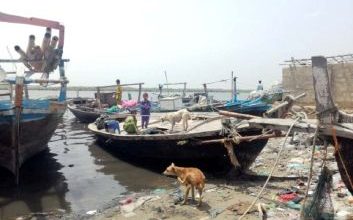
- Closing traditional river and sea routes for fisherfolk in the name of “national security.”
- Developing elite housing schemes on the coast after displacing locals.
- Blasting granite from Karoonjhar, desecrating sacred sites.
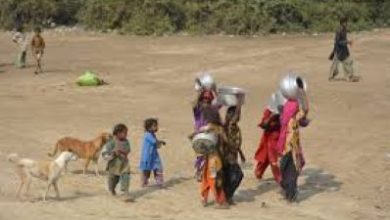
- Blocking natural streams in Khirthar and Kohistan, depriving locals of water to supply DHA and Bahria Town.
These are but one chapter in Sindh’s story of pain. If the problem were only resource theft, the struggle would be simple. The worst oppression is not theft – it is deception. Capitalism does not merely rob our land; it conquers our minds, our traditions, even our bodies. What is visible can be recognized. What the naked eye may not see requires reason, political analysis, and social science. Capitalism manufactures confusions that rob us of our true identity and hand us false ones. The artificial identities that divide humans against humans and normalize inequality. Respect in our society is measured by wealth, profession, and gender. A bureaucrat is valued above a peasant laborer — and though we deny it in words, our attitudes betray us. Before a bureaucrat, we speak formally and stand straighter. Before a hari, we relax as equals. If we own even a little land, we instinctively mimic the same superiority shown to us by richer men.
Gender deepens this injustice. Men are trained to believe they own women, must decide for them, and must “protect” them. This society has even poisoned the sacred bond of brother and sister: a brother may kill his own sister in the name of honor, whether for love, rumor, or suspicion. These are not human instincts; they are values imposed by a rotten order, and we men cling to them because they offer privileges too convenient to abandon. Women therefore, unnaturally, are expected to serve their spouses, cook, and bear sons like factory units. Instead of defending love, freedom, and human dignity, society defends these inhuman norms, justifying them through religion, philosophy, science, or culture — never admitting that they serve the interests of landlords and capitalists.
These behaviors are not freely chosen. Inequality is systemic, not accidental. Respect belongs not to individuals but to wealth, class, and gender. In truth, we are a powerless class: our leadership compromised, our intellectuals reduced to courtiers, our past rich with legends of bravery but our present adrift and our future clouded. Mere idea of separating boundaries is not freedom, it may be a state, a federation, kingdom, similar to the ones we have. It can be anything but freedom for freedom is more than just that. It is a land where there is no place for forces that may act in counter of Love, care and justice. And Sindh still has not fully understood that part of its own case. The “national question” is clear — as G.M. Syed, Aresar, and many others have shown. What we lack is an answer. I see that answer in healing the rift between Sindhi nationalism and socialism — the rift that treats national and class struggles separately, giving priority to elites rather than to workers, even within our own freedom movements.
I therefore close this piece with a question that blasts my mind often:
Does Sindh truly understand the oppression it faces?
If it does, on what foundations are its remedies built? If not, what is to be done?
Read: Sindh’s Resources at Center’s Grasp
_________________________
Shahanshah Hussain is a final year law student and a climate justice organizer, affiliated with the workers’ resistance movement, an organization for land and river rights