
Rethinking Literary Criticism
Literary criticism can be defined as the practice of interpreting and evaluating literary works

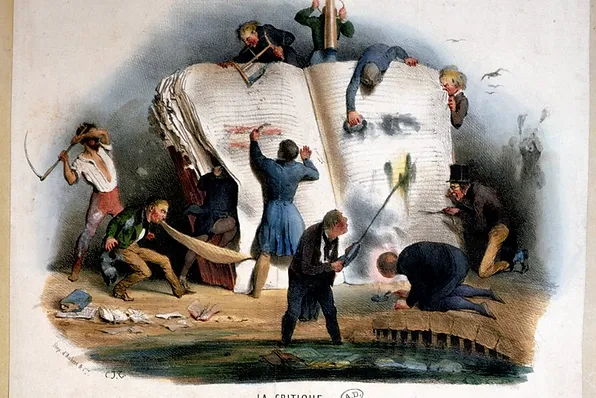
Literary criticism is not solely dependent on the critic’s analysis but also involves the reader’s interpretation and response
SHOUKAT LOHAR
Literary criticism is an essential field of study that aims to analyze, interpret, and evaluate works of literature. It provides readers with a deeper understanding of literary texts and explores their various elements, such as themes, characters, symbolism, narrative techniques, and social and historical contexts. Let’s understand it.
Definition and Background
 Literary criticism can be defined as the practice of interpreting and evaluating literary works through analysis and judgment. It has a long history, dating back to ancient Greece and Rome, where scholars like Aristotle and Horace established the foundations of literary criticism. In their works, they discussed the principles of drama, poetry, and rhetoric, forming the basis for later developments in the field.
Medieval Criticism
During the Middle-Ages, literary criticism was largely influenced by religious and moral perspectives. The primary focus was on understanding texts in relation to religious beliefs and teachings. Biblical allegory and moral lessons were often emphasized, and works were judged based on their adherence to Christian values.
Modern Criticism
Modern literary criticism emerged during the Renaissance and Enlightenment periods. The Renaissance witnessed a renewed interest in classical Greek and Roman literature, leading to a more scholarly and scholarly approach to analyzing texts. The Enlightenment brought about a shift towards reason and rationality, and critics began examining literature in light of social, political, and philosophical ideologies.
Beyond Assessment
Literary criticism goes beyond mere assessment of texts. While evaluation is an important aspect, criticism also aims to explore deeper meanings and themes, uncover the author’s intentions, and examine the cultural, historical, and social contexts in which the work was created. It delves into the formal and stylistic elements of a text, its symbolism, and the impact it has on readers. Literary criticism seeks to engage readers in a dialogue with the text, fostering a greater appreciation and understanding of literature.

Challenges in Understanding Literary Criticism
Literary criticism can often be seen as complex and challenging to comprehend. The diversity of theories, approaches, and perspectives within the field can make it overwhelming for readers. Additionally, the use of specialized terminology and jargon can further hinder proper understanding. However, with patience, a willingness to learn, and exposure to various critical works, readers can gradually develop a better grasp of literary criticism.
The Importance of Literary Theories
Literary theories play a crucial role in shaping and guiding literary criticism. They provide frameworks and perspectives through which texts can be analyzed. Various theories, such as formalism, structuralism, post-structuralism, feminism, post-colonialism, and psychoanalysis, offer different lenses to interpret and understand literature. These theories help critics explore different aspects of texts, uncover hidden meanings, and shed light on the broader cultural, social, and historical contexts in which the works were produced.
Role of Readers
Literary criticism is not solely dependent on the critic’s analysis but also involves the reader’s interpretation and response to the text. Readers bring their own experiences, perspectives, and emotions to the reading process, influencing how they engage with and understand the work. Each reader may have a unique interpretation, and literary criticism encourages diverse viewpoints and discussions.
_______________
 Shoukat Lohar is Assistant professor in English at Mehran University of Engineering and Technology Jamshoro. He can be reached at Shoukat.ali@faculty.muet.edu.pk


