Thar Coal and the Community Rights
Coal Mining, Transportation, Electricity Generation and Community Impacts


While Thar coal development brings economic opportunity, local communities face social and environmental challenges.
- Residents have raised grievances regarding loss of ancestral land, inadequate compensation and disruption of traditional livelihoods such as farming and grazing
By: Ramesh Raja
Coal Resources of Pakistan and the Thar Coalfield
Pakistan is endowed with significant coal reserves, estimated at around 186 billion tons, with the vast majority located in Sindh. The Thar Coalfield in the Thar Desert represents nearly 94% of the country’s total coal reserves, with geological surveys from the early 1990s confirming approximately 175 billion tons of lignite coal. Spanning roughly 2.2 million acres (9,000 square kilometers), Thar is one of the largest lignite coal deposits globally. Coal seams lie at depths between 150 and 300 meters, necessitating large-scale open-pit mining and dewatering of underground aquifers. The coalfield is divided into 12 blocks for systematic development, though only Blocks I and II are under active production at present.
Mining operations are led by the Sindh Engro Coal Mining Company, while exploration and regulation fall under the Thar Coal and Energy Board. Current output stands at 15–16 million tons per year, a small fraction of the total reserves. Economically, Thar coal is comparatively inexpensive, with mining costs between 30 and 40 US dollars per ton, significantly much lower than imported coal, which can range from 80 to 120 dollars per ton. Substantial investment in infrastructure, including roads, water supply systems and transmission networks, has facilitated both mining operations and coal transport to nearby power plants.
 Electricity Potential and Production from Thar Coal
The energy potential of Thar coal is immense, with experts estimating it could generate nearly 100,000 megawatts for over two centuries. Realizing this potential, Pakistan has established coal-based power plants close to the mines, minimizing transport distances and keeping production costs competitive. Presently, these plants collectively generate between 3,000 and 3,300 megawatts, feeding the national grid. Notable operational plants include the Shanghai Electric and Engro power plants in Thar.
The development of Thar coal has accelerated over the last decade through infrastructure investments and international cooperation, particularly under initiatives such as the China-Pakistan Economic Corridor. Planned expansions include increasing mining capacity, opening new blocks and constructing additional coal-fired power plants. Gradual and efficient implementation could significantly boost domestic electricity generation and reduce dependence on imported fuels, reinforcing Pakistan’s energy security.
Legal Status of Thar Coal and Protection of Local Communities
Following the Eighteenth Amendment to Pakistan’s Constitution, natural resources like coal fall under provincial jurisdiction, making Thar coal the property of the Government of Sindh. The Thar Coal and Energy Board manages mining block allocation, exploration licenses and development oversight, ensuring compliance with provincial regulations.
At the federal level, institutions such as the National Electric Power Regulatory Authority oversee broader energy planning, tariffs and distribution, necessitating cooperation between provincial and federal authorities.
Equally critical is the protection of local communities, many of whom have lived in Tharparkar’s desert settlements for generations. Development policies stress environmental safeguards, responsible land acquisition and investments in schools, healthcare, water supply, and employment. Sustainable coal development must therefore balance economic progress with environmental responsibility, social welfare and the preservation of traditional cultural life.
 Thar Coal Transportation and Future Plans
The Government of Pakistan has developed a comprehensive plan to transport Thar coal efficiently to domestic power plants and for potential export. A 105-kilometre railway line from Islamkot to Chhor is under construction, directly linking the Thar mines to the Pakistan Railways network. This corridor will supply coal to around 30 existing coal-fired domestic power plants, reducing dependence on imported coal and ensuring reliable domestic fuel.
 From Chhor, coal will travel via existing tracks to Kotri Junction (250 km), serving as the main node for domestic distribution. Key power plants include Port Qasim Electric Power Plant (1320 MW), Hub Power Plant (1360 MW), Sahiwal Coal Power Plant (1320 MW), and Sahiwal Ultra Super Critical Coal Plant (1320 MW). Plans also include supply to a new Chinese-supported Gwadar coal power plant via sea from Port Qasim, eliminating the need for a direct rail link.
For export, coal will move through railways from Thar coal field-Chhor (Under construction)-Bin Qasim- Port Qasim (9 Km under construction), the designated export junction. The total rail distance from Thar to Port Qasim is approximately 500 km, combining new and existing lines. Trains will operate at 120 km/h, allowing rapid, continuous bulk transport, which is more cost-effective than road haulage.
The Islamkot–Chhor line and Bin Qasim–Port Qasim branch are implemented by Pakistan Railways with the Frontier Works Organization (FWO) as the main contractor. The total project cost is around Rs 75 billion, jointly funded by the federal and Sindh governments, with completion expected in late 2026. Once operational, the corridor will handle around 10 million tons of coal per year, efficiently supplying domestic power plants, enabling exports via Port Qasim, and supporting sea transport to Gwadar, thereby strengthening energy security and fostering industrial growth in Pakistan.
Rights, Grievances, and Demands of Thar Coal-Affected Communities
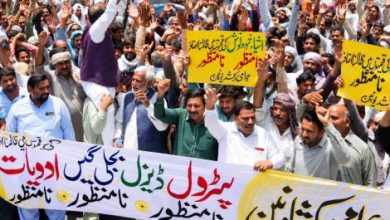
While Thar coal development brings economic opportunity, local communities face social and environmental challenges. Residents have raised grievances regarding loss of ancestral land, inadequate compensation and disruption of traditional livelihoods such as farming and grazing. Communities demand secure land rights, fair compensation and options to lease land rather than permanently lose it.
Environmental concerns include water contamination, aquifer depletion, dust pollution and degradation of grazing lands. Locals have protested for strict safeguards, restoration of water quality and accountability for health impacts. Access to basic services remains a key demand, as many villages near the coalfield still lack electricity, clean water, schools, healthcare and welfare facilities. Residents seek priority access to these services, as well as educational support, scholarships and vocational training for local youth.
Employment practices have also been highlighted, with calls for prioritizing local residents in mining, power, and railway projects, supported by skills development programs. Inclusion and equitable benefit-sharing are essential to prevent social tension arising from the influx of external workers.
In summary, Thar’s communities advocate for a comprehensive approach that balances industrial progress with social justice, environmental stewardship, and local empowerment. Recognition of land rights, access to services, fair employment, education, and welfare are central to ensuring that the economic benefits of Thar coal reach those who have historically borne its costs.
Read: Sindh – Maritime Heritage and Economic Potential
________________________
 The author of this article, Engr. Ramesh Raja, is a Civil Engineer, visionary planner, PMP certified and literary enthusiast with a passion for art and recreation. He can be reached at engineer.raja@gmail.com