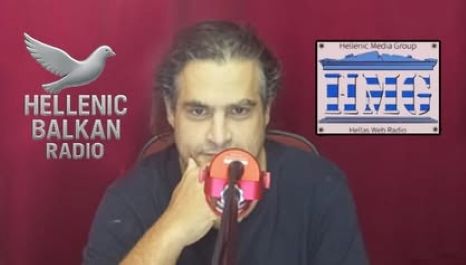
Investigative journalism is closely linked to the protection of human rights.
- By uncovering abuses of power, corruption, and violations of fundamental freedoms, investigative reporting contributes to democratic accountability
- For me, journalism is fundamentally a public service. The role of a journalist is not only to inform but also to protect democratic values, give voice to society, and contribute to transparency and accountability – Greek Journalist Dimitrios Kannavos
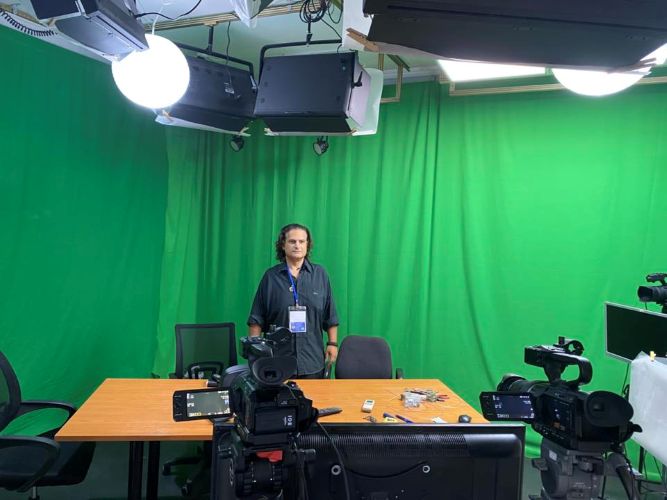 Hailing from Greece, Dimitrios Kannavos is an accomplished journalist and an active figure in the fields of media, culture, and public service. He serves as a Member of the Audit Committee of the European Association of Journalists – Hellenic Section, and is also a Founding Member of the International Union of Cretan Journalists and Mass Media, contributing significantly to the advancement of journalistic standards and international cooperation. Throughout his career, he has been recognized with numerous national and international awards for his work, community service, and dedication to cultural promotion.
By ANGELA KOSTA
Dr. Kannavos, could you outline your professional career path, highlighting the stages that have most significantly contributed to your training in the field of international journalism?
My professional journey in journalism has been shaped by a deep commitment to public interest reporting, international dialogue, and investigative work. Over the years, I have worked across different areas of media, including investigative journalism, international reporting, cultural diplomacy, and digital media strategy. A significant milestone in my career has been the establishment and leadership of the Hellenic Media Group, a platform dedicated to responsible journalism, international cooperation, and the promotion of democratic values. Through this work, I have had the opportunity to collaborate with journalists, academics, and cultural figures across Europe and the United States. Another important step has been the development of the Hellenic Los Angeles Network, which aims to build bridges between Greece, the Greek diaspora, and the international creative community. These initiatives have strengthened my understanding of journalism not only as a profession but also as a global civic responsibility.
You conceive journalism as a mission of responsibility and service to society. In what way does this vision guide your professional work?
 For me, journalism is fundamentally a public service. The role of a journalist is not only to inform but also to protect democratic values, give voice to society, and contribute to transparency and accountability. This philosophy guides every aspect of my work. Responsible journalism requires independence, ethical integrity, and respect for truth. In an era where misinformation spreads rapidly, journalists must act as guardians of reliable information. My work aims to promote journalism that serves society rather than power. This means focusing on accuracy, fairness, and the broader social impact of reporting.
With reference to international relations and investigative journalism, what do you consider to be the main challenges today in terms of independence, accuracy, and source protection?
One of the greatest challenges today is maintaining editorial independence in an environment where economic pressures, political influence, and digital disinformation increasingly affect the media landscape. Investigative journalism also faces growing risks related to the protection of sources and the security of information. Journalists must operate within complex geopolitical contexts where information can be manipulated or weaponized. To confront these challenges, strong ethical standards, legal protections for journalists, and international cooperation between media organizations are essential.
In addressing issues related to humanitarian action and civil protection, which principles do you consider essential to ensure accurate and responsible reporting?
When reporting on humanitarian crises, journalists must prioritize accuracy, human dignity, and contextual understanding. It is crucial to avoid sensationalism and to ensure that reporting reflects the realities faced by affected populations. Responsible journalism should highlight the human dimension of crises while also providing verified and balanced information. At the same time, journalists must be aware of the ethical responsibility involved when reporting in sensitive environments, especially where vulnerable communities are concerned.
 As a Member of the Supervisory Committee of the European Association of Journalists – Hellenic Section, which initiatives do you consider a priority for strengthening ethics and the quality of information in Europe?
As a member of the Supervisory Committee of the European Association of Journalists – Hellenic Section, my role focuses primarily on oversight, transparency, and institutional accountability. The Supervisory Committee is responsible for reviewing and supervising the financial activities and administrative procedures of the Board of Directors, ensuring that the organization operates with integrity, transparency, and compliance with its statutes. Beyond this institutional responsibility, I believe that strengthening ethical journalism in Europe requires continuous professional training, support for independent journalism, and strong mechanisms for transparency and accountability within media organizations. At a time when public trust in information is being challenged by disinformation and political polarization, journalistic institutions must reinforce their internal governance structures and ethical frameworks. Ensuring credibility, transparency, and responsible management within professional associations is an essential step in strengthening the broader credibility of journalism in Europe.
As a Founding Member of the International Union of Cretan Journalists and Mass Media, what role do you attribute to international cooperation among media professionals?
 International cooperation among journalists is essential in today’s interconnected world. Media professionals must work together to share knowledge, protect press freedom, and strengthen professional standards.
Organizations that promote international collaboration create valuable networks that allow journalists to exchange perspectives and address global challenges collectively. Such cooperation also reinforces the cultural and democratic role of journalism beyond national borders.
In a global context characterized by increasing disinformation, what contribution can journalistic institutions offer to safeguard the credibility of information?
Journalistic institutions play a crucial role in protecting the credibility of information. They must promote professional ethics, support investigative journalism, and strengthen verification mechanisms. In addition, media organizations must invest in digital literacy and public education so that citizens are better equipped to distinguish reliable information from misinformation. The credibility of journalism ultimately depends on transparency, accountability, and consistent adherence to ethical principles.
In your view, what is the relationship between investigative journalism and the protection of human rights in contemporary societies?
Investigative journalism is closely linked to the protection of human rights. By uncovering abuses of power, corruption, and violations of fundamental freedoms, investigative reporting contributes to democratic accountability. Journalists often serve as watchdogs of society, bringing attention to issues that might otherwise remain hidden. This role is essential for the protection of civil liberties and the promotion of justice. In many cases, investigative journalism has played a decisive role in exposing human rights violations and prompting institutional reforms.
Looking at the evolution of the media landscape, which structural transformations do you consider most significant for the future of the profession?
The most significant transformations include the rapid digitalization of media, the emergence of new communication platforms, and the global circulation of information in real time.
While these developments offer new opportunities for journalism, they also create challenges related to misinformation, economic sustainability, and audience trust. The future of journalism will depend on the ability of media institutions to adapt technologically while maintaining strong ethical foundations.
What message would you like to address to the new generations of journalists who are entering an increasingly complex and constantly evolving international context?
To the new generation of journalists, I would say that integrity is your most valuable asset. In a world filled with noise and competing narratives, the commitment to truth and ethical reporting must remain the guiding principle. Journalism requires courage, curiosity, and responsibility. Young journalists should continue to pursue knowledge, remain independent in their thinking, and always remember that journalism serves society.
Despite the challenges, journalism remains one of the most important pillars of democracy.
Read: Journalism’s role in combating authoritarianism
__________________