


Exploring the strategic depth, regional implications, and the core challenges facing the tri-nation alliance of Saudi Arabia, Türkiye, and Pakistan.
Saman Yousaf
The choice of venue was as significant as the content of the Mecca Joint Defence Agreement, as the leaders of Saudi Arabia, Türkiye and Pakistan signed it at Al-Safa Palace on 7 August 2026. Such agreements are typically made in capitals. This one was finally settled in the city to which Muslims throughout the world face in prayer five times a day. All the symbolism was intentional, and it was strong. A month later, the key is whether these three states can transform what has been declared as a “security partnership” into a lasting security framework.
There is reason to believe that they can, and to proceed with caution. It is a development of the Strategic Mutual Defence Agreement that was signed in Riyadh in September 2025, between Pakistan and Saudi Arabia, which in turn was a formalization of decades of Pakistan’s training and support for Saudi forces. The addition of Türkiye follows a gradual evolution in ties between the two nations, including joint efforts on constructing boats used for their respective worships and training planes, as well as the expansion of defence-industrial cooperation. But the timing was determined by circumstances. The war in Iran in 2026 introduced drones to Saudi soil, put the energy flows of the world under threat and illustrated how fast instability in the Gulf turns into everybody’s concern. Under those circumstances, the heart of the pact, that an armed attack on one member is an armed attack on all, is no empty gesture. It’s a definite indication that the price for aggression towards any of the three has been intentionally increased.
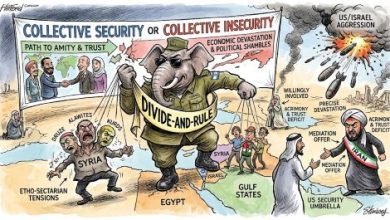
The deal was immediately dubbed an “Islamic NATO” or a “Sunni bloc” by commentators. Both labels have got the wrong idea. The signatories have said they are not targeting any specific country, it’s open to others and it is not designed to replace other commitments. Saudi Arabia is one of Washington’s allies. Türkiye is still a member of NATO. Pakistan is maintaining all-weather friendship with China and at the same time is in close relationship with the United States and the Gulf. It’s not a realignment, it’s a layering; it’s an extra level of security being provided to middle powers in a world where great power security has become less secure than it is in the past. The foreign minister of Iran replied with a hand for unity and self-reliance among the Muslims, indicating that the agreement was not interpreted in Tehran as an attack on Iran. This is exactly the attitude the three capitals need to strive to maintain.
The deal acknowledges the value of Pakistan’s armed forces, manpower, training and armed forces industry, which has come of age over the last two decades and has become professional and battle-tested to provide the region with the expertise it requires. A vote of confidence is the decision by the first meeting of the pact’s Strategic Political and Defence Committee on 31 August to set up a permanent secretariat in Saudi Arabia with a Pakistani secretary-general for the first three years. Islamabad is not a junior partner in this arrangement either, they have been summoned to assist in designing the arrangement. The economic aspect should be explored more than the military stories. A pact that provides funding for Pakistani and Turkish lines of production from the Gulf would be more beneficial to Pakistan’s long-term sustainability than one funding package.
Constructive support of the pact involves being aware of what is still unresolved. First, there are varying perceptions of threats. For Riyadh, the Gulf and Yemen are on the horizon; for Ankara, Syria, the eastern Mediterranean and the Black Sea; and for Islamabad, its eastern border and the security problems to the west. A collective-defence clause is as strong as the collective knowledge of when it is invoked. Early establishment of consultation processes and levels would be a good idea for the members to do ahead of a crisis that might require them to improvise. Secondly, the agreement should be strengthened, not strained, as it serves a nation’s strength. First and foremost Pakistan’s security is at stake. There is no better way to ensure commitments overseas support capacity at home than by sensible burden sharing, in which Saudi funds for capabilities that are used jointly, and technology transfer from Turkey. Thirdly, an enlargement should be purposeful. Both Egypt and Bangladesh have indicated interest and Syria has done so as well. But, growth means weight gain and each new member is accompanied by its own arguments and conflicts. The cohesion that makes the pact valuable could be maintained by a consensus-based, step-by-step approach, or even a status of a partner or observer before full membership. Fourthly, the nuclear issue should remain in the background. Analysts generally agree that the pact does not increase Pakistan’s deterrent posture towards its partners and that Pakistan’s posture continues to be geared towards its own region. The clear, consistent statement will help to ease international concerns and maintain the commitment to the traditional element of deterrence. Finally, diplomacy needs to go hand in hand with deterrence. New Delhi has urged Riyadh to show its interest and attention is being paid to Tehran. The best way for Pakistan and its allies to do this is to help present the Makkah framework as a stabilizing force that will make it more expensive for the aggressor to attack while maintaining all avenues of communication.
The Mecca Agreement will prove to be a success or a failure in the secretariat, the political and military committees, joint exercises on land, sea and air, standards for interoperability and early-warning and air-defence coordination. Early progress has been very promising.
This is the time to be confident yet not complacent for Pakistan. The country has been given its place in this partnership based on its decades-long contribution to regional security. The challenge now is to help construct a framework that is believable to potential aggressors, reassuring to neighbors and truly helpful to the people of all three countries.
Read: Social Entrepreneurship in Pakistan
_____________
Writer is M. Phil student in Strategic Studies at the National Defence University, Islamabad, and hold a BS in International Relations from International Islamic University, Islamabad.




Congratulations on this insightful piece! A well-researched and thought-provoking analysis that highlights the strategic dimensions of the issue very effectively. Excellent work…