Culture does not belong to one people alone; it belongs to all humanity.
Antonio Ma-at Interviews Angela Kosta
Legacy Narrative International Journalist – Hellenic Media Group – Los Angeles Media Network
Your literary journey has successfully combined poetry, translation, journalism, and cultural commitment. What initially inspired you to dedicate your life to literature, and what continues to motivate your work today?
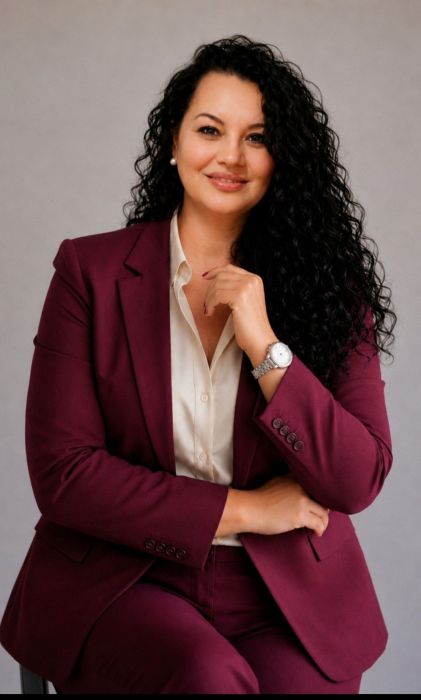 Literature has been my refuge since childhood. Born in Albania and living in Italy since 1995, I have always regarded writing as a universal language capable of transforming pain, hope, and memory into a shared human heritage.
Over the years, my journey naturally expanded into translation, cultural journalism, and publishing. I founded and currently direct several international literary magazines, including MIRIADE, THE LANTERNS OF POETRY GLOBAL, SPETTRO, HORIZONTE, and NUANCES ON THE PANORAMIC CANVAS, all created with the aim of promoting intercultural dialogue and providing a platform for writers and poets from every corner of the world.
Today, I continue this work with the same passion, convinced that culture is one of the few forces capable of uniting peoples, breaking down linguistic barriers, and building bridges of peace through the power of words.
As one of the most respected translators and cultural promoters internationally, you have introduced hundreds of writers to a global audience. What do you believe is the true responsibility of a translator and an ambassador of literature?
Translation means safeguarding the soul of a literary work. It is not merely about transferring words from one language to another, but about conveying emotions, culture, and identity. Throughout my career, I have translated and promoted hundreds of authors from numerous countries, contributing to the dissemination of contemporary literature in many languages.
I believe that a translator is a bridge between civilizations, while a cultural ambassador has the responsibility to create opportunities, support emerging talents, and foster dialogue among nations.
Culture does not belong to one people alone; it belongs to all humanity.
Throughout your career, you have connected writers from different countries, languages, and cultures. How has this international experience influenced your understanding of literature as a force for peace, friendship, and mutual understanding among peoples?
I have had the privilege of collaborating with authors from every continent, and each experience has strengthened my conviction that literature is the universal language of the human soul.
Through my international literary magazines, literary festivals, conferences, and publishing projects, I have witnessed friendships blossom among people who did not share the same language but shared the same values.
Literature is cultural diplomacy. It is dialogue. It is mutual respect. It demonstrates that the beauty of words can bring people together far more effectively than any border can divide them.
Your works have been translated into numerous languages, and you have received many international honors. Looking back on your remarkable journey, which achievement do you consider the most significant, and why?
Every award represents an even greater responsibility toward culture.
Among the recognitions I hold closest to my heart are my Doctor Honoris Causa, the prestigious awards I received at the Senate of the Italian Republic, my appointment as Ambassador of Culture, as well as numerous international awards from Europe, Asia, the Americas, and other continents.
I have also had the honor of participating in important institutional events at the Italian Ministry of Culture, where the promotion of literature and intercultural dialogue holds profound significance.
Nevertheless, the achievement I value most is neither a medal nor a title, but having contributed to introducing hundreds of authors to the international literary scene by creating meaningful opportunities through translation, journalism, and publishing.
Beyond your books and achievements, what legacy do you hope to leave for future generations of writers, translators, publishers, and cultural leaders around the world?
I would like to be remembered as someone who built bridges between cultures.
My greatest wish is to leave a legacy founded on dialogue, collaboration, and international openness. I hope that my magazines, my books, my translations, and my editorial work will continue to serve as instruments of encounter and understanding among peoples.
I always encourage young writers not to write in pursuit of success, but to leave an authentic testimony of their own time. Awards are important, but the greatest reward is touching people’s hearts and helping make the world a more humane place.
I deeply believe that culture is one of the highest expressions of peace. If my work has inspired even one person to believe in the transformative power of literature, then I will have achieved my greatest goal.
 Biography of Dr. Angela Kosta
Dr. Angela Kosta is an Albanian-born Italian writer, poet, essayist, journalist, literary critic, translator, publisher, and international cultural promoter. Born in Elbasan, Albania, she has lived in Italy since 1995, where she has established herself as one of the leading voices in contemporary international literature through her dedication to intercultural dialogue, literary diplomacy, and the promotion of world literature.
She is the Founder and Executive Director of the international literary magazines MIRIADE, THE LANTERNS OF POETRY GLOBAL, SPETTRO, HORIZONTE, and NUANCES ON THE PANORAMIC CANVAS, editorial platforms that bring together distinguished writers, poets, scholars, and artists from every continent, encouraging cultural exchange and literary cooperation beyond geographical and linguistic boundaries.
Dr. Kosta serves as Head of the Press Office of the Women’s Chair at the Accademia Tiberina in Rome, while actively collaborating with numerous international literary academies, cultural institutions, and media organizations. Throughout her career, she has devoted herself to promoting peace, human values, and intercultural understanding through literature.
Her literary works have been translated and published in more than forty languages, appearing in international journals, newspapers, anthologies, and literary reviews across Europe, Asia, Africa, the Americas, and Oceania. As a translator and editor, she has introduced and promoted hundreds of writers from around the world, becoming an important bridge between cultures.
Dr. Angela Kosta has received numerous prestigious international honors for her outstanding contribution to literature, journalism, translation, and cultural diplomacy. Among the most significant are the Doctor Honoris Causa, the title of Ambassador of Culture, distinguished awards presented at the Senate of the Italian Republic, and recognition at institutional events held at the Italian Ministry of Culture. She has also received important literary awards throughout Europe, Asia, the Americas, and other continents, including recognition for her excellence in translation, publishing, and international cultural promotion. Recent honors include the Branko Merxhani Prize awarded by the Albanian Journalists’ Union for strengthening intercultural relations between Italy and Albania.
Her mission extends beyond writing books: she believes literature is a universal language capable of building bridges among civilizations, fostering mutual respect, defending cultural diversity, and inspiring future generations. Through her editorial work, translations, journalism, and international collaborations, she continues to promote the transformative power of literature as one of humanity’s strongest instruments for peace, dialogue, and global friendship.
____________
 Antonio Ma-at